Back to Germany: Via Gedser to Rostock [Part 6]
The sixth day of the bike tour takes me back to Germany, but not without a detour to Denmark’s southernmost point.
Wake up. Have breakfast. Pack up the tent. Load the bike. Set off.
By now, I had already gotten used to mornings on the bike tour going something like this, and so the now sixth day of the trip began in much the same way.
On this day, my bike tour was supposed to take me back to Germany; in the afternoon I would still need a ferry connection — I hadn’t booked it in advance, so I wanted to get to Gedser, the border town with the ferry port, as quickly as possible.
Off to Gedser
Back Next
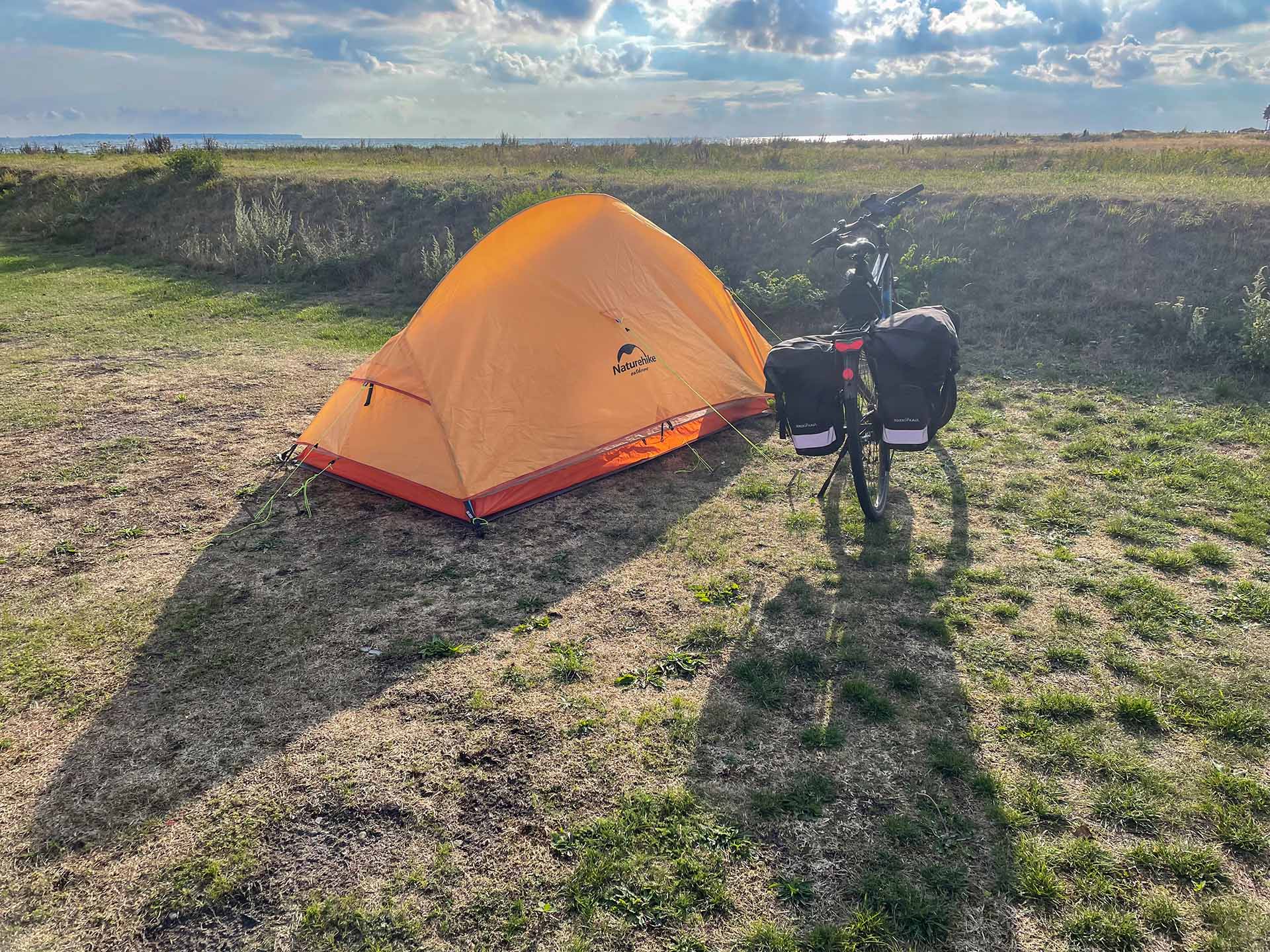
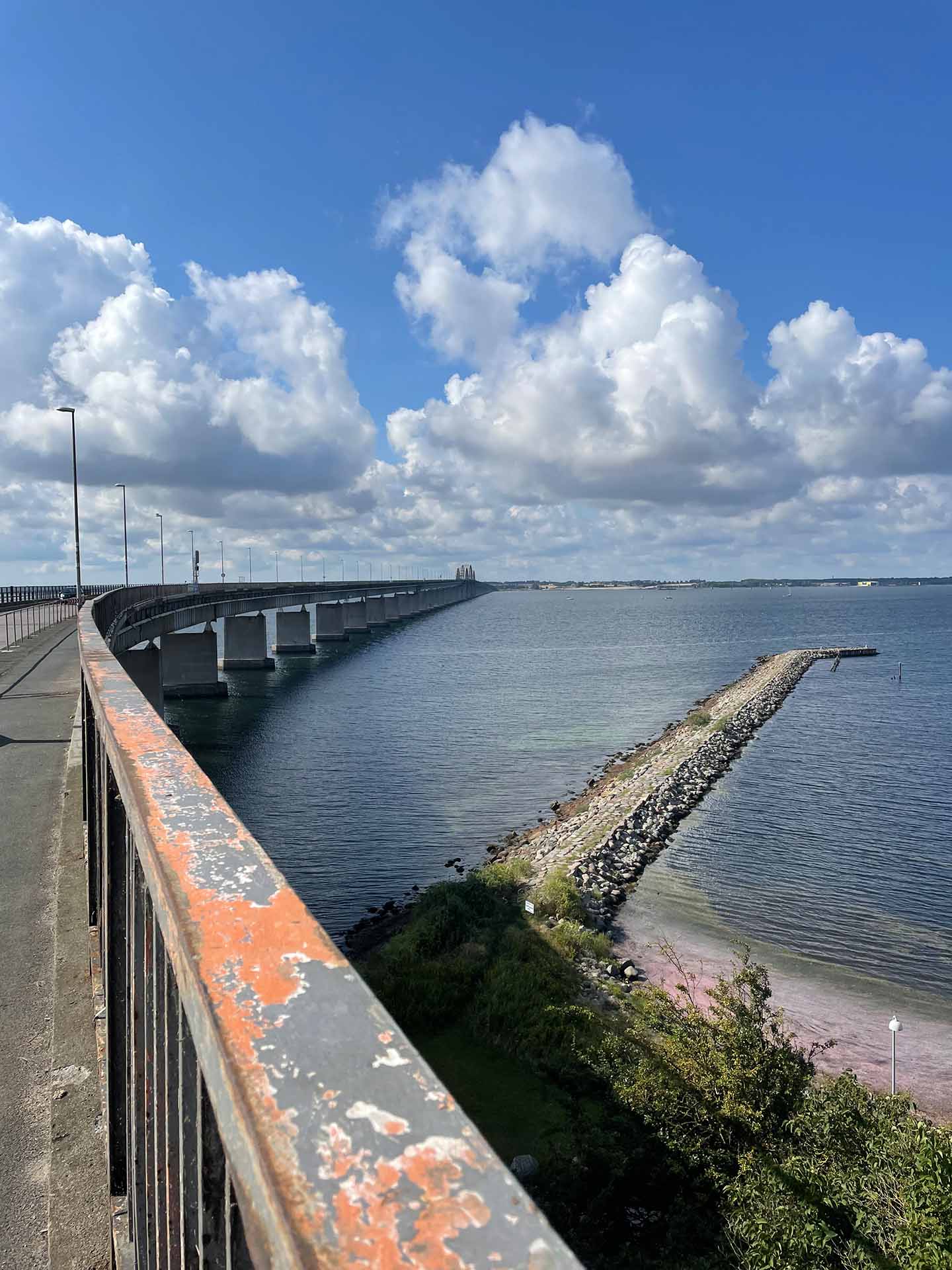
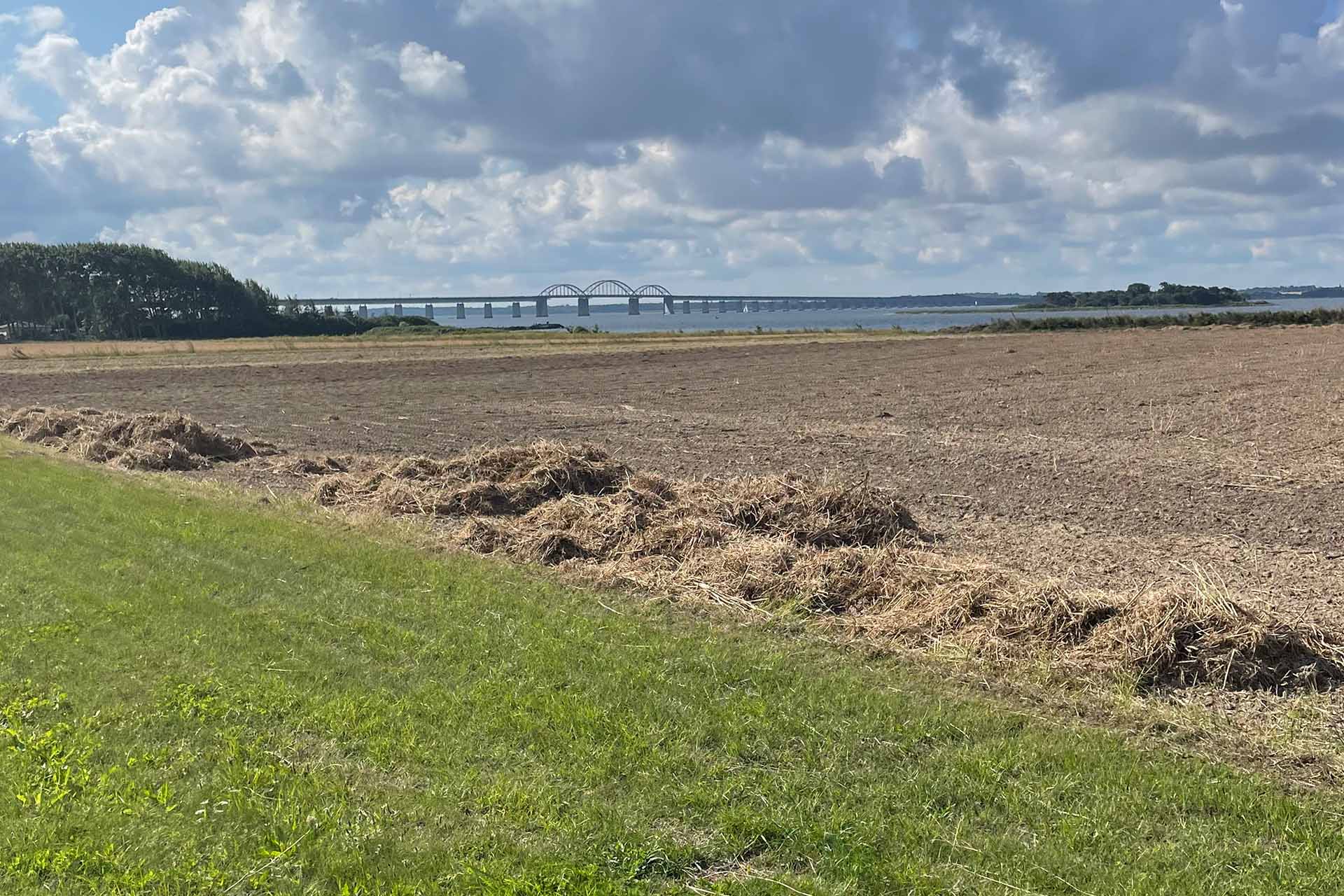
After crossing several large bridges over the fjords of Denmark’s southern islands, I continued through the familiar Danish landscape for around 55 kilometers to Gedser. On this day too, I got caught in a heavy rain shower for a while: dark clouds followed me the entire way from Vordingborg to Gedser and all the way to the ferry, then suddenly broke around midday and unleashed a downpour like the one I had already experienced in Copenhagen. This time, though, the cloudburst only lasted a few minutes.
https://p3g3.de/content/media/2026/04/skandinavien21_regentankstelle-1.mp4
By the time I recorded the video, the rain had already almost died down again; for a while, even the storm drain in front of me was overflowing.
After that rain, the weather held for the rest of the way to Gedser, staying cloudy but without any more rain, so I could continue on my way to the border town.
The southernmost point of Denmark
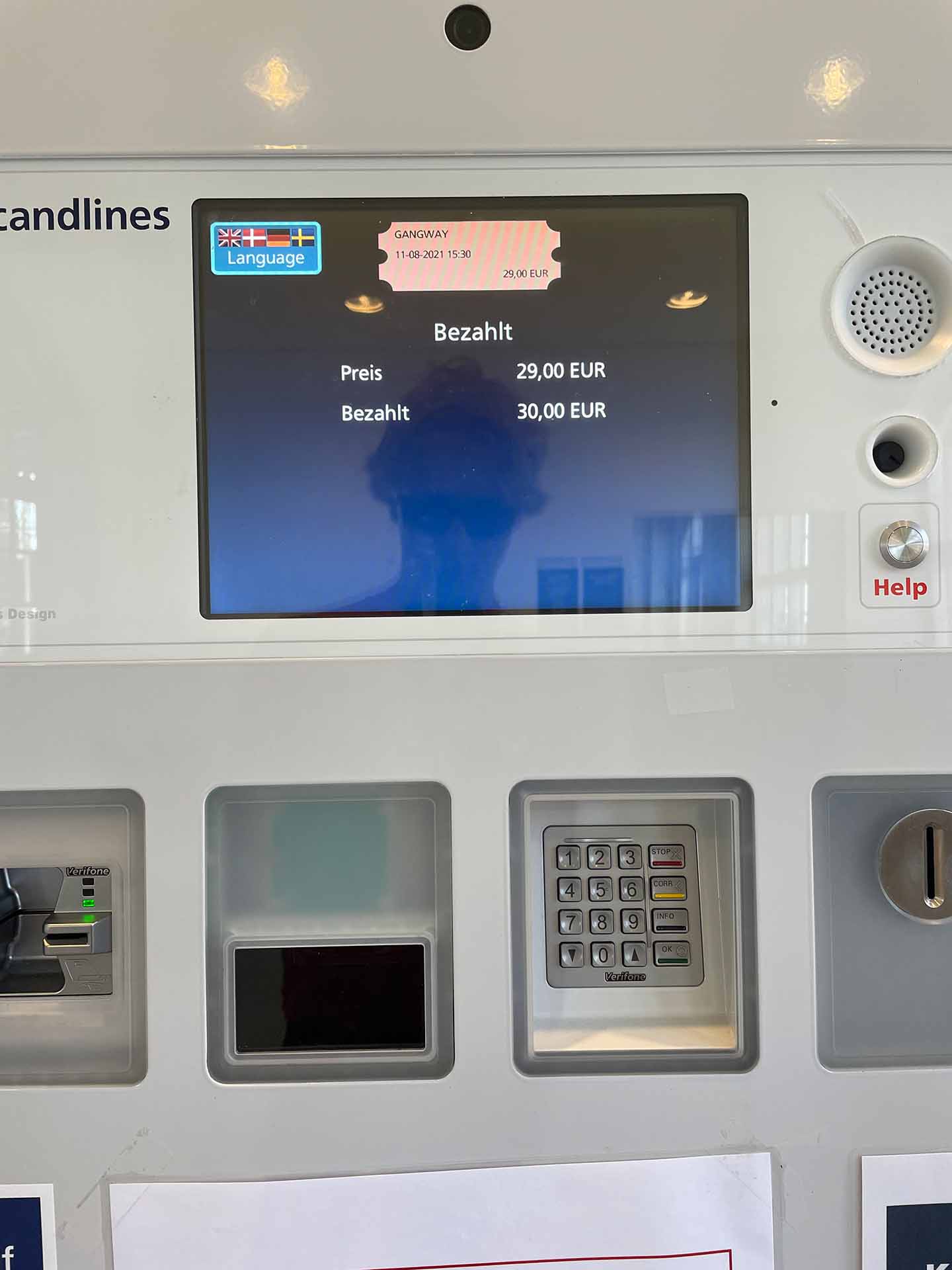
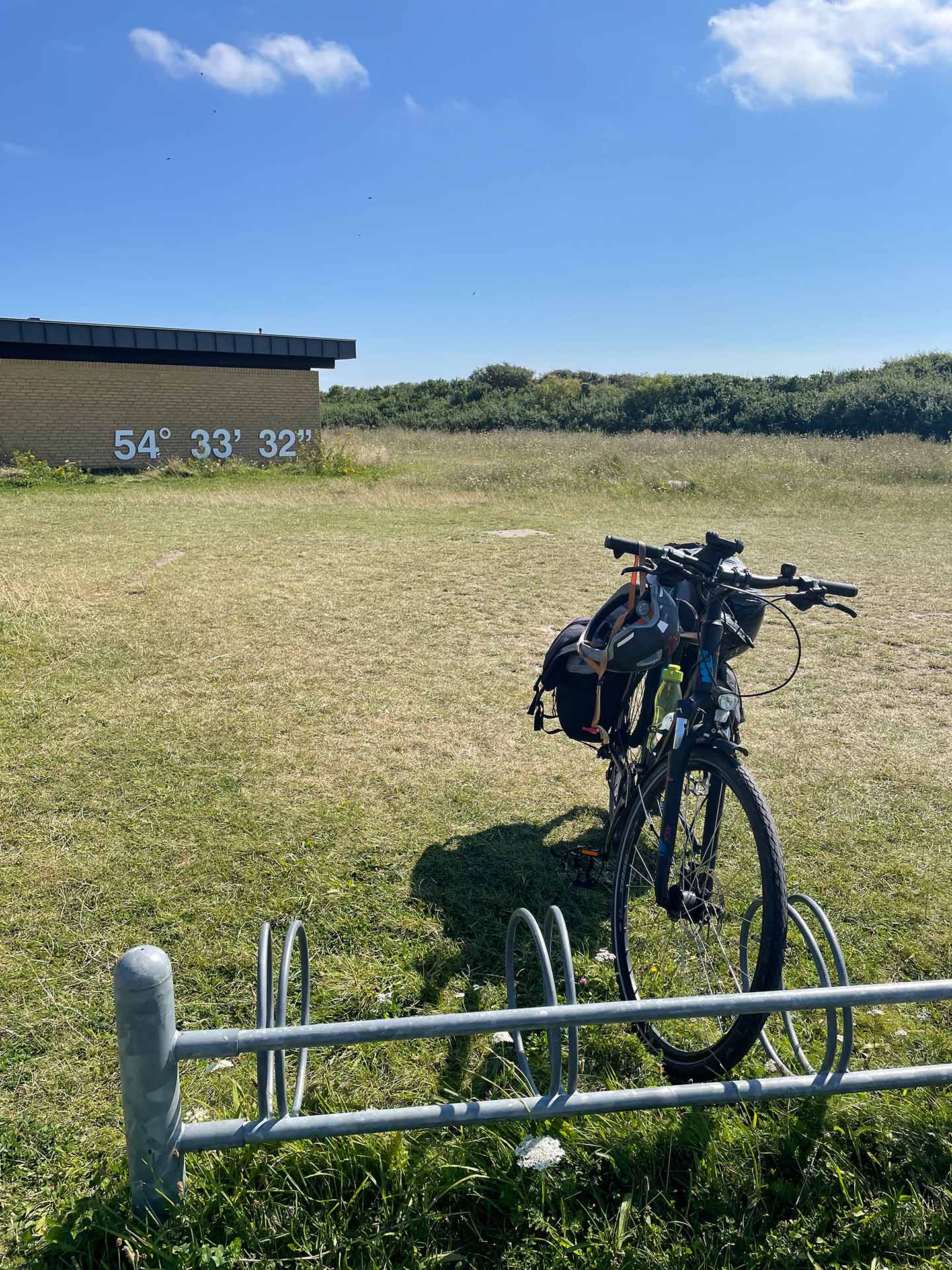
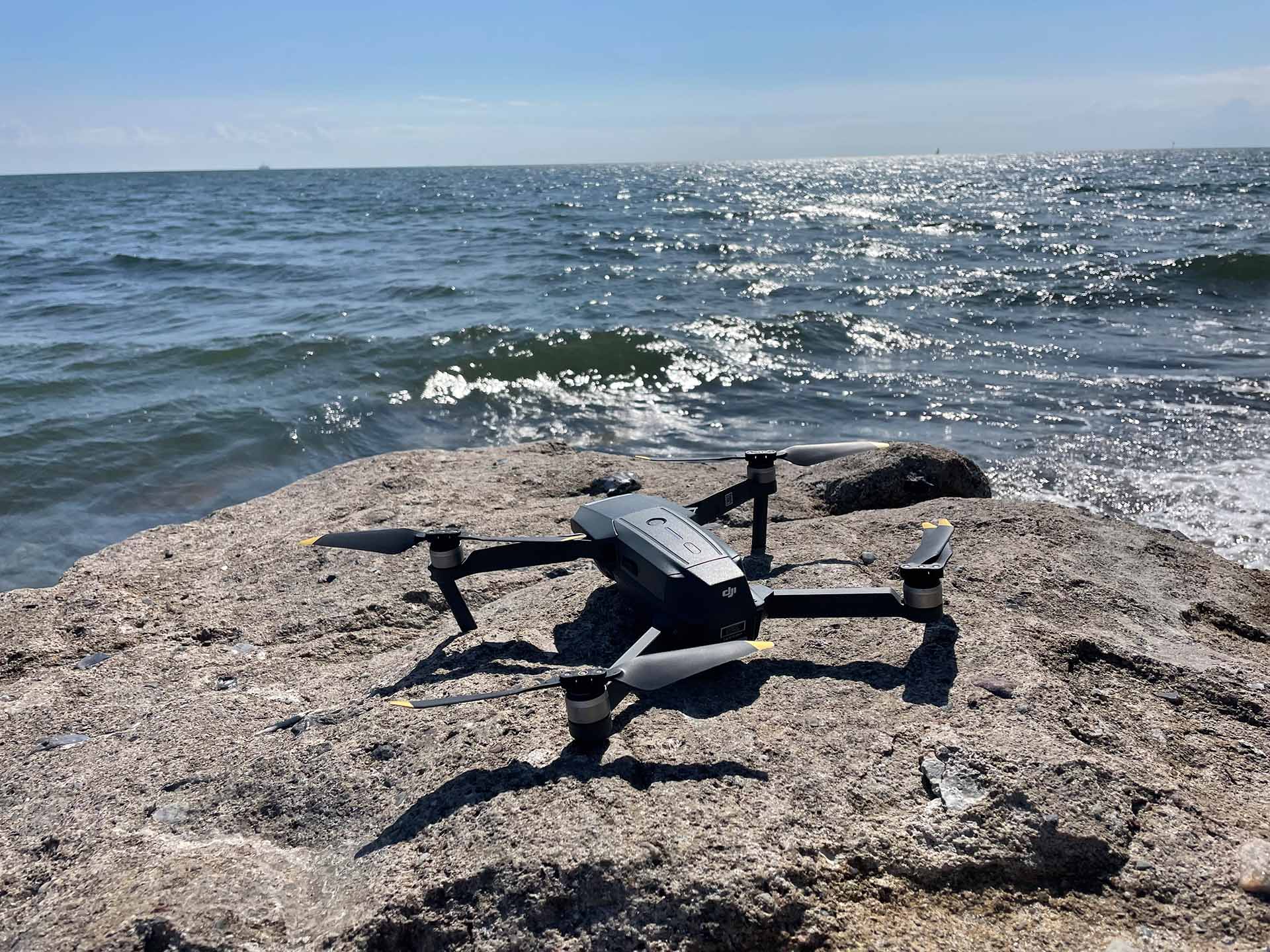
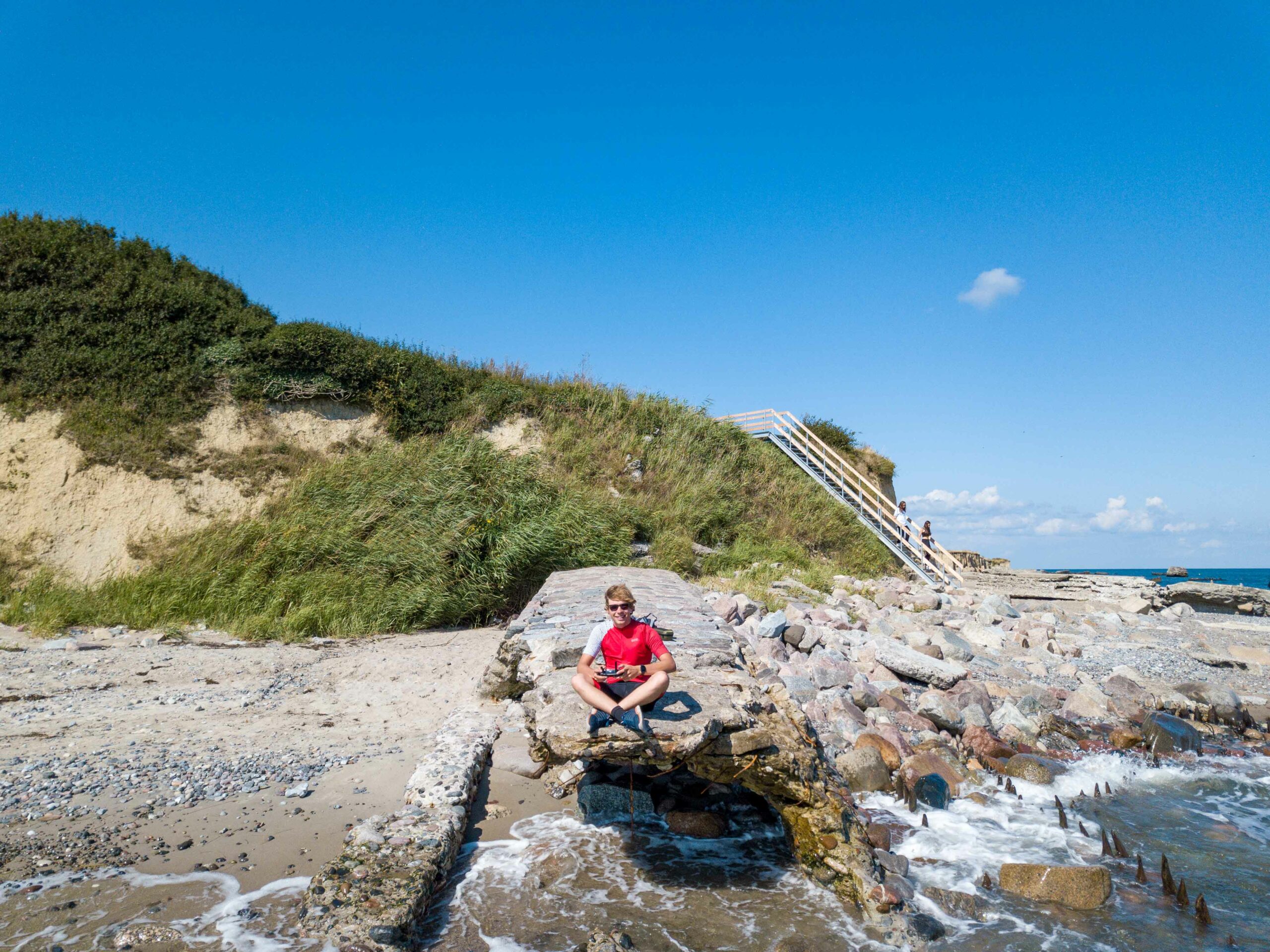
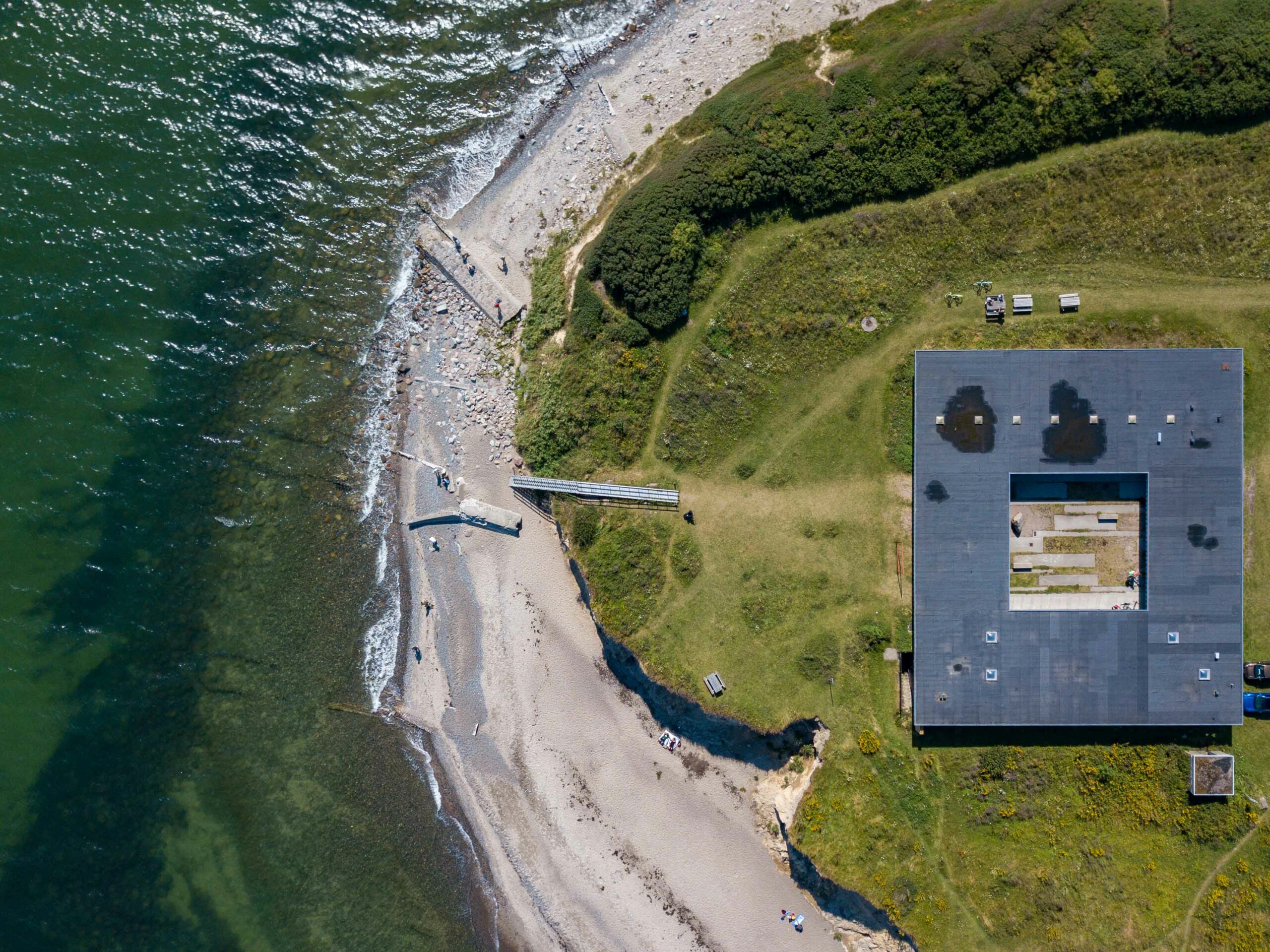
After arriving in Gedser, I first got a ferry ticket for the next crossing that was supposed to take me to Rostock. Since that trip was still about an hour away, I decided to make a detour to Denmark’s southernmost point: the Gedser Odde park right on Denmark’s coast.
Back Next
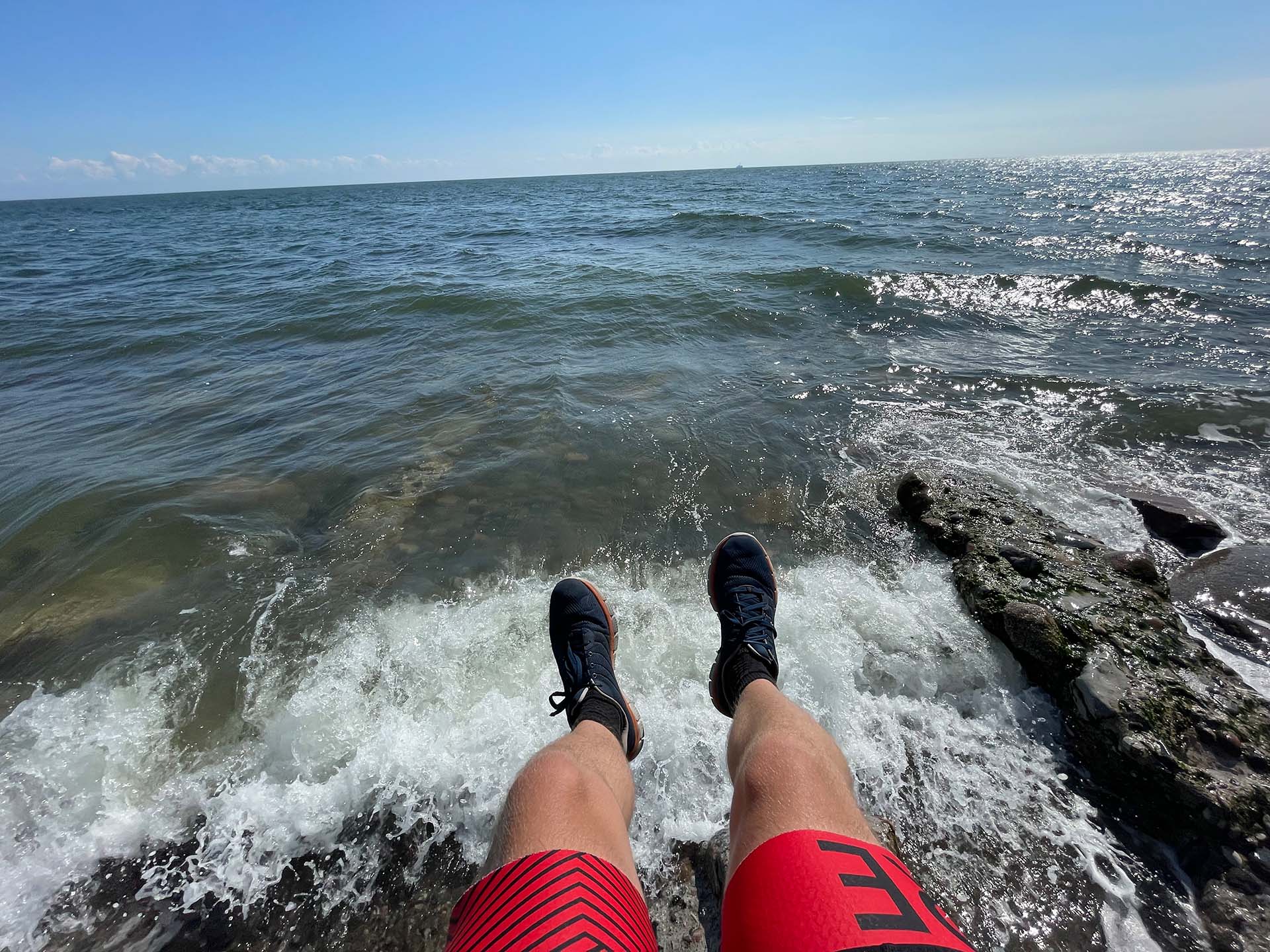
After flying my drone, taking a few other photos of the surroundings and (very importantly, otherwise I barely mention it in this travel story since so little happens at the time) simply resting for a few minutes, I headed briskly back toward the ferry port.
Those few kilometers went by quickly; unfortunately, when I arrived, the ship wasn’t even in the harbor yet. Too bad — I could have stayed longer in Odde after all. But I preferred making sure I caught the last ship of the day back to Germany rather than sitting on the beach for a few more minutes.
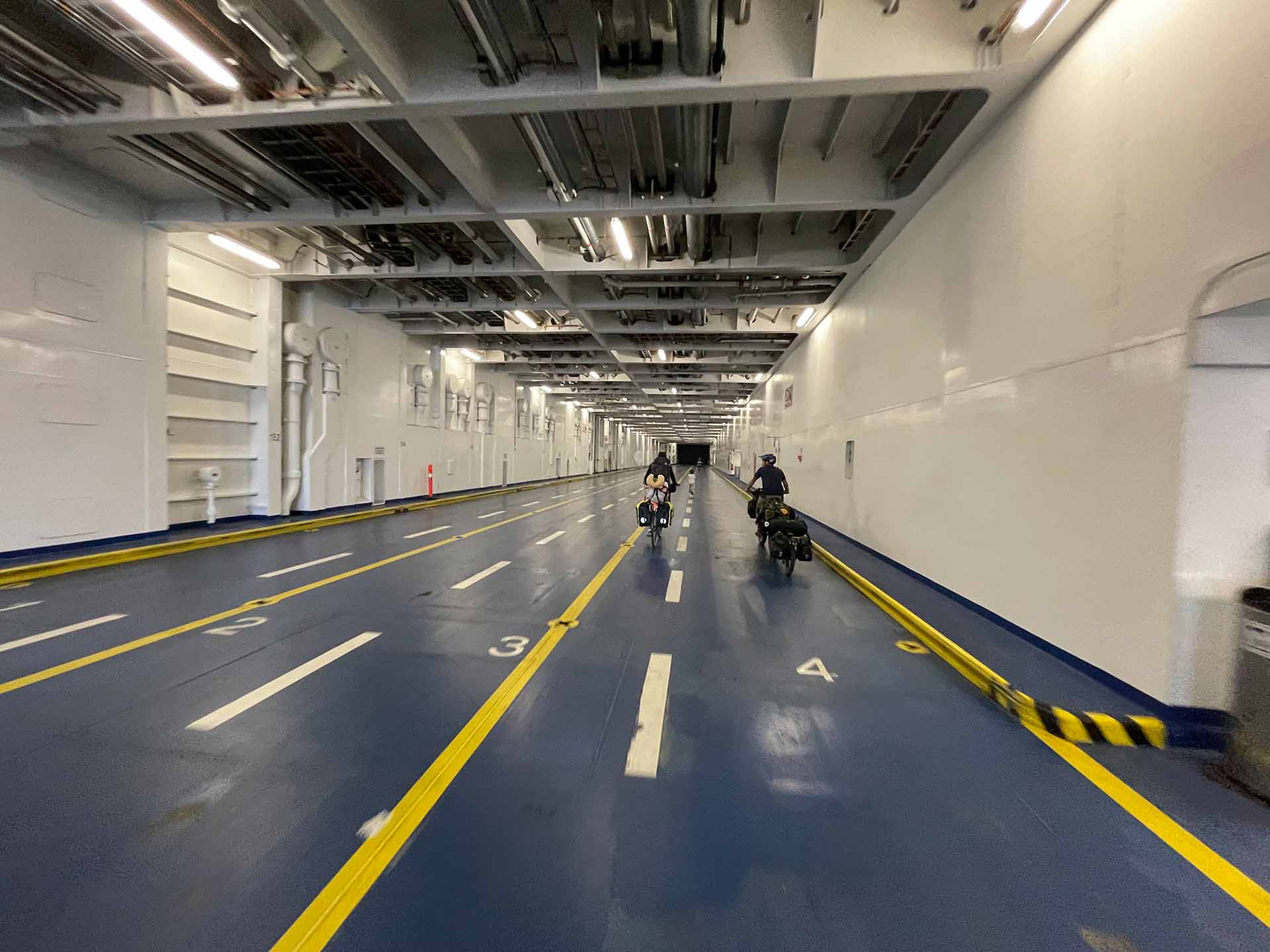
Around 30 minutes after I arrived at the port, and 40 minutes after the official boarding time, the ferry finally rolled into Gedser at a leisurely pace. After a short unloading process, we as a small group of cyclists were already able to board the ferry.
On to Germany
Compared to the previous two ferries, the Scandlines ferry (named "Copenhagen") was fairly unspectacular, with one exception: a 30-meter rotor sail rises up from the deck.
This Flettner rotor is a propulsion concept that is more than 100 years old, in which a large cylinder is rotated rapidly by electric motors during the journey, so that, paradoxically, the one-sided buildup and mutual acceleration of air creates forward thrust.
The concept behind this sail technology is called the Magnus effect. On the ferry itself, despite educational promotional films about the sail’s 4–5% CO2 savings when in use, I didn’t understand how this Magnus effect actually worked; it only became clear to me now, while writing this post, after reading the Wikipedia article .
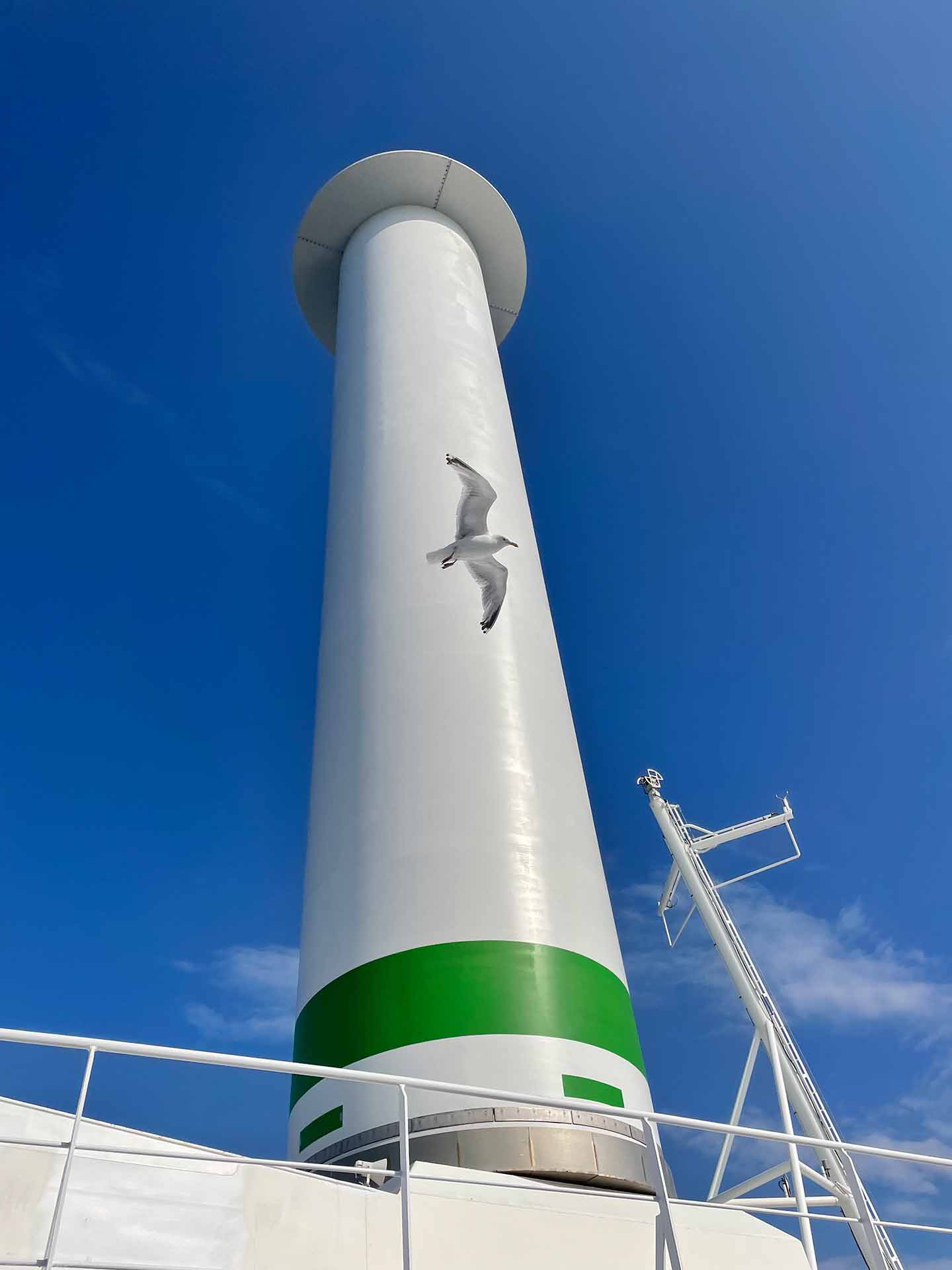
With those 4–5% CO2 savings, I chugged across the North Sea for 2.5 hours and 100 kilometers before German land came into view.
I actually like traveling by ship, even over longer distances, but on this one I was really looking forward to Rostock. First, I had absolutely nothing to do on board; neither "duty-free" shopping nor the very cafeteria-like restaurant were really my thing, and I couldn’t make myself particularly comfortable on the few seats on deck either. Second, I wanted to be in Rostock as early as at all possible, because the next day a route of a completely different scale was waiting for me — and before setting off on that, I at least wanted to cook and get a few hours of sleep.
Back in Germany: Rostock
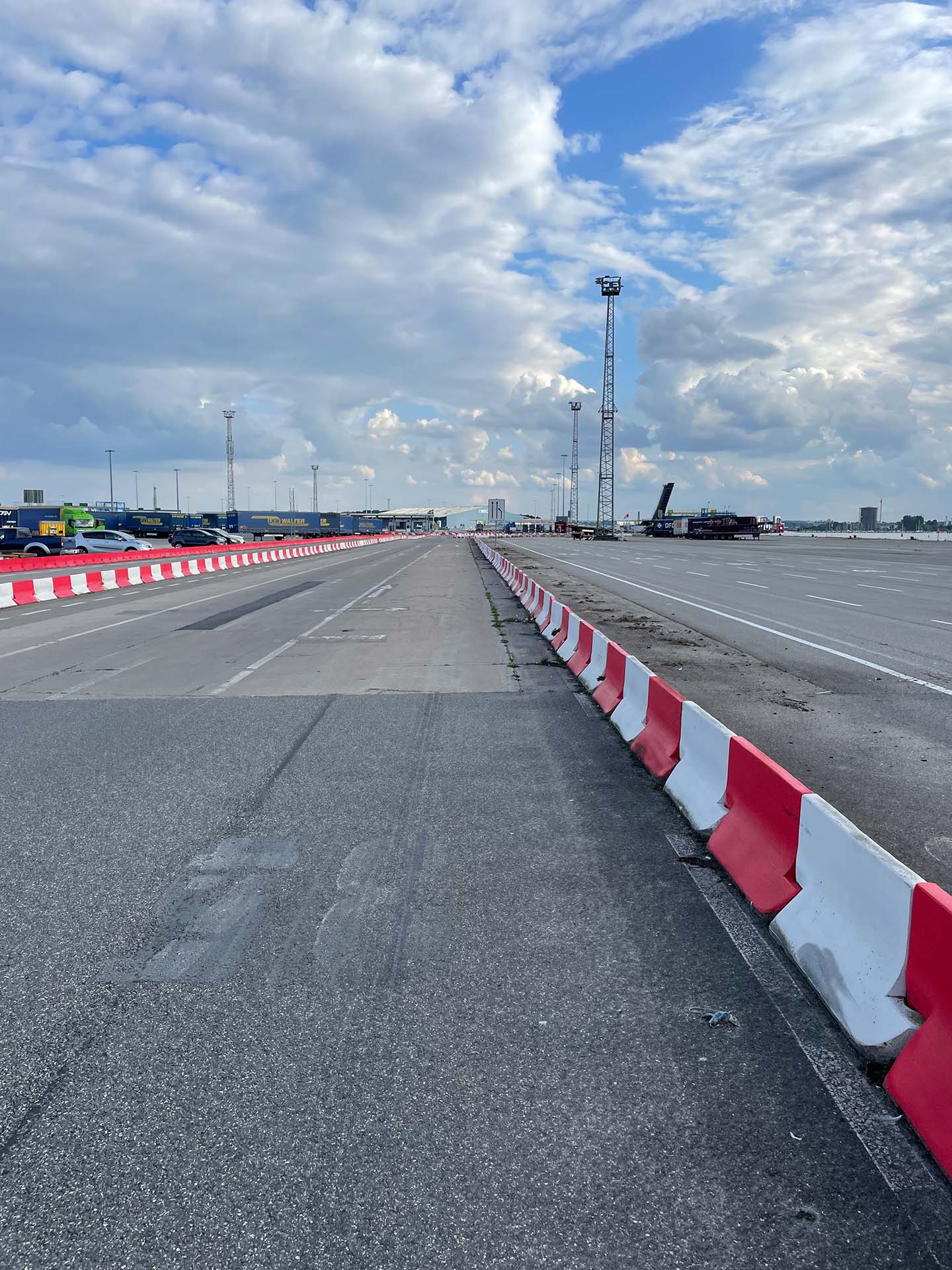
At exactly 6:00 p.m., I set foot on German soil again, in the form of the Rostock ferry port. Even before all the other motor vehicles, we cyclists were allowed to leave the ferry, and shortly afterward the trucks followed too.
With the trucks quickly catching up behind me, I probably let myself get a bit stressed and — at least I can’t explain it any other way — missed the bike turnoff from the traffic route. At any rate, I suddenly found myself continuing along a fairly narrow road toward a bridge together with the trucks, where turning around or even simply stopping would have become really dangerous. When I passed a 50 km/h sign, I decided that the best way to defuse the situation was probably to ride as fast as possible (in situations like that, I’m rarely the kind of person who wants to make the vehicles behind me wait; of course, that decision is always preceded by a risk assessment): fully loaded, I accelerated uphill (!) to 50 km/h, probably the most exhausting 30 seconds of the entire trip — once I reached the top, I was able to take a moment to catch my breath at a roundabout with a smaller exit. In that short time, my heart rate had reached 200 beats per minute, so I was very relieved about the break.
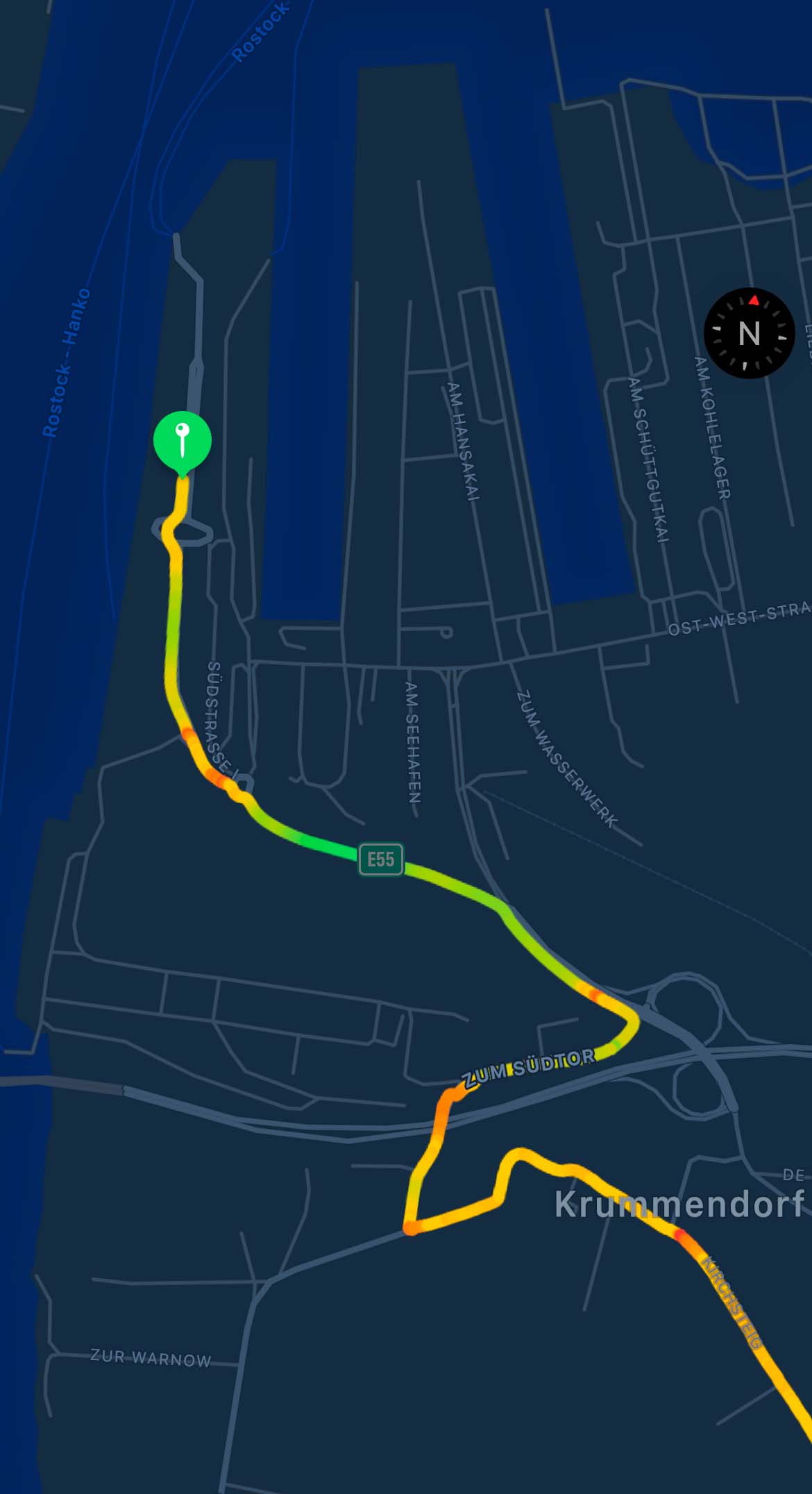
After this "active start" into German federal territory, I was immediately reacquainted with the bike path situation in Germany:
Back in Germany 😼 pic.twitter.com/GjGW7DiPMVAugust 11, 2021
There were still 14 kilometers left to my hostel in Rostock-Marienehe, but I was able to ride them in a relaxed way along the Unterwarnow in the beautiful evening atmosphere. An hour after arriving in Rostock, at 7:00 p.m., I reached my small hostel. From there, I headed straight to the nearest supermarket, where I bought pasta and other provisions for the evening.
Once I got to the hostel, however, two vacationers from Saxony offered to let me eat with them — an offer I gladly accepted, so I was able to eat pasta with vegetables and lots of curry and cheese without having to cook myself. In return, I did the dishes, and while doing so I chatted with the two Saxons. For me, it was quite interesting to speak directly with two people — rather than about "the East Germans" — whose opinions and beliefs I could only relate to with difficulty.
So we talked about the existence of man-made climate change and the sense and nonsense of diesel driving bans, as well as the state of the CDU — on the latter, even if we were looking at the situation from different directions, we could at least agree that it was "miserable," so at least there was one common denominator. Despite the enormous thematic differences, the conversation was very pleasant, and I was even offered rum and milk (an interesting combination!), but in view of the next tour I politely declined.
At around 10:00 p.m., I fell asleep relaxed in a four-bed room, though even while setting the alarm for 3:30 a.m. I already felt a slight sense of unease.