Postscript: The MDR segment after it aired
More than a month after the MDR segment about my work in technology aired, I’m reporting on the experiences this segment has given me.
When the segment about me and my electrical engineering inventions aired on the evening of March 9, I could hardly imagine what a flood of tasks would come my way.
So here is the chronology of the "MDR Segment 2021" project, with tips and the things I learned in the time after the segment aired.
March 2, 7 days before the broadcast
An email from MDR. More precisely, an email from the scheduling department of Maximus Film GmbH, who had recorded and produced the segment.
At last, after two postponements, the segment had finally been included in the program; after waiting around a month, that was a very relieving piece of news.
March 8, 1 day before the broadcast
One day before the broadcast, I wrote the announcement of the segment here on this blog. I actually thought that meant I had finished the last part of the active work for the project and finally crossed "MDR segment" off the to-do list.
March 9, 19:37, announcement on Twitter
I decided at fairly short notice to announce the broadcast of the segment on Twitter.
In hindsight, a good decision, because that way I could post live about what happened after the broadcast; without the announcement tweet, the hook would have been missing.
March 9, 20:05, broadcast of the segment
The moment the segment was broadcast, the storm of messages began: first on Twitter, and shortly afterward on other social media as well, I was mentioned so often in a short period of time that my smartphone temporarily couldn’t keep up with the notifications anymore (I estimate around 200 notifications/minute for 1–2 minutes)
In just under 30 minutes, at around 8:03 p.m., a segment about me and my little DIY projects will air on MDR in the program “Einfach genial”🔥 🙋♂️ You’re warmly invited to tune in 📺 https://t.co/vicVM1uoWRMarch 9, 2021
March 9, 20:10, "Server, are you still alive?!"
The flood of messages on social media died down quickly again, but shortly afterward I noticed something else: somehow my mail client was no longer connecting to my (self-hosted) mail server. A quick ping to the host system of the MTA (Mail Transfer Agent) showed the system was completely overloaded.
Even worse: despite routing the network traffic to my server through the CDN (Content Delivery Network) Cloudflare, it too hit its load capacity limits. However, the website and the blog remained reachable the entire time — albeit with partly longer response times (in the worst case I measured 500 ms until the server responded; normally this should be around 30–50 ms).
By the way, the mail system didn’t collapse because of too many emails; rather, the unavailability was a side effect of the overloaded web server (in the case of the mail system, it was mainly the reverse proxy in use that was no longer responding) — a restart at the software level helped bring the affected systems back online.

March 10, the day after
After the rush on the website on the day of publication, emails started pouring into the mailbox from March 10 onward: at times so many that I could no longer keep up with answering them all.
Most of the emails asked about a way to buy the inventions shown. I was able to answer those emails fairly quickly with "sorry, I’m not allowed to put any of the products shown on the market without dozens of tests (for good reason)."
Some of the emails (around 15%) asked for the link to the project building instructions. MDR published my email address on its website, but apparently not the associated website and blog. A small percentage (maybe 3–4 percent / 5–10 emails) contained inquiries about project ideas that the people had had for a while. Unfortunately, for lack of time I had to answer most of these with "Sorry, as much as I like the idea: unfortunately I hardly see any way to implement it in the foreseeable future." But I offered my professional support for two projects, and I’m now helping with the implementation or advising on the development. It remains to be seen how well this kind of project works in electrical engineering (as a rule, I usually work on a project from the first idea to the final implementation largely on my own).
The weeks after
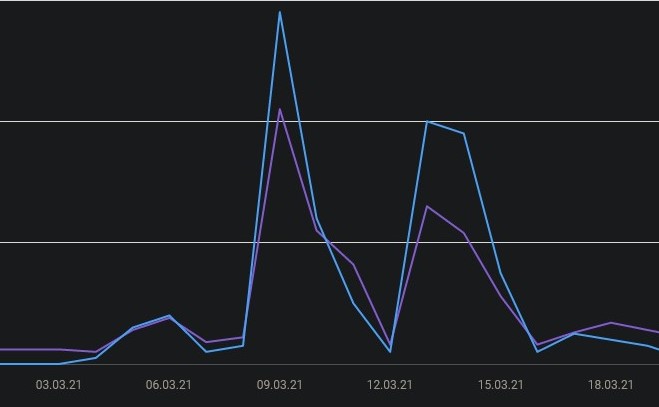
In the weeks after the broadcast, both the website views and the number of emails declined again, but never quite back to the previous level: I still answer around a dozen emails every week related to the MDR segment, and the website and blog receive around 40% more views than they did in January.
And what can you learn from that?
Above all, I took away three things from the experience of the last few months:
1. Have a plan b): What would I have done if the server had suddenly completely crashed on March 9? I probably would have tried to switch on Cloudflare’s "I'm under attack" mode and thereby fend off some of the traffic entirely, but I can’t say with 100% certainty whether that would have worked either. So it’s best to plan for this case in advance or size the servers flexibly; with some providers (e.g. Hetzner), you can rent computing power by the hour, which would have been perfect for a case like this
2. Most people are actually quite nice: I had to deal with surprisingly few unfriendly emails. Sure, there were a few outliers, but all in all the experience was positive.
3. Take a break: When I was completely drowning in emails the day after the broadcast, I simply turned off the computer for a few hours and did something else instead (for example, go jogging). Afterward, the emails had of course not magically answered themselves as I had hoped, but with a clear head it was much easier to work through the pile in a much more relaxed way.
Interesting: after the website was heavily visited yesterday following the broadcast, my mailbox is getting a bit overwhelmed today; right now I’m no longer managing to answer every email with follow-up questions directly https://t.co/Ea2I7Mfx0hMarch 10, 2021
With that in mind: the next rush on this page can come :)