Making bike theft harder: Tracking down thieves with an AirTag
After my bicycle was stolen at Heidelberg Central Station, I was able to locate it almost a day later in Kandel near Wörth am Rhein using an AirTag.
A bike theft is never anything close to ideal. Besides the sudden mobility problem and the possible financial damage (around 1,000 euros in my case), there was also an emotional component with my KTM touring bike: my bicycle and I have already been through a lot together. From multi-day tours within Germany to a trip along the Scandinavian coast, I had really already traveled a lot, and was very happy with the KTM Life Tour, which accompanied me faithfully on all of these tours. That made it all the more upsetting when my bicycle was stolen last Friday (May 6, 2022) at Heidelberg Central Station. Despite the good lock, which secured the frame, front wheel, and bike stand together, the lock was cut and my bicycle was taken.
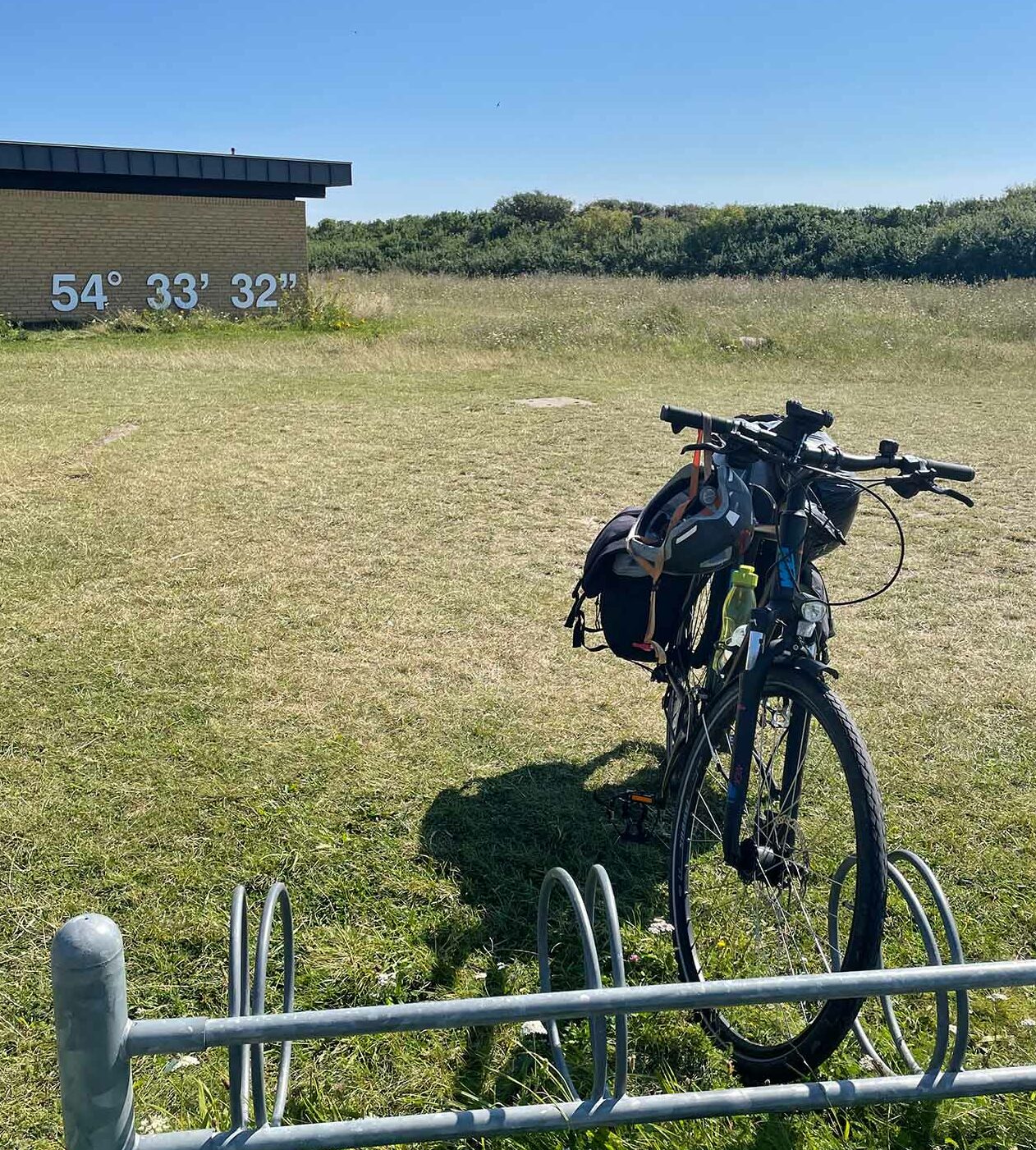
The bicycle and an AirTag
But I at least had one ace up my sleeve against this kind of bike theft:
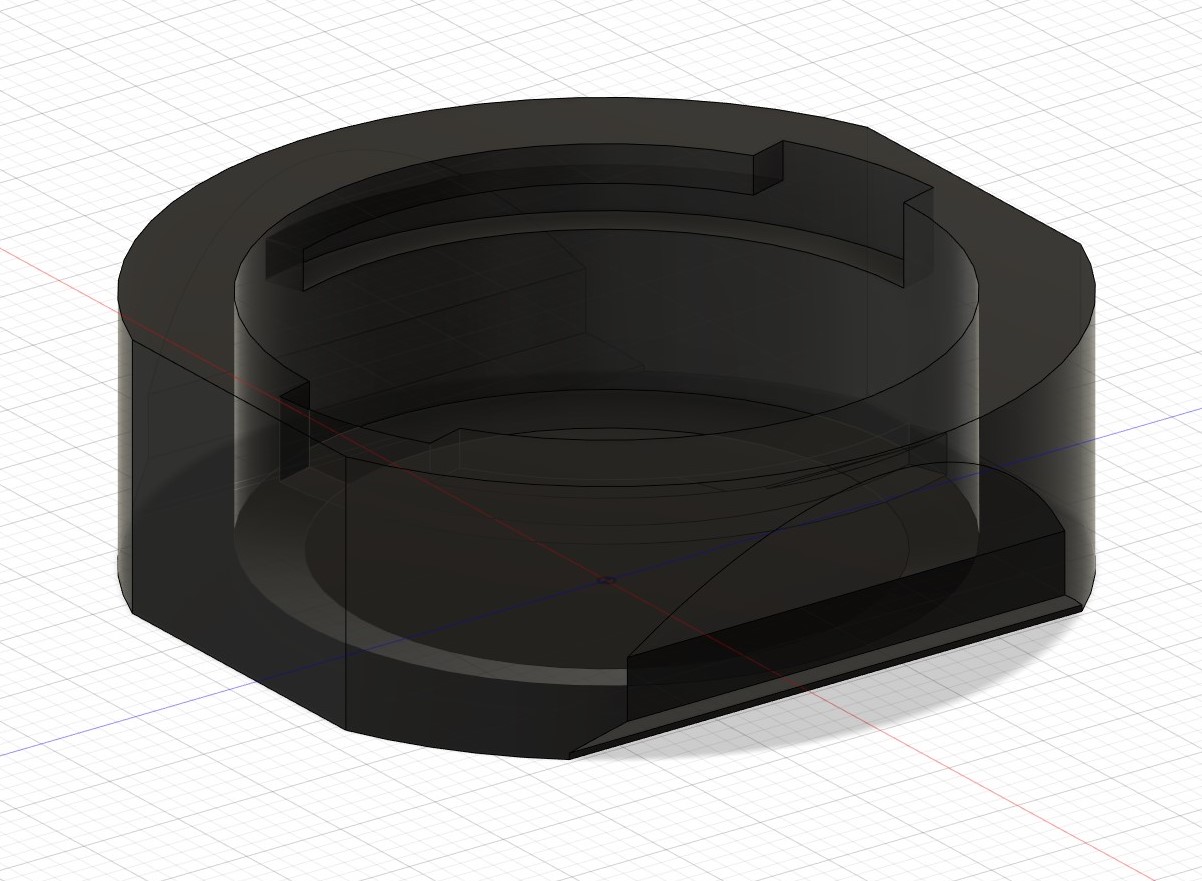
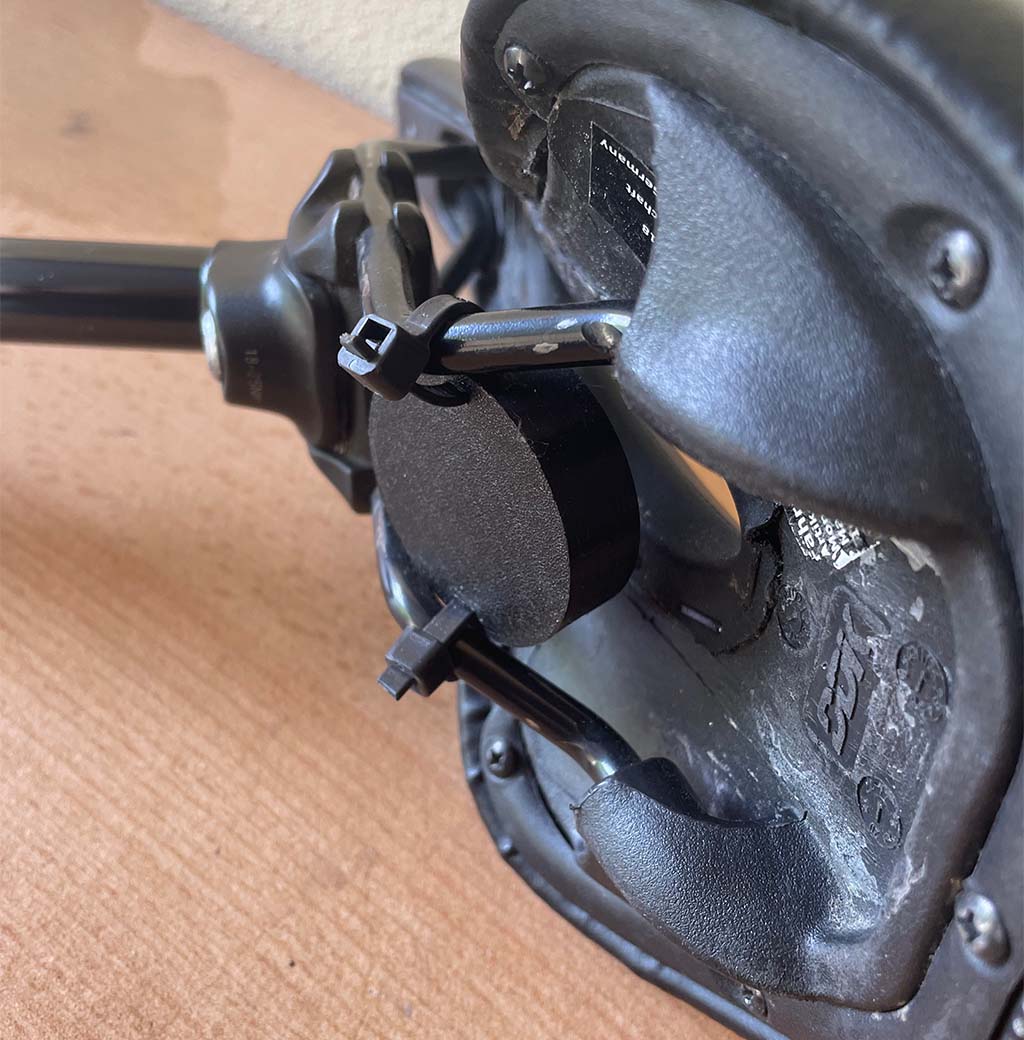
When the American tech company Apple introduced its small tracking device, the "AirTag," a year ago, people quickly came up with ideas to attach these small, disc-shaped item finders (designed especially for keys) to other objects. While manufacturers of suitable mounts for the coin-sized tracker were still busy preparing to sell such accessories, I used a 3D printer to print a self-designed mount.
Back Next
The catch with the AirTag story, however, is that these trackers have also been used for abusive purposes in the past (e.g. stalking) — which is why third parties moving around with the AirTag now quickly receive a notification that their location is visible to me. So its effectiveness in the event of a theft is limited, since the thieves may quickly find out that the bicycle's location is not secret. In addition, Apple directly provides an option to locate and deactivate such an AirTag if it is moving along with someone. Lastly, the location of AirTags can only be determined precisely when an iPhone is near the tracker and can update the location that way. An AirTag does not have a GPS receiver or anything similar; tracking works only through the now very dense network of Apple devices that can detect one another.
So the primary purpose of AirTags is to find lost items again — not to track down thieves.
Quo vadis, AirTag?
After I couldn't find my bicycle at Heidelberg Central Station on Friday evening as expected, the first thing I did was open the "Find My" app on my smartphone: maybe I could use it to find out where the bike was.
Back Next
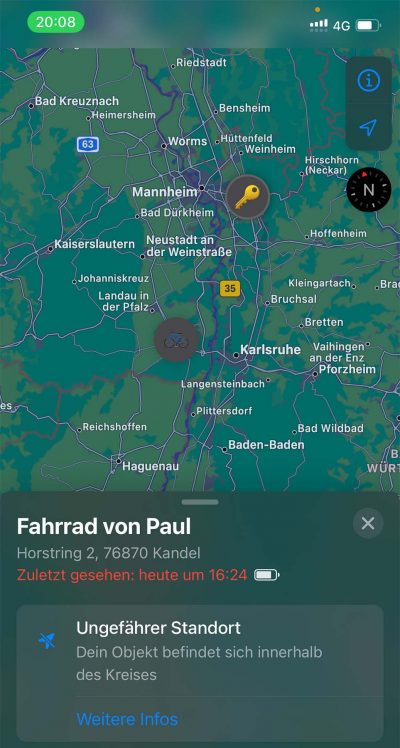
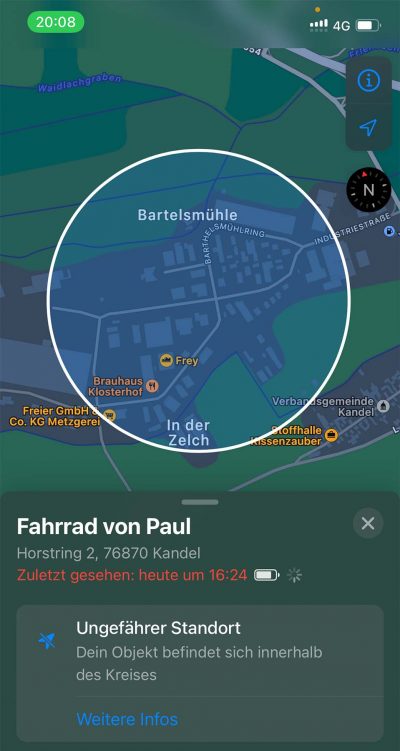
Thanks to the app, I was able to find out that the bicycle had definitely been stolen, and that I hadn't simply — as had happened before — overlooked it again. What was unfortunate was that the AirTag had last been located almost four hours earlier, which seemed unlikely with a network as dense as Apple's Find My network.
On top of that, the AirTag was not located precisely, but only somewhere in the town of Kandel near Wörth am Rhein, apparently with quite a high degree of inaccuracy (more on that later). All of this led me to suspect that the thieves had probably found the AirTag and deactivated it accordingly. So I first went through the standard procedure after a bike theft: file a report with the police, then inform the insurance company about the theft.
The fact that I had an AirTag in the bike already helped me at that moment too, even if only indirectly: after all, I could prove that the bicycle was definitely not in my possession.
Cool, my faithful bike was stolenMay 6, 2022
A new hope
After I spontaneously met up with a good club colleague, Jakob from the Center for Social Innovation (ZFSI) to prepare a workshop project, I checked the "Find My" app on my smartphone once again while telling the bike story, to show that the AirTag was no longer reporting in.
But I was wrong: the AirTag had checked in again just a little over an hour earlier, this time with an exact location instead of just a rough area. That revived the hope of finding the bicycle after all.

With that hope in mind, we called the police in Wörth (the responsible police station) to ask whether they had the capacity to join us in visiting the address we had identified. We were fully aware that it was entirely possible that in Kandel we would find either only a discarded AirTag without the bicycle, or a closed space (e.g. a residential building) where even with the police we would have no chance of getting the bike back ourselves.
After the officer on duty was initially somewhat surprised and puzzled that I had been able to determine the bicycle's suspected address, he agreed to support us if necessary if we made our way to Wörth am Rhein. For us, that meant organizing a car to cover the 80 kilometers to Wörth am Rhein at short notice — thanks to a disruption on the S-Bahn connection from Heidelberg to Karlsruhe, using public transport was nearly out of the question; even with tight connections, just getting to Wörth am Rhein station would have taken at least two hours, plus the trip to the police station and then on to Kandel. As someone with a driver's license but without a car of my own (why would I, I have/had a bicycle), I had to make a few calls to borrow a car on such short notice.
Thankfully, I was able to borrow a VW van from a family friend and drive it to Wörth am Rhein in an hour. So, easier said than done, we were soon sitting in the T5 on the highway toward Karlsruhe. There we turned off toward Rhineland-Palatinate, where we quickly reached the town of Wörth am Rhein.
In Wörth am Rhein, we met the police at the station to arrange a meeting point with a patrol car at a nearby location; we chose a gas station around 800 meters before the address we were looking for.
At this gas station, after a short wait, we met the police, who then followed us into the town of Kandel and close to the tracked location. In the meantime, the AirTag had not checked in again — so my tension over whether I would actually be able to find the bicycle was very high. After all, it would also have been embarrassing to drive to a location with the police only to find the coin-sized tracker lying in the street.
White Sprinters and lots of bicycles
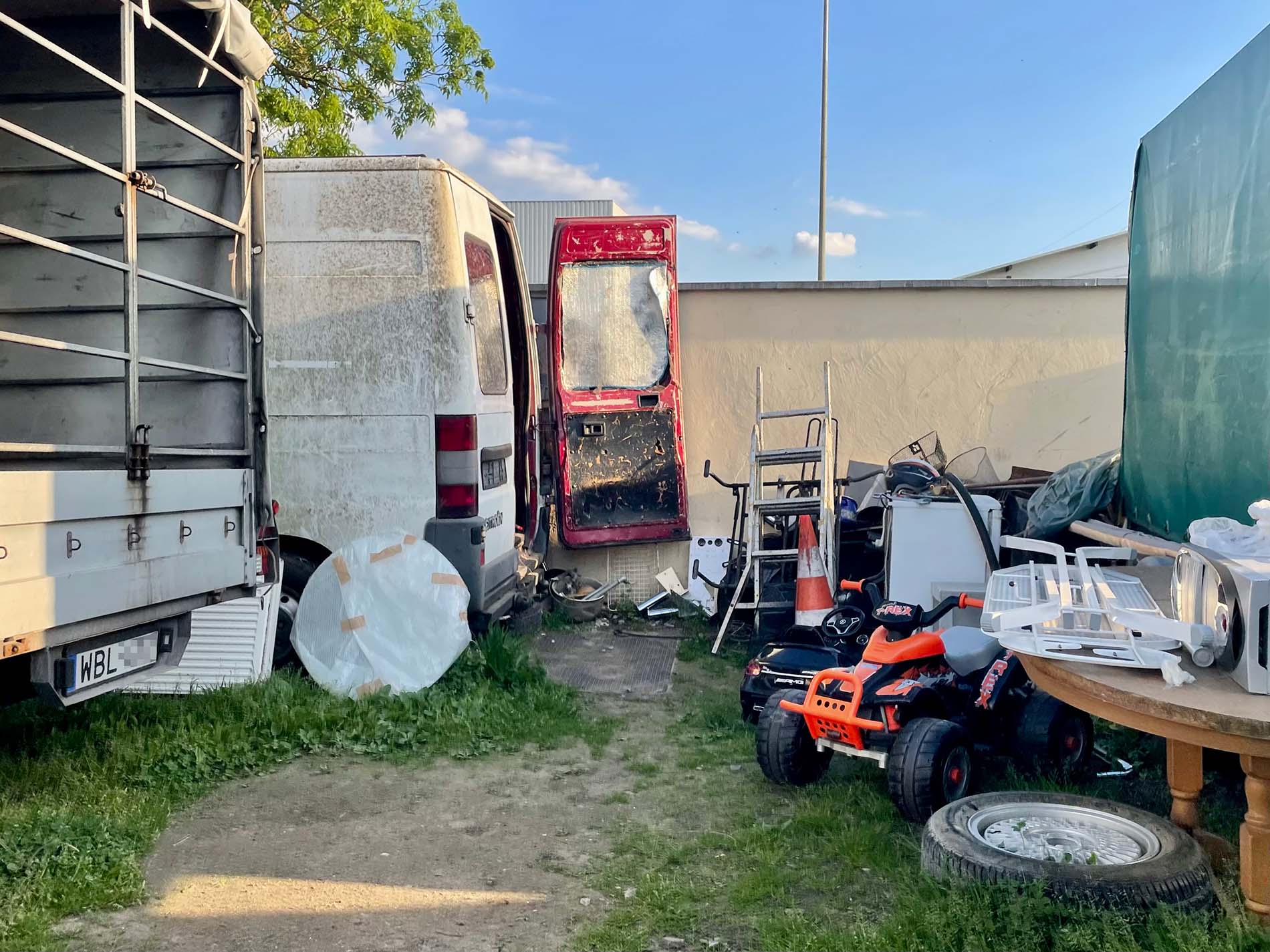
When we arrived in the yard, we were greeted by a wide-open gate, which the four of us (two police officers, Jakob, and I) walked through. Right behind it, next to truck trailers, there were a whole row of decommissioned Sprinters as well as another small van that was currently being loaded with bicycles (all without front wheels). We also came across three Hungarian men who were actively loading the bicycles. While the police tried to establish the identities of the three men, I walked around the yard a bit to try to establish a connection with the AirTag. After I initially had no success making contact and was already somewhat afraid that the bicycle was no longer on the premises, a signal from the tracker suddenly reached my smartphone. By walking around the area where a connection to the AirTag existed, and repeatedly making it play a ringtone, I was able to identify a somewhat barricaded white van (also decommissioned) in which the AirTag was at least located. After clearing the entrance, we were able to enter the van — and found a stack of bicycles covered with a blanket:
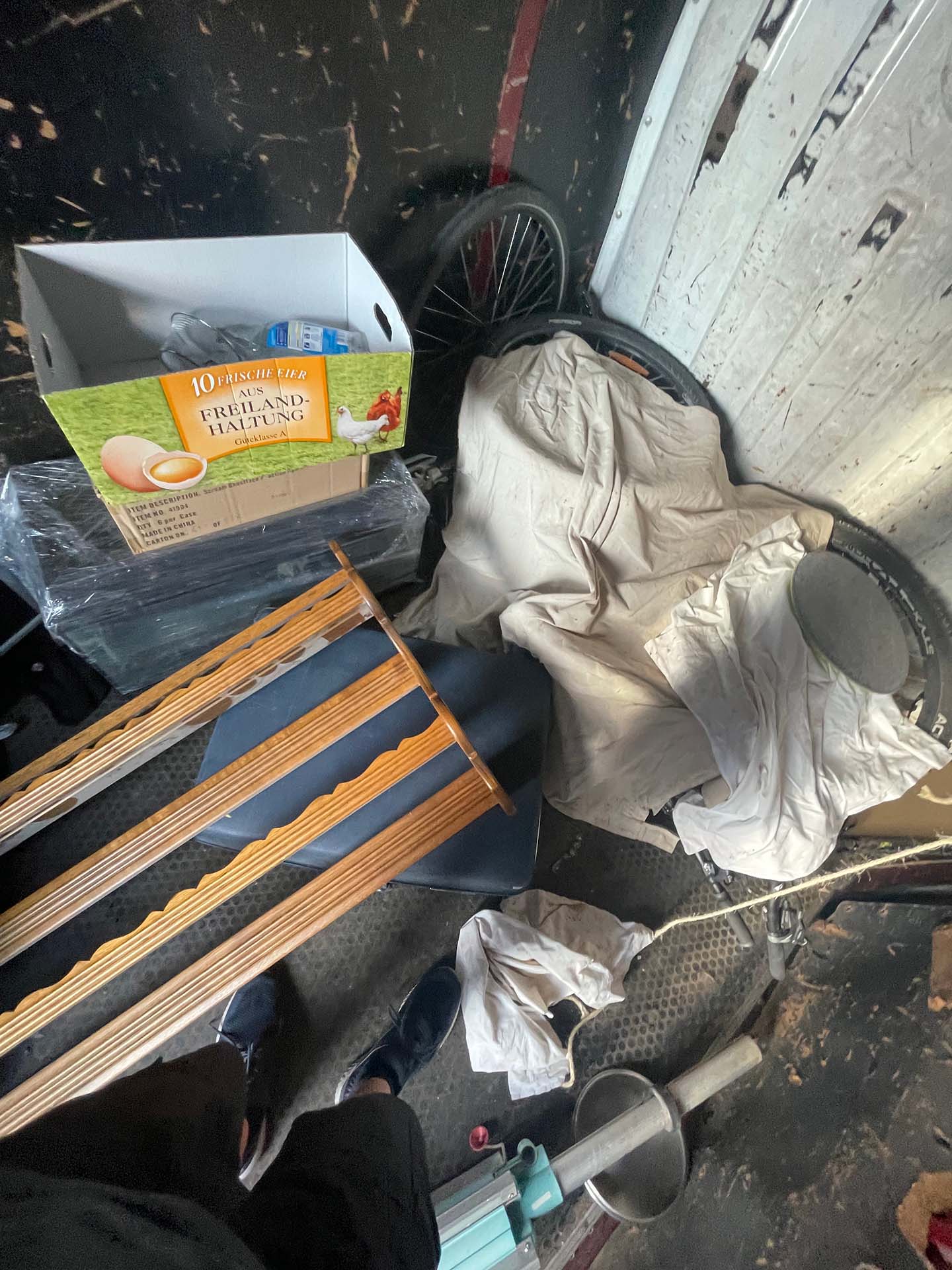
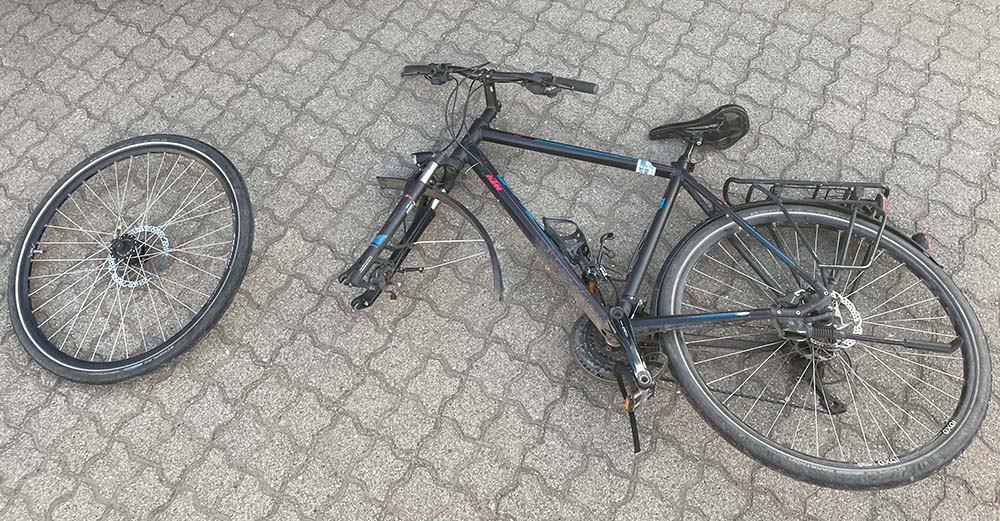
After I had removed the blanket and a few bicycles from the pile, I could hardly believe my eyes: there really was my bicycle! Completely reconfigured for the most space-saving transport possible (pedals turned inward, handlebars twisted, and front wheel removed), there at the very bottom lay the bicycle that had already carried me tens of thousands of kilometers through the world.
So I took the bicycle out and inspected it — after a bit more searching in the van, I was also able to find the front wheel. In front of the van, I even found the helmet, which had been locked up together with the bicycle and stolen as well.
Back Next
With the bicycle loaded up, we gratefully let the police officers get back to their work, as they were just recording the identities of the three men — given the find and many other bicycles in a similar transport configuration, there was reason to suspect that more stolen bicycles might be found. It should also be said here that I explicitly do not assume that the men we encountered loading the bicycles were the same men who stole my bicycle — for example, it is also possible that the bicycle was purchased at a flea market that same day. As always, the presumption of innocence applies first.
What can be learned from this?
So, what did I learn from this case?
- AirTags can be very helpful tools in cases of bike theft, even if that is not really what they were designed for.
- Communicate with the authorities: without contact with the police, an action like this would not only be dangerous, but highly illegal. Taking the law into your own hands is inappropriate in a case like this.
- Be careful with your trusty steed: I now have no choice but to get a new lock — this time I'll go for something even more secure, and if it can be avoided, I won't leave the bicycle outside overnight anymore.
- Don't lose hope: after the first evening, I had hardly any hope left, to the point that I had already started looking around for a new bicycle. But especially within the first 48 hours, with some luck and technical help, you may still be able to find the bike.
Press release from the Wörth am Rhein police and thanks
Here is the police press release about the recovery of the bicycle: https://www.presseportal.de/blaulicht/pm/117686/5217496
At this point, my thanks go to everyone who helped recover the bicycle: especially Jakob and the Wörth am Rhein police.