Hej Sweden!: On the catamaran ferry from Sassnitz to Ystad and then on to Malmö [Part 2]
On the second day of my trip, I leave Germany and take the ferry to Ystad, then continue by bike to Malmö. Along the way, I ride on the most beautiful cycle paths of the entire journey.
The early bird catches the ferry
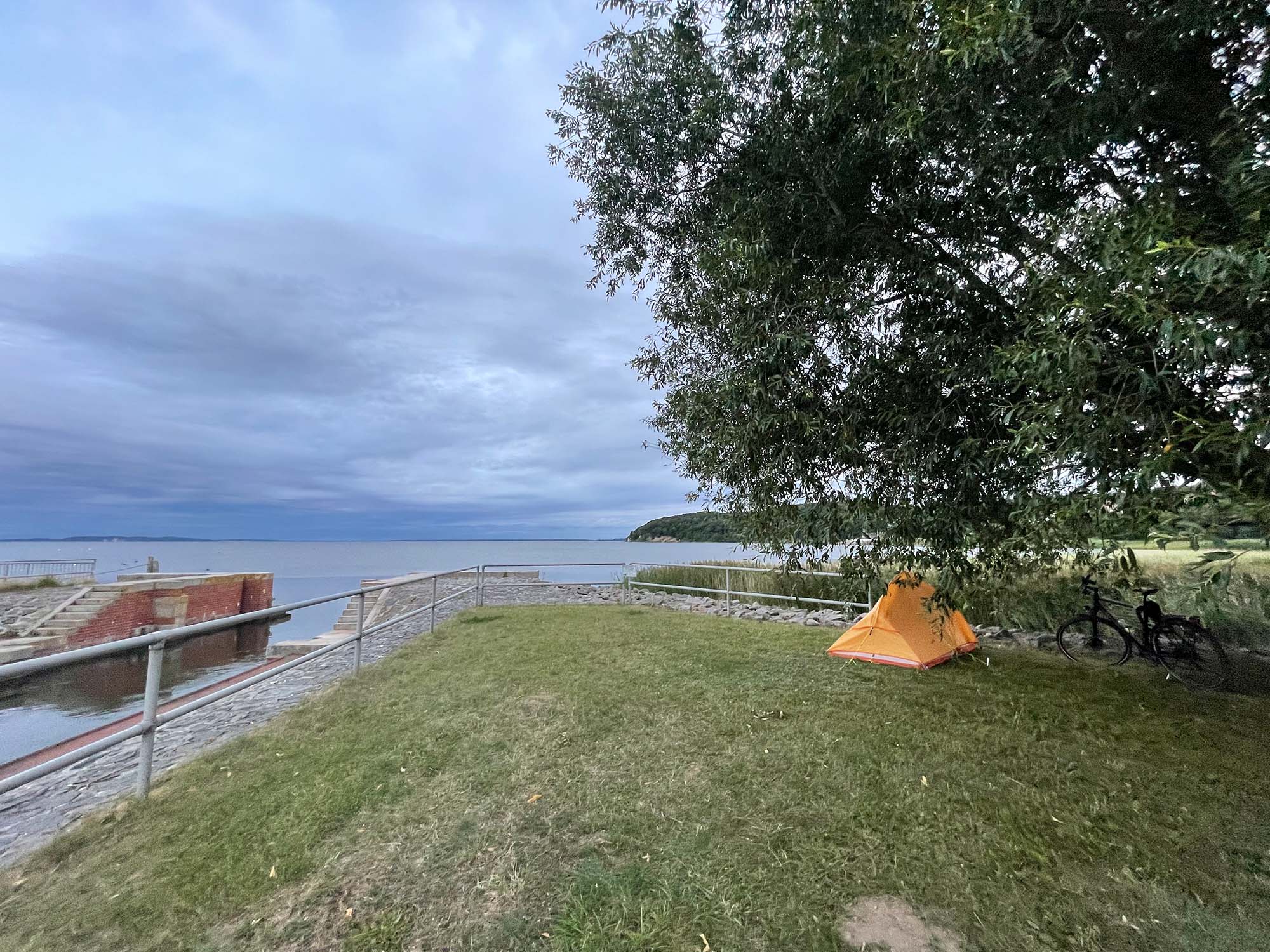
After a very short night near Sassnitz, my alarm was supposed to go off at 06:00 - but thanks to considerable noise (I had rather unfortunately pitched my tent right next to a larger railway and traffic route, as I could see at first light), I was already awake at 05:00 after barely three hours of sleep.
Despite the tiredness, I quickly packed up the tent. After testing the packing process once on a patch of grass back home in Heidelberg, I still spent a good twenty minutes on my second attempt folding the tarps until all the parts fit into the right bags.
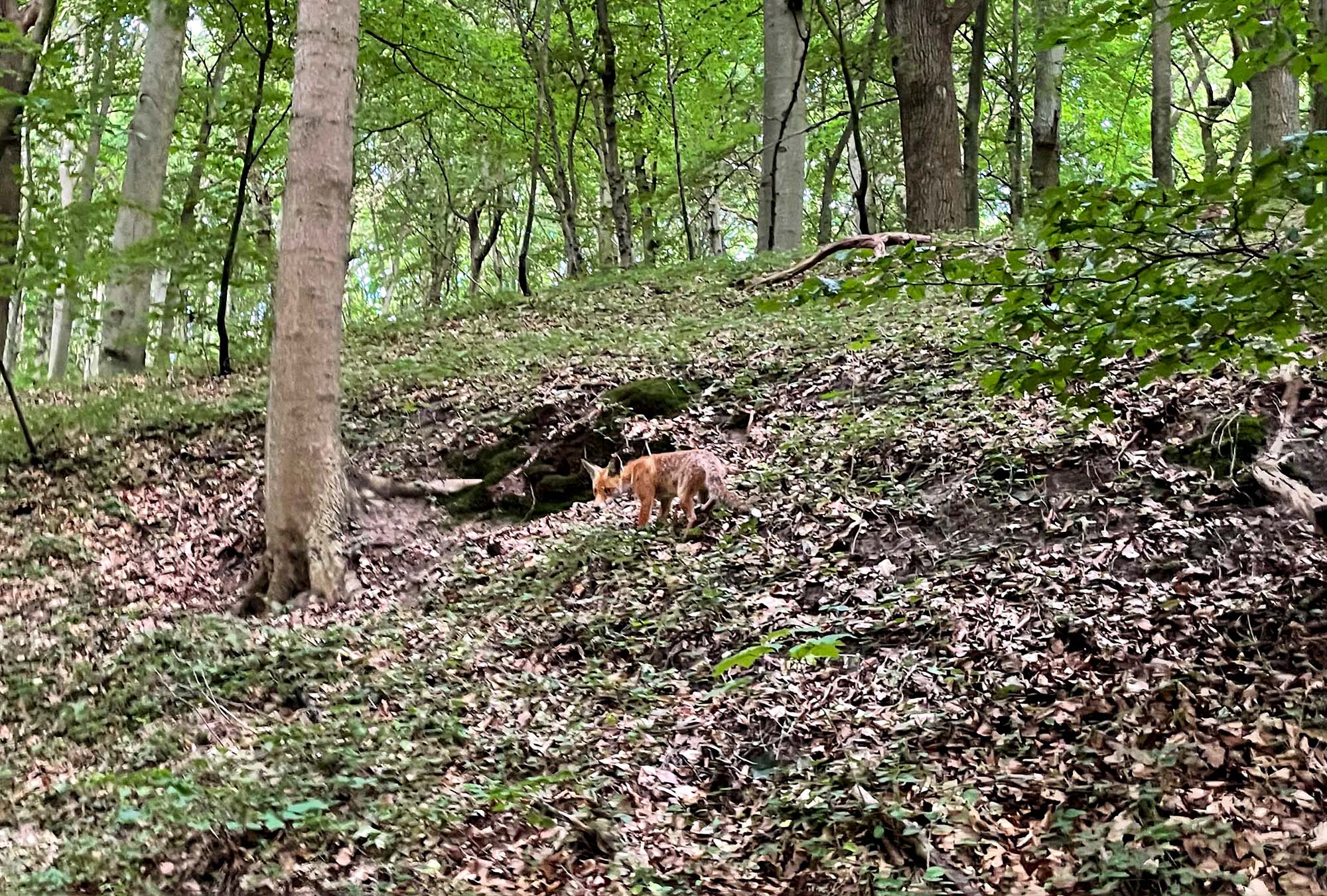
After that, I packed the bike again and set off for the ferry. On the five kilometers from my overnight spot to the ferry port, the route led me along a well-developed cycle path through a forest. In that forest, a deer suddenly jumped right onto the bike path in front of me and ran alongside me for around 30 meters before leaping back into the woods on the other side of the path. After that surprise (when I think about encounters with wildlife like that, I tend to underestimate just how big such deer really are: the animal running in front of me must have been at least 1.3 meters tall), I also spotted a fox in the forest, which was surprisingly trusting, so I was even able to take a photo.
I continued on to the ferry port in Sassnitz, where the car lane is only separated from bicycles and pedestrians at the very end. After that, cyclists continue onto the ferry terminal grounds, although in my case that was initially impossible: a freight train was being unloaded at that very moment. Luckily I still had some time and was able to ask the very friendly unloading staff to move the train briefly across the road crossing and clear the route.

Across the Baltic Sea at 85 km/h
So at 07:25, five minutes before the official check-in time, I was standing with five other cyclists at the North Terminal of the ferry company FRS Baltic, all of whom were planning day trips to Ystad.
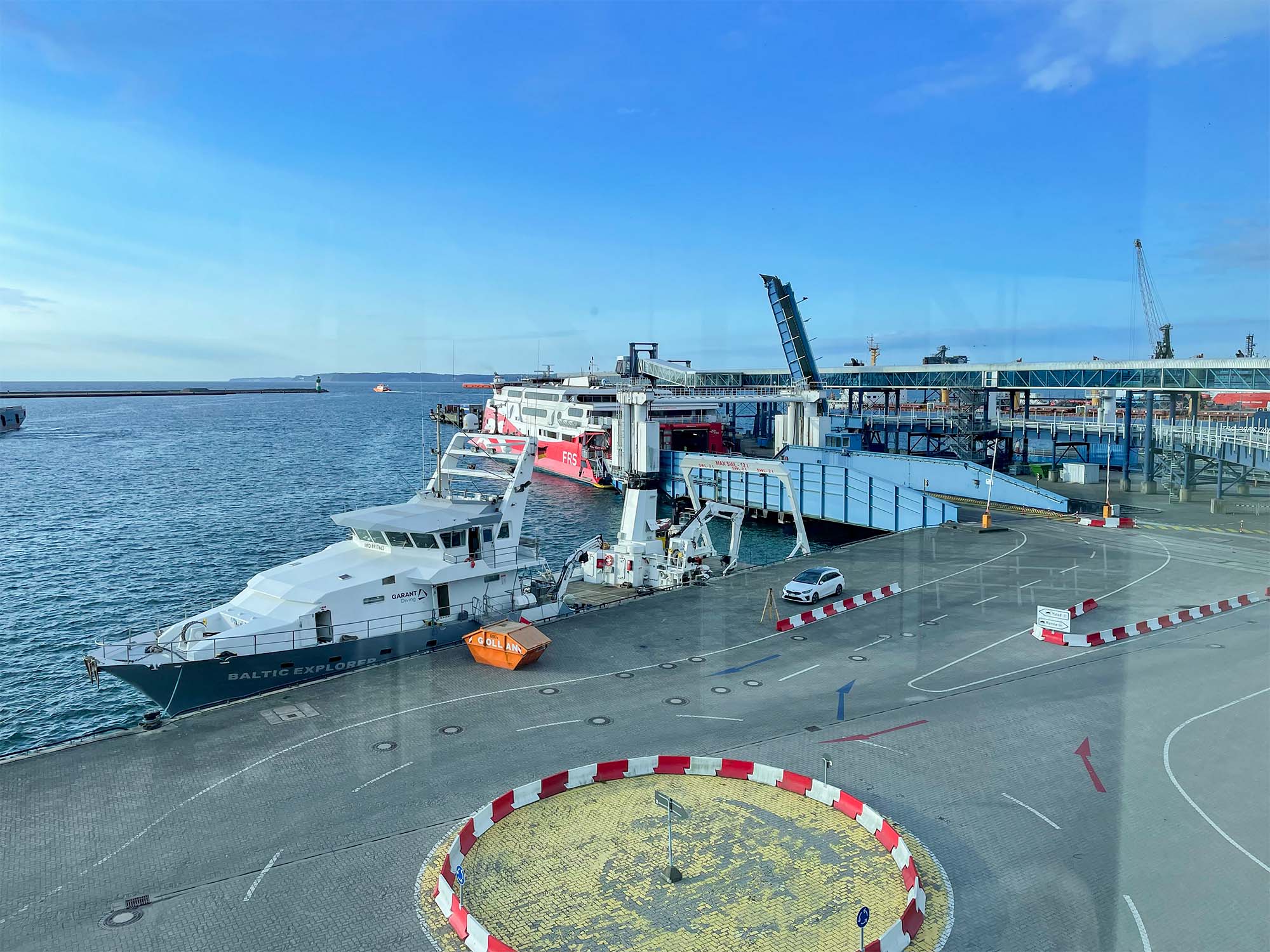
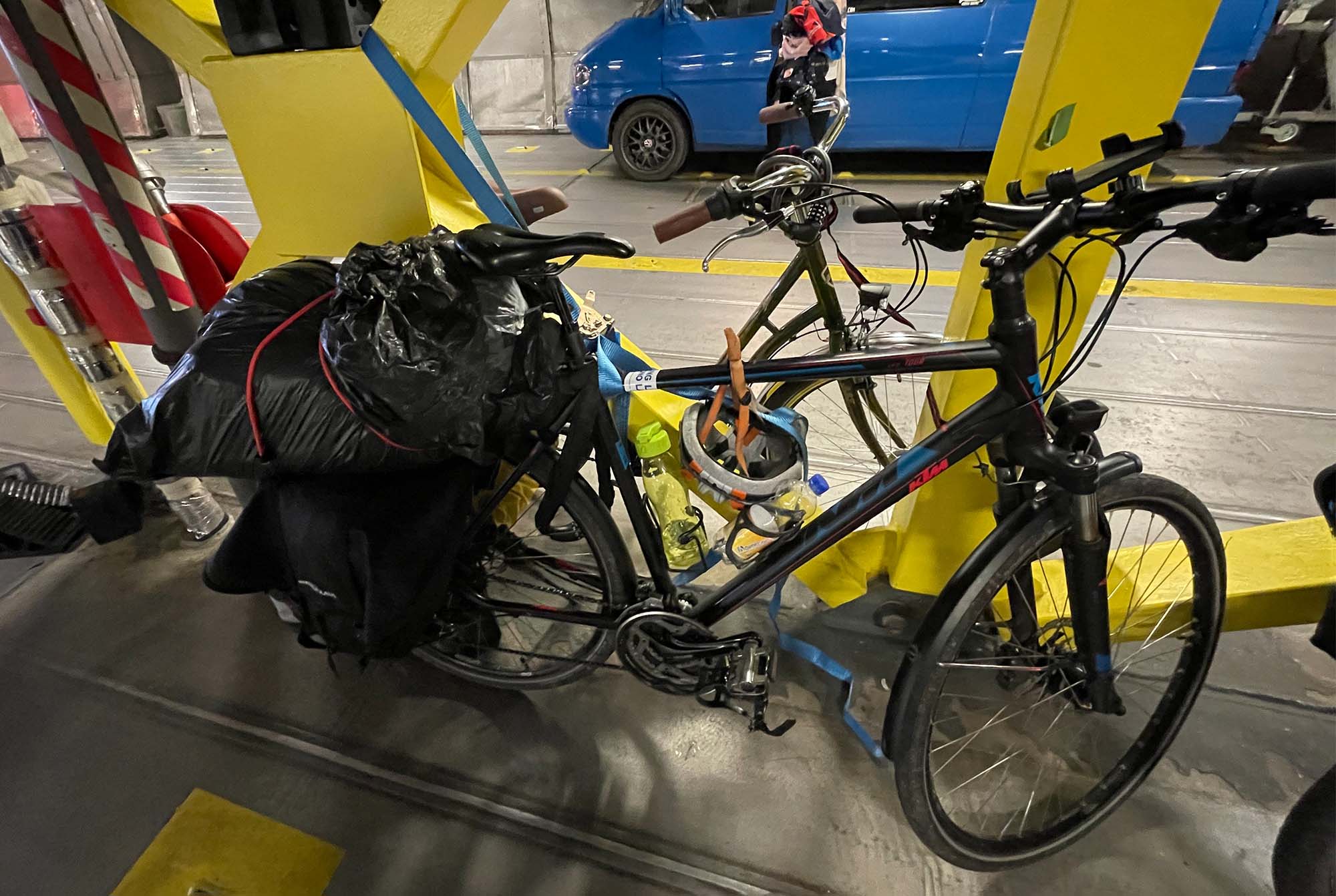
After we cyclists were allowed to board the ferry before all the motorists, it was time to stow the luggage and secure the bike. Using semi-functional tie-down straps (on most of them, the ratchet function no longer worked), we fastened the bikes to a railing on the lower deck of the ferry. The luggage that I didn't want to carry through the ship, I wedged between the railing and the bike. That made it very unlikely that anything would fall over or possibly slide under a car.
With my backpack, I headed to the rear deck of the 91-meter catamaran so I could watch the rest of the cars being loaded. Packed with around 200 vehicles, we set off from Sassnitz to reach Sweden in 2.5 hours.
The farther we got from the mainland, the faster we became: at first it was still a very pleasant "standing outside" speed, where the wind from the ride was not yet too noticeable, but a bit farther out it became so fast that you really had to hold on well (and your smartphone too, if you wanted to take photos or videos).
With its 40,000 hp jet propulsion, the ferry was able to accelerate to up to 88 km/h during the crossing (measured by GPS), cutting through the water so smoothly that I could barely notice any waves or anything similar.
A ferry in catamaran design is truly fascinating. We're traveling across the open sea at 85-90 km/h, the wake behind the propulsion is 5-7 meters high, and yet it's as calm as on a classic ferry. pic.twitter.com/sk9kDbaLadAugust 7, 2021
https://p3g3.de/content/media/2026/04/frsbaltic-1.mp4
This FRS catamaran, which operates on the route between Sassnitz and Ystad and which I took, holds the record for the fastest transatlantic crossing at 2 days, 17 hours, and 59 minutes. Since the record was set in 1998, it has remained unbeaten (the average speed during that crossing was 76 km/h).
Once the German coast was behind us, the duty-free shop opened and many passengers stocked up on alcoholic drinks: with Sweden's high alcohol taxes, shopping completely free of VAT was very attractive for both residents and tourists of the country.
I, on the other hand, spent almost the entire time on the upper deck and occupied myself with catching up on some of the sleep I hadn't gotten during the night.
After a short nap (the modern Anglicism for that is probably "power nap"), Sweden was already visible on the horizon.
Since I had been advised while boarding the ship to start "freeing" and reloading the bike early, I went down to the lower deck ahead of time, where I found my bike and luggage in the same condition as when I had secured them.
"And this is all really a bike path?" - The first tour in Sweden on the best cycle paths of the trip
And just like that, I was already on Swedish soil:
Hallå 🇸🇪! pic.twitter.com/1En6YLtAncAugust 7, 2021
It wasn't even noon yet when I had already found a bakery in Ystad that sold me a cinnamon bun. In doing so, I realized with some dismay that Sweden does not use the euro: although I had spent holidays in Sweden several times before, I had never personally taken care of food shopping back then. Spoiled by the euro on my previous trips, I had simply not thought about the fact that far from all countries have adopted it.
As it quickly turned out, the foreign currency problem was not nearly as big as I had thought: everywhere, yes really everywhere, you can pay easily by credit or debit card. In this area, Sweden is years, if not decades, ahead of Germany. Even at the smallest market stalls, you can just pay quickly and easily, without minimum amounts or absurd fees.
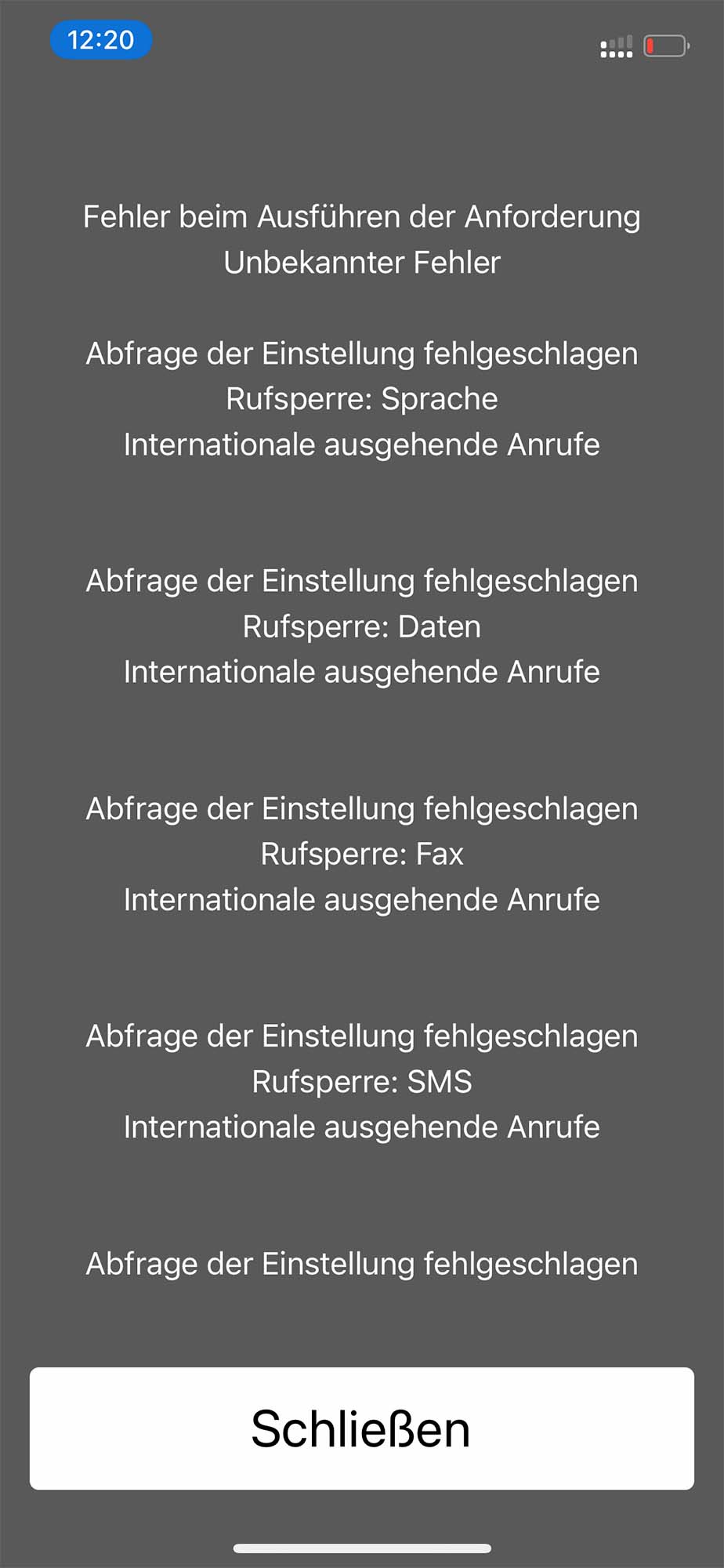
After the cinnamon boost, I was faced with the next problem, namely mobile service no longer working: for reasons that were still rather mysterious to me at the time, my smartphone connected with my data SIM (so I use the device in dual-SIM mode) only through the Telekom phone contract to the network in Sweden.
Since I couldn't immediately find a solution to the problem, I bit the bullet and used a 50 MB day pass in my Telekom phone contract for 2.99 euros to get mobile data and downloaded the route to Malmö. Somewhat frustrated by the whole mobile network issue, I got on my bike for the first 100 kilometers in Sweden.
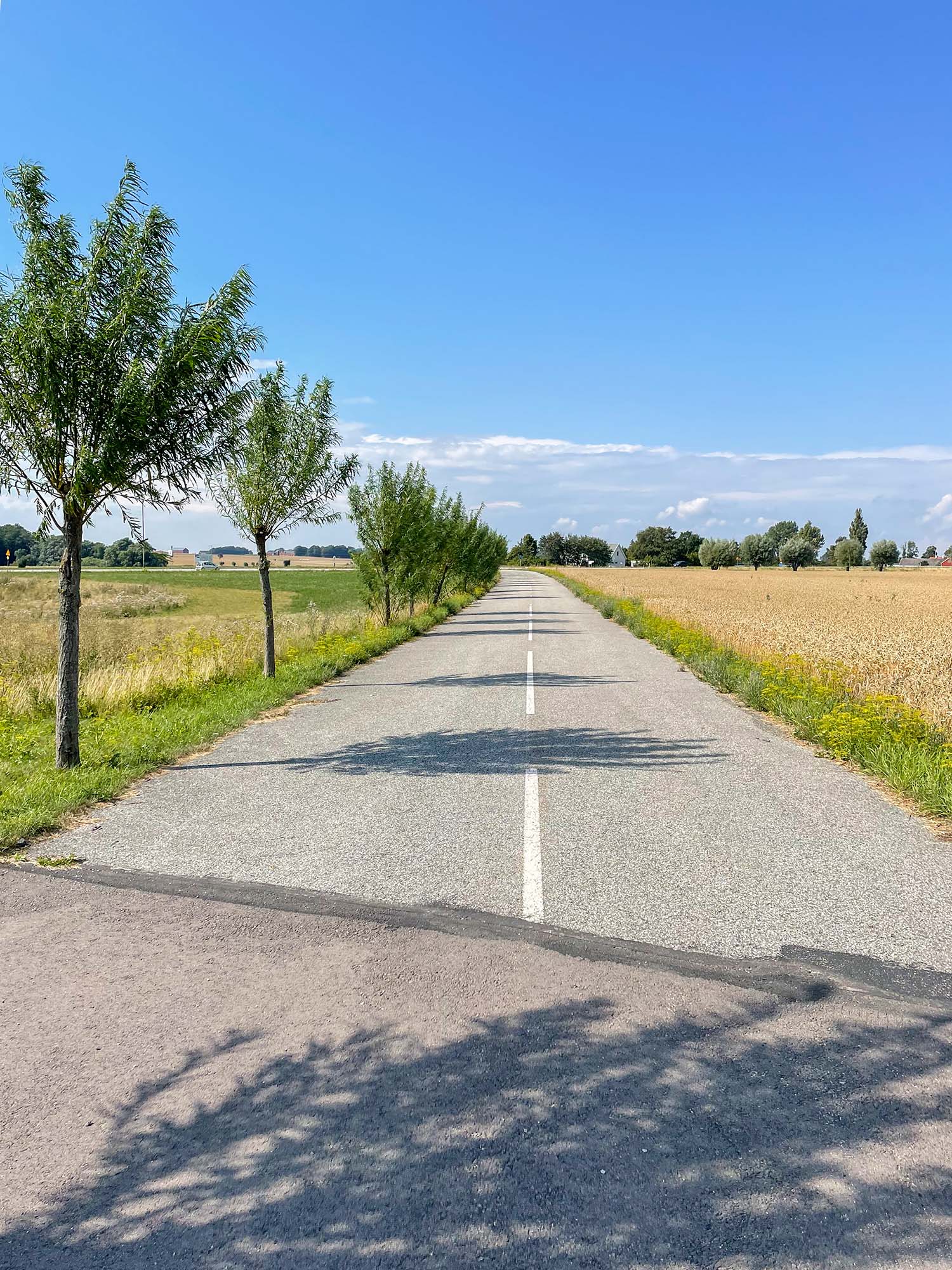
The first 50 kilometers were very pleasant to ride. Before Trelleborg, I took a break at a supermarket, where I looked into the mobile service problem in more detail.
I even briefly called Vodafone's international support, my data provider, to get to the bottom of the issue. Then suddenly the problem became obvious to me: thanks to dual-SIM operation, which I had not yet used abroad until then, I still had to manually enable the data roaming setting for the e-data SIM in the settings.
That allowed me to connect again to the excellent Scandinavian mobile network, and, completely relaxed and stocked up with fresh water, continue on to Malmö. I arrived there around 18:30, pitched my tent at a beautifully located campsite by the sea, and then turned to a question that in Sweden is often associated with very high expenses: what do I actually want to eat?
At a fair in Malmö
While looking for food, I walked along Malmö's beach for quite a while, where I came across a fair. After two years without visiting an event of this kind, I could truly appreciate the unique atmosphere there: people were dancing and riding the Ferris wheel as if Corona had never existed.
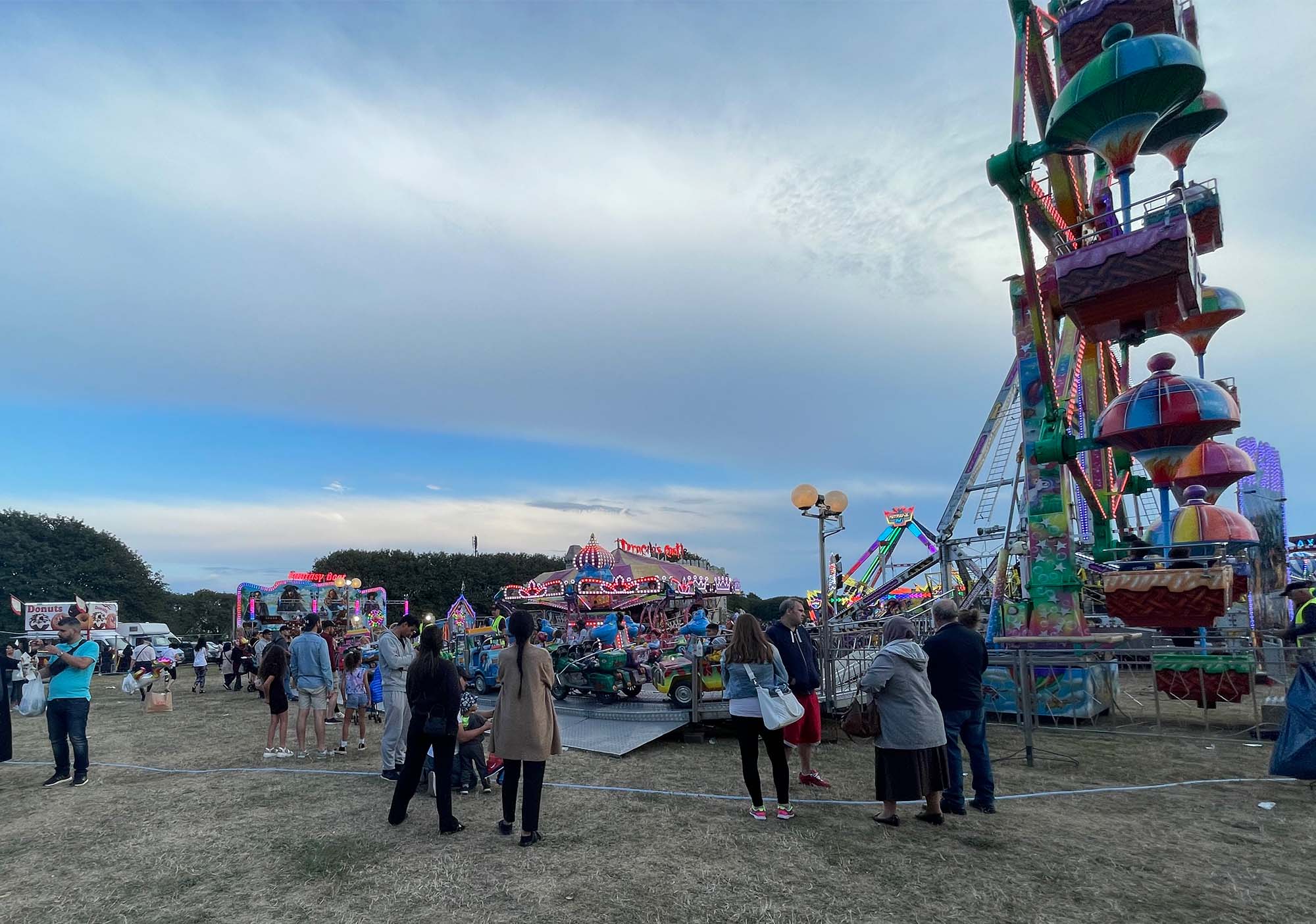
Unfortunately, I didn't find any culinary highlight at the fair, since I didn't want to fuel all that exercise with typical fair food like churros or sausages. My way led me farther into the city, and after four kilometers I finally found a pizzeria where I could buy a medium pizza for 149 Swedish kronor: a mere 15 euros, then, although the pizza did taste very good. But by that point at the latest, it became really clear to me that Sweden is very expensive to live in.
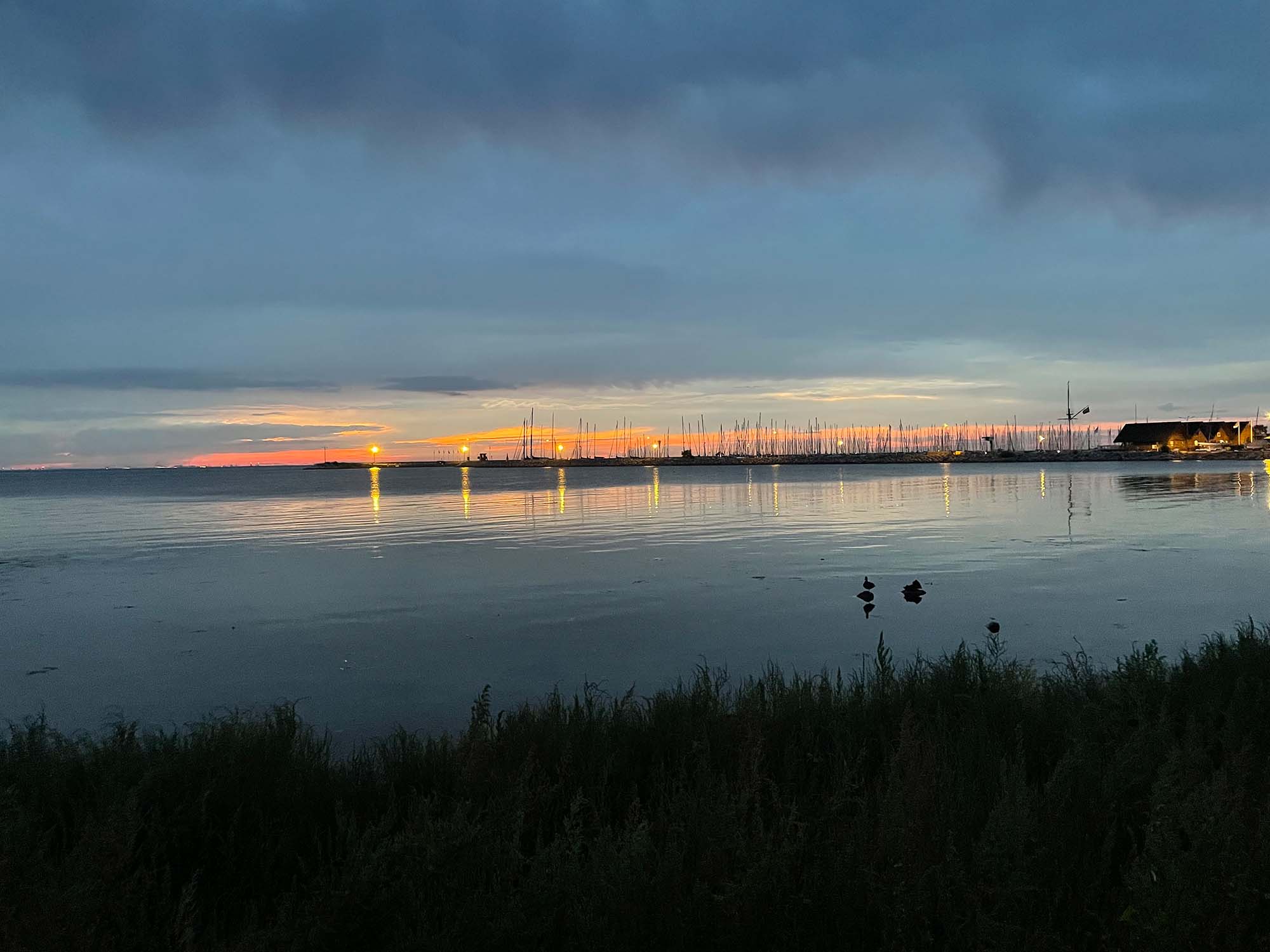
After three hours, I returned to the campsite at dusk, where I immediately lay down in the tent to catch up on the sleep I had missed.