Eight days, seven nights: 1,003 kilometers by bike along the German-Scandinavian coast
From Greifswald to Lusatia: what would have been 350 km directly turned into a 1,003 km cycling adventure for me along the Scandinavian coast.
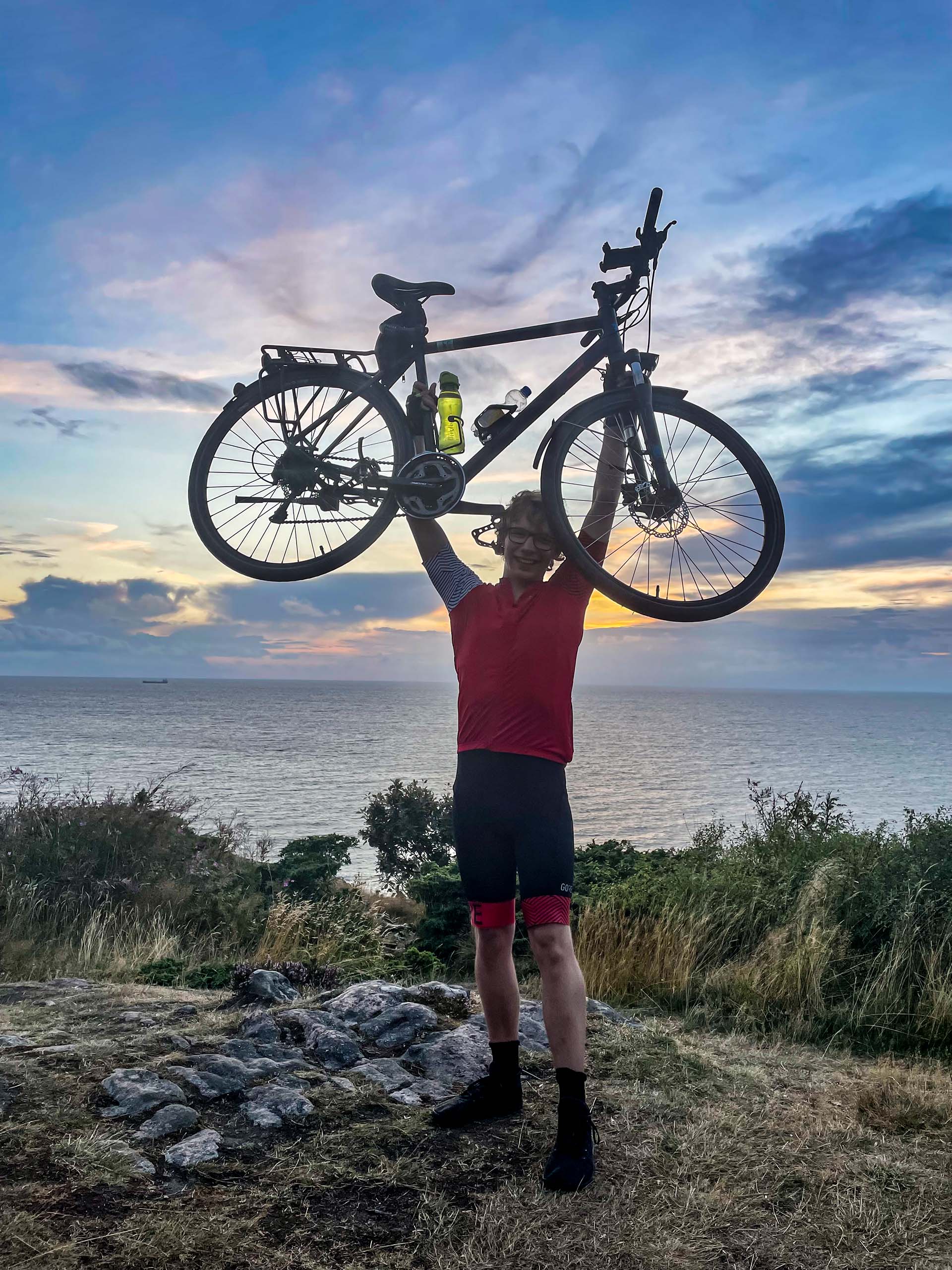
Prologue: All (cycling) roads lead to Scandinavia
When I was working on my summer plans in June of this year, I was faced with the following situation:
Six weeks of summer vacation. Actually a perfect opportunity to immerse yourself in foreign cultures and truly experience more than just a purely touristy holiday (that’s how I explored the west coast of the USA back in 2019). However, COVID was still a major factor in travel planning, and long stays in other countries were either impossible or very hard to plan. Internships were also hardly back in person yet, and spending several weeks of my summer vacation in front of a screen doing a remote internship was not an option for me. So I looked into what kind of adventure I could take on without long-distance travel and largely independent of infection rates. What came out of that was a rough plan for a multi-day bike trip to Scandinavia. The advantages of such a trip were that I could explore two wonderful Scandinavian countries without flying or taking international train journeys: Sweden and Denmark. Both countries are also known for very good bike paths, few mountains, and a bike-friendly culture.
With this idea, the months passed until the beginning of my last school summer vacation came around. And with about a week to go before the planned departure, I started looking up the destinations in more detail.
This detailed post documents my summer adventure in three countries over nine parts, by bike along rocky coasts, over sand dunes, and through forests — so grab a tea and enjoy the journey.
Preparation
An undertaking like a multi-day bike tour requires preparation. Train and ferry journeys in particular often have to be booked a bit in advance, especially if you want to take a bike along. So with my seven days of preparation time, I was cutting it pretty close — three to four weeks would definitely have been much more relaxed.
But first I needed an exact route: where did I want to ride each day, were there difficult sections or major climbs in between? The latter wasn’t something I had to worry about for Scandinavia, since the Skanden are not reachable in eight days (there and back). The destination of my trip was decided first: in Forst (Lausitz), I could meet acquaintances who could take me (and my bike) back to Heidelberg after a few days of relaxation. Looking for a starting point, I went exploring in Google Maps for ferry connections (thankfully marked there) from Germany to Sweden. The requirements for the connection were to keep the distance to Sweden as short as possible and to have a departure point that was easy to reach by bike or train.
I found the Sassnitz -> Ystad route operated by FRS Baltic, which makes the crossing to Sweden in less than three hours, to be a very good fit.
Next came the search for a connection from Sweden to Denmark — from Ystad I would ride west toward Copenhagen, so I would need another ferry connection, or better yet a bridge to Denmark. The Øresund Bridge would have been the natural candidate, but unfortunately the bridge cannot be crossed by bicycle. Taking the train from Malmö to Copenhagen would have been possible, but because I was booking so late, bringing a bike was no longer possible.
A bit farther north, however, there was a connection from Helsingborg to Helsingør that can be crossed quickly and affordably by ferry. That’s why I chose Helsingborg as my overnight stop, so that I could ride from Helsingør to Copenhagen (around 65 km) first thing in the morning in Denmark.
So the plan was as follows:
Sleep in Sassnitz on day 1, then travel via Ystad to Malmö and stay there as well, then continue on to Helsingborg. Spend another night in Helsingborg, take the ferry across the Øresund Strait in the morning, and continue straight on to Copenhagen. Then I would still have four days left to get from Copenhagen to Lusatia.
Planning then continued with the ferry connection back to Germany, where only two options came into question: either from Rødbyhavn to Fehmarn and then from Kiel toward Berlin, or from Gedser to Rostock. Since the connection to Rostock was faster and easier to reach from Copenhagen, I chose the final sea crossing from Gedser to Rostock with scandlines. While I would have needed three days from Copenhagen to Rødbyhavn, Copenhagen to Rostock was realistically doable in two days.
So the rough framework was set. The first thing I booked was the connection from Ystad to Malmö: 34 euros later (5 euros of that for the bike ticket), the first boarding pass landed in my inbox. I couldn’t pre-book the other crossings over the Øresund Strait and to Rostock, so next I took care of the overnight stays.
It quickly became clear that I would definitely have to camp — hardly any youth hostels still had beds available, and even in Stralsund the youth hostel had no space left: because even if the booking tool of the German Youth Hostel Association says "Rooms available from xy€" after entering the place and date, you can only actually see availability after clicking on "Reserve room." Since before that I had only clicked as far as the first "Rooms available from xy€" screen, that option unexpectedly disappeared as well.
On the other hand, completely against all expectations, I immediately found a bed in a room at the Copenhagen Youth Hostel, which I planned in right away. Apart from the overnight stay in Rostock, where I found a cheap hostel on the edge of the city, I either found no accommodation at all or only very expensive hotels, which were not an option for me. I definitely had to bring the tent — so I decided to camp on all the other nights (in Berlin I was luckily able to stay with a friend; otherwise that stop would have caused me even more headaches).
Lastly, I took care of the train connection from Heidelberg up toward Sassnitz. As it turned out, booking this late was one of the biggest problems of the trip: defying all logic, when bike transport is selected in the DB Navigator, it doesn’t just show connections with free bike spaces, but all connections with trains that potentially offer bike spaces. Even if you click all the way through to payment, the check of whether any bike spaces are actually still available only happens when the ticket is actually booked, in parallel with the money being charged from your account. That makes it almost impossible (especially as a Bahncard 100 holder or when using the DB summer ticket) to find out when bringing a bike is still possible at all. After 2 hours (!) in the DB travel center, I finally found a bizarre connection via Mannheim and Berlin where bike transport was still possible.
Happy to have found anything at all, I booked the connection, and three days before departure the framework of the trip was set.
Preparing the bike for the trip
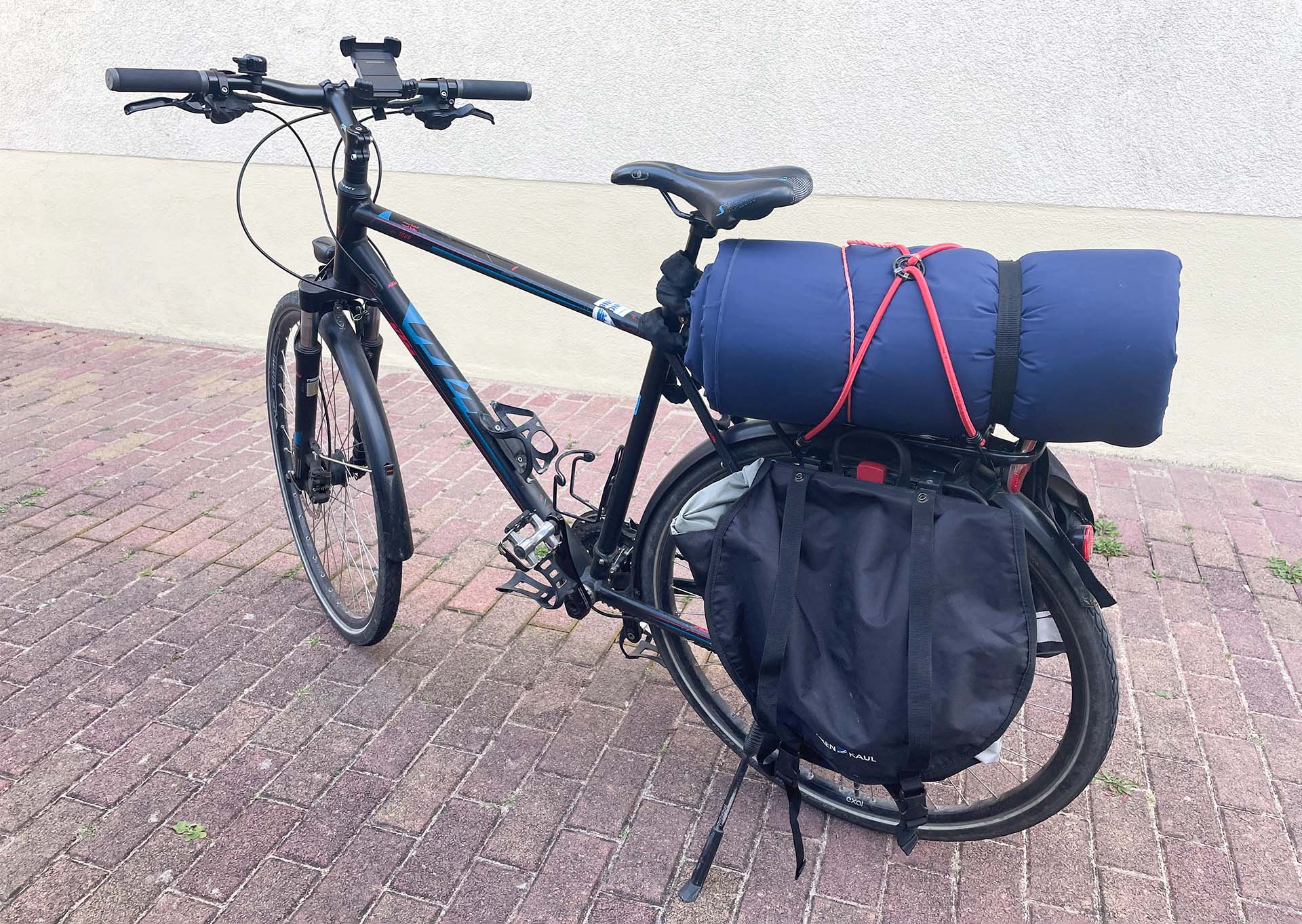
Before leaving, I first had to prepare my bike — besides checking it over, pumping up the tires, and oiling the chain, I also removed the basket and instead mounted the brackets for two rear panniers. Two bottle holders in the frame completed the setup of my KTM Life Tour.
Besides clothes, some camera gear, and lots of water, I packed a bike pump and repair kit as well as a spare inner tube. I also brought swimwear for the Baltic Sea and provisions in the form of granola bars.
All of that fit comfortably into two panniers, though I still brought a small backpack for valuables and the little bit of tech.
Every beginning is hard (and dark)
On the first day of the trip, I first took the train to Greifswald, then rode 75 km by bike from there to Sassnitz. The route across Rügen was surely very beautiful — but thanks to an unplanned night ride, I hardly saw any of it.
Provehito in altum: leap forward into the unknown
Friday morning, the trip finally began. Thanks to the late departure of the train in Heidelberg (I wrote about how that late departure came about in Heidelberg in the preparation post for this trip), I was able to sleep in and started packing the last things for the trip at a relaxed 9:00 a.m. Fill up drinks, check the train connection for delays, and head toward the station.
Right away I noticed the unusual heaviness and unfamiliar sluggishness of the bike; usually I was out in the city with minimal luggage.
Arriving at the station with plenty of buffer time, I waited for the S-Bahn, which was supposed to take me punctually toward Mannheim.
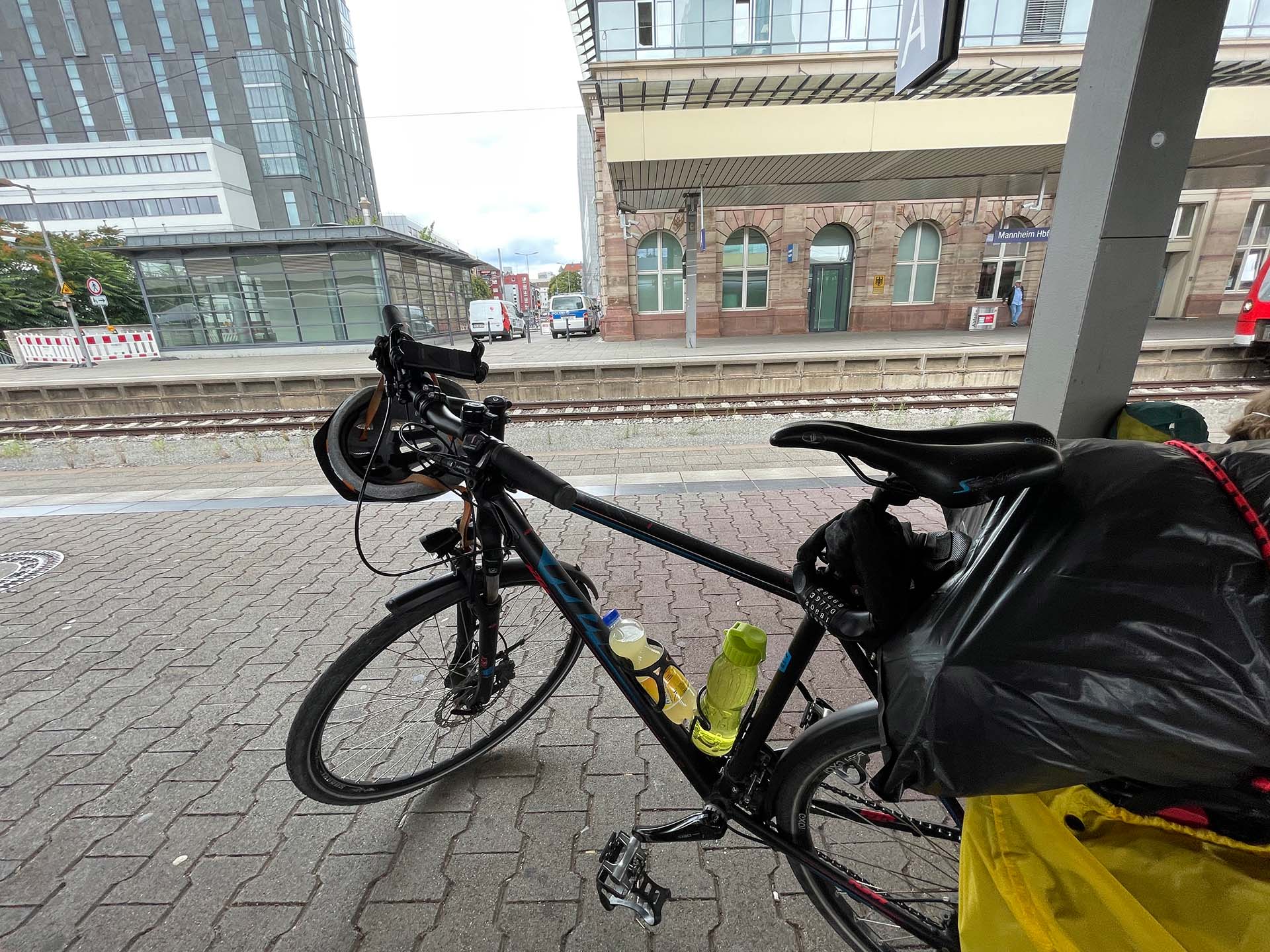
From Mannheim, I took ICE 690 (a connection I had taken almost a dozen times in the summer of that year) to Berlin Gesundbrunnen. Boarding and especially securing the bike on the ICE was a science in itself: with the panniers removed and no other luggage, I only managed to lift it and thread the front wheel in at head height with the help of another cyclist, who luckily could help with the lifting.
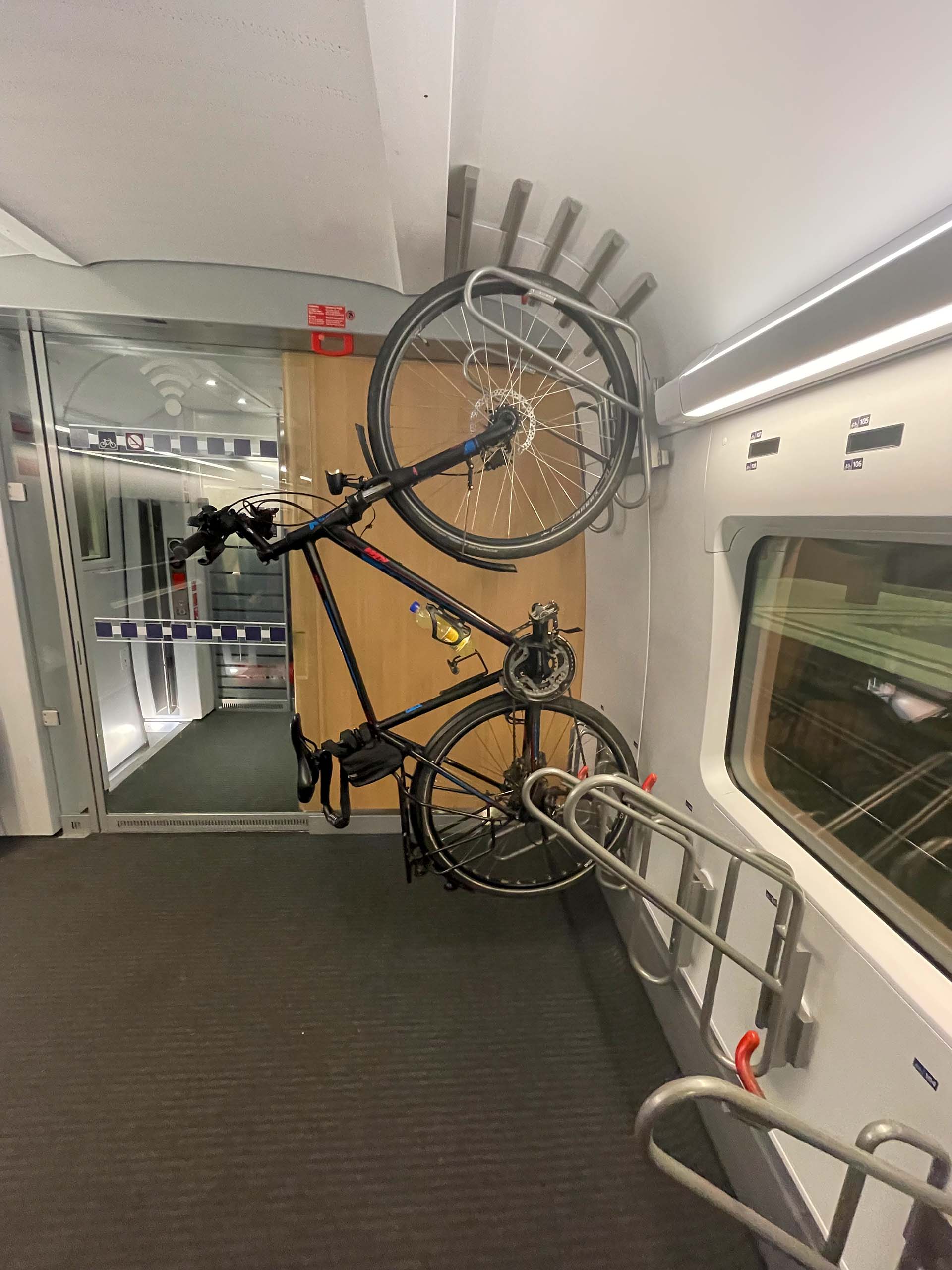
Why do 80% of people on the ICE to Berlin already get off at Südkreuz? Did I miss something? 🚄August 6, 2021
Arriving on an almost empty ICE in Berlin Gesundbrunnen (nearly all passengers had already gotten off before Berlin Gesundbrunnen at Hauptbahnhof or Südkreuz), I was faced with the first bigger problem of the trip: the tension straps for fastening the sleeping mat to the luggage rack were missing! At first that doesn’t sound like a big problem, but for me it was pretty inconvenient: I wouldn’t arrive in Sassnitz until 7:53 p.m. at the earliest, too late to visit a bike shop. The tension straps made sure my load on the luggage rack didn’t fall off — without such a strap, a longer ride on the bike was unthinkable, because I constantly had to keep one hand on the bag on the luggage rack so the luggage wouldn’t fall off.
With one hand acting as the fastening for the sleeping mat, I first got on the ICE to Sassnitz, where I kept dealing with the problem. My phone calls to possible alternatives for finding tension straps in Sassnitz were unsuccessful; either the shops were already closed or they didn’t have any tension straps available.
So I looked for options to get hold of tension straps at an IC stop before Sassnitz, in Greifswald. I found what I needed at a Toom branch, which was even open until 10:00 p.m. on Fridays. Great — now I had found a solution to this first problem. During the rest of the IC ride, I chatted with fellow passengers and got to know a resident of Greifswald who could point me in the direction of the Toom branch.
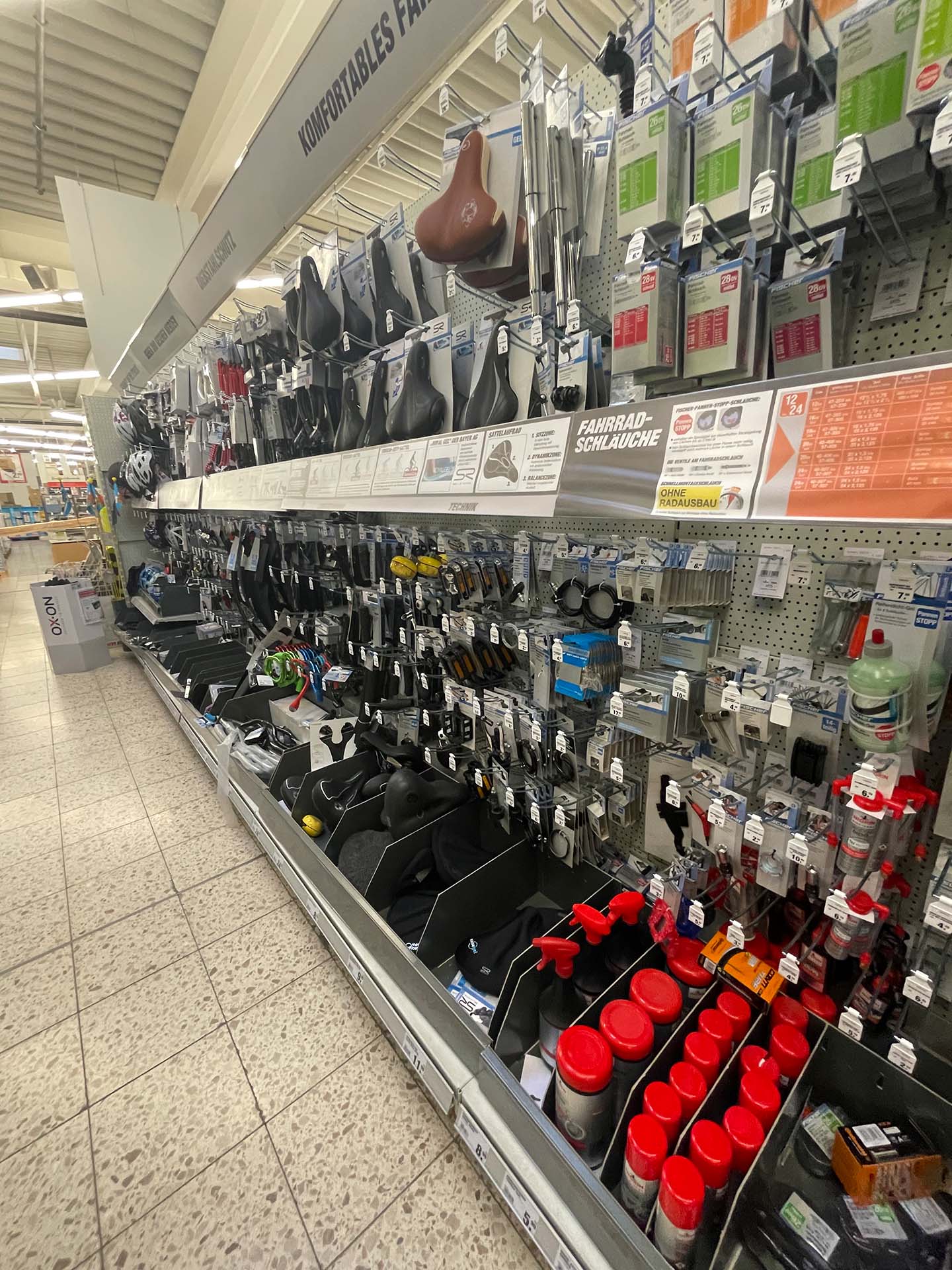
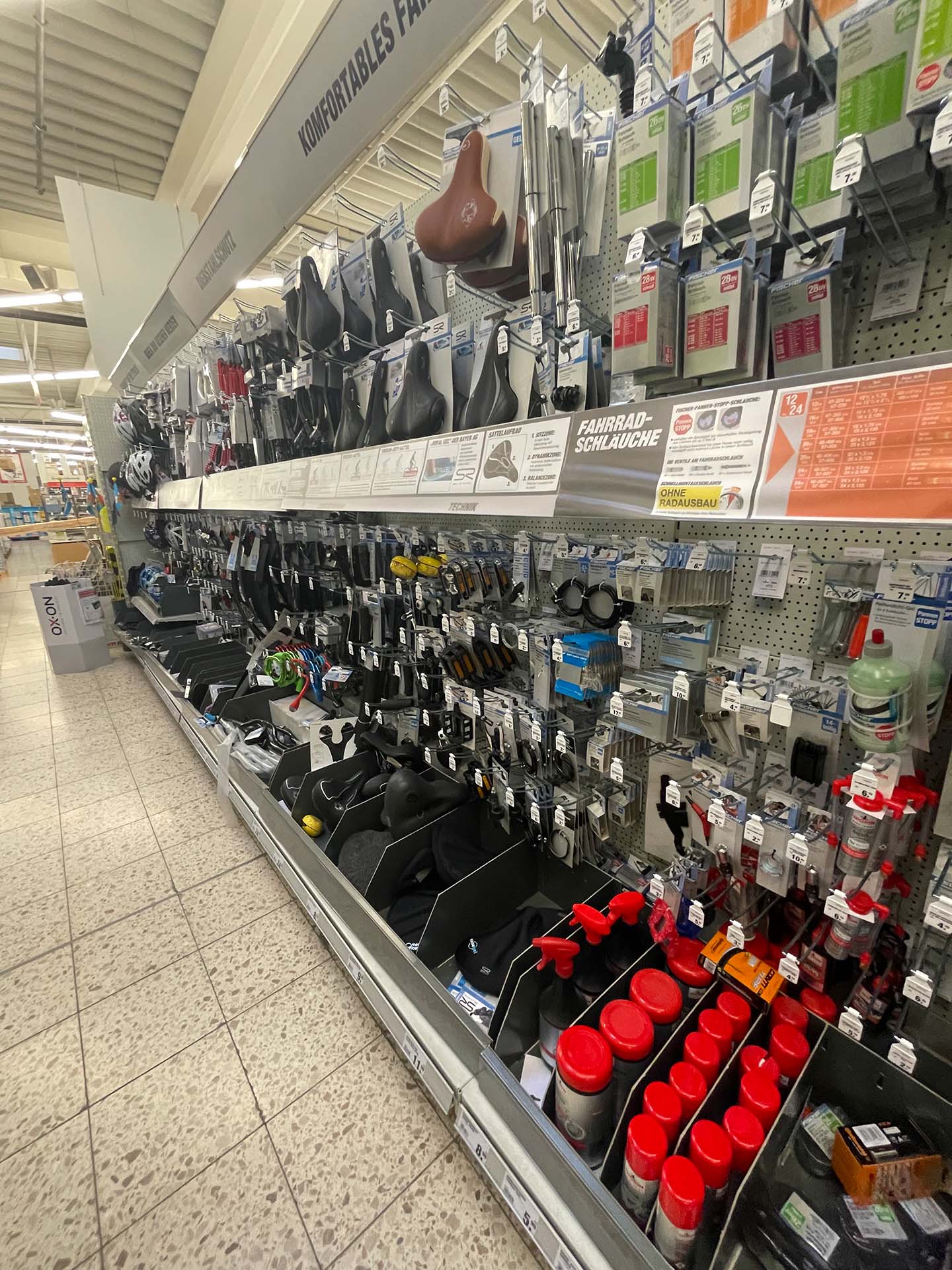
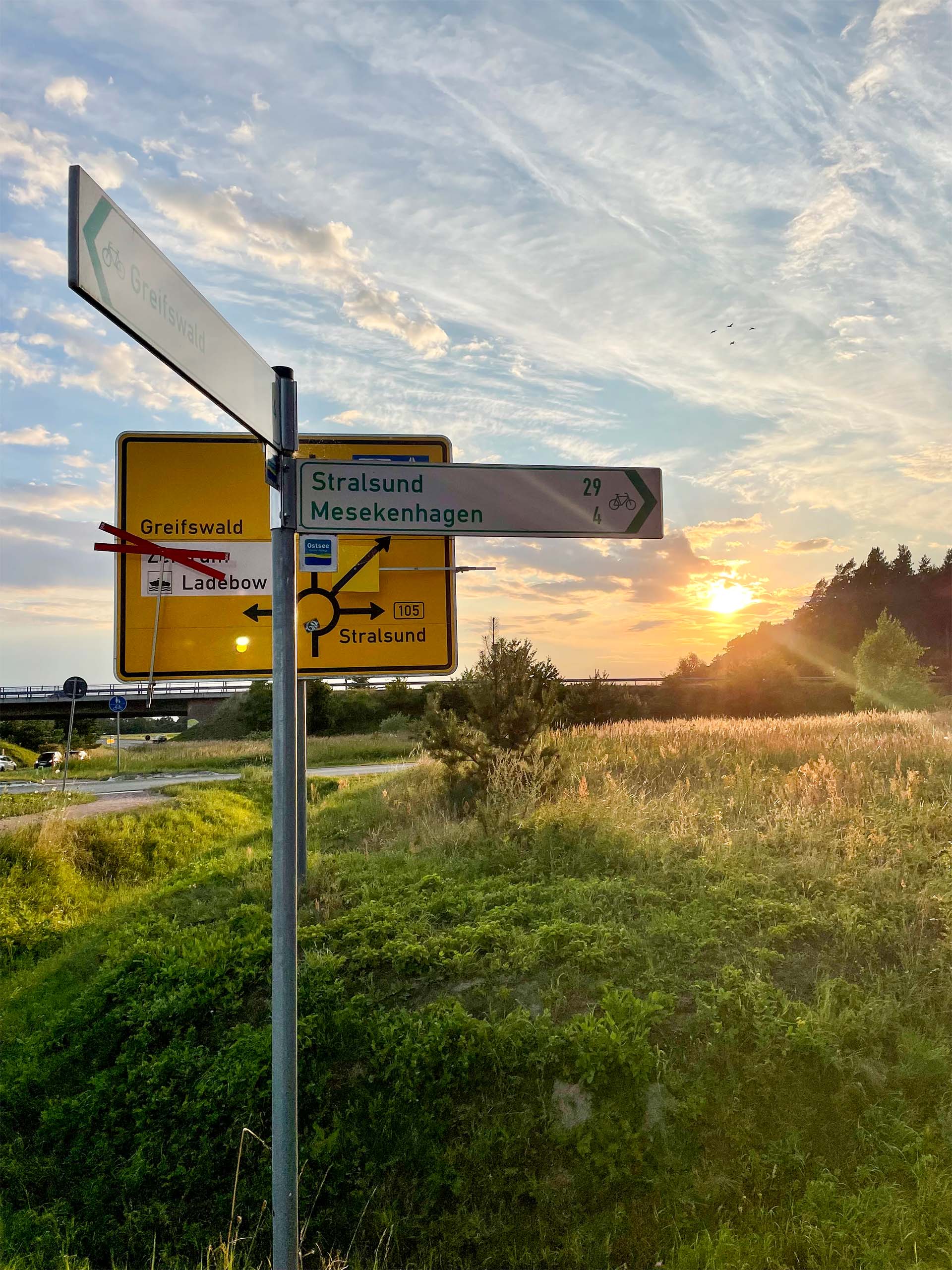
With a tension strap installed again, I finally set off around 8:00 p.m., with the sun already slowly setting, on the first stage toward Sassnitz.
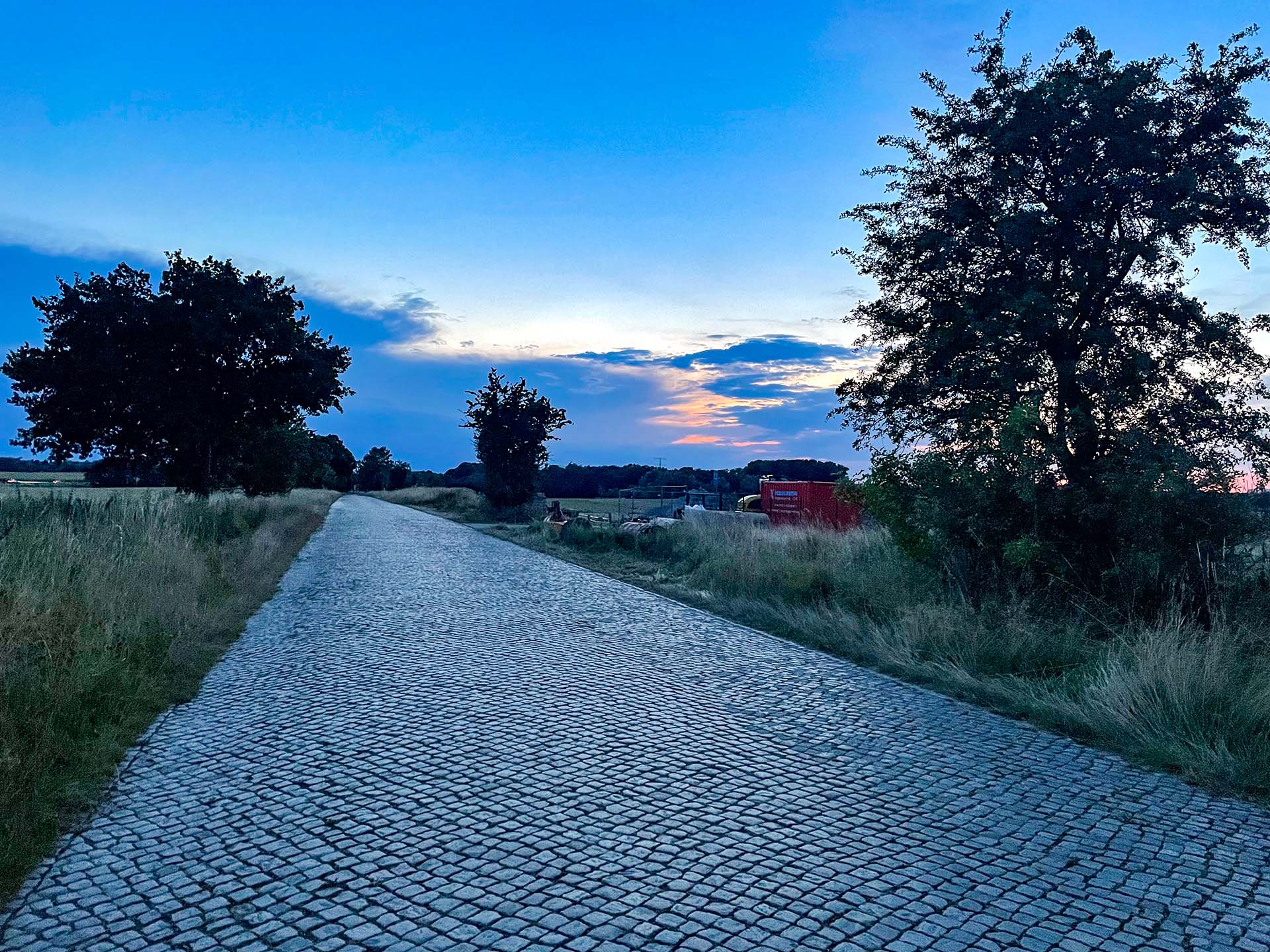
First, though, I had to make up the distance I had lost by getting off earlier; the detour for the tension strap cost me almost two hours on the way to Stralsund.
Back Next
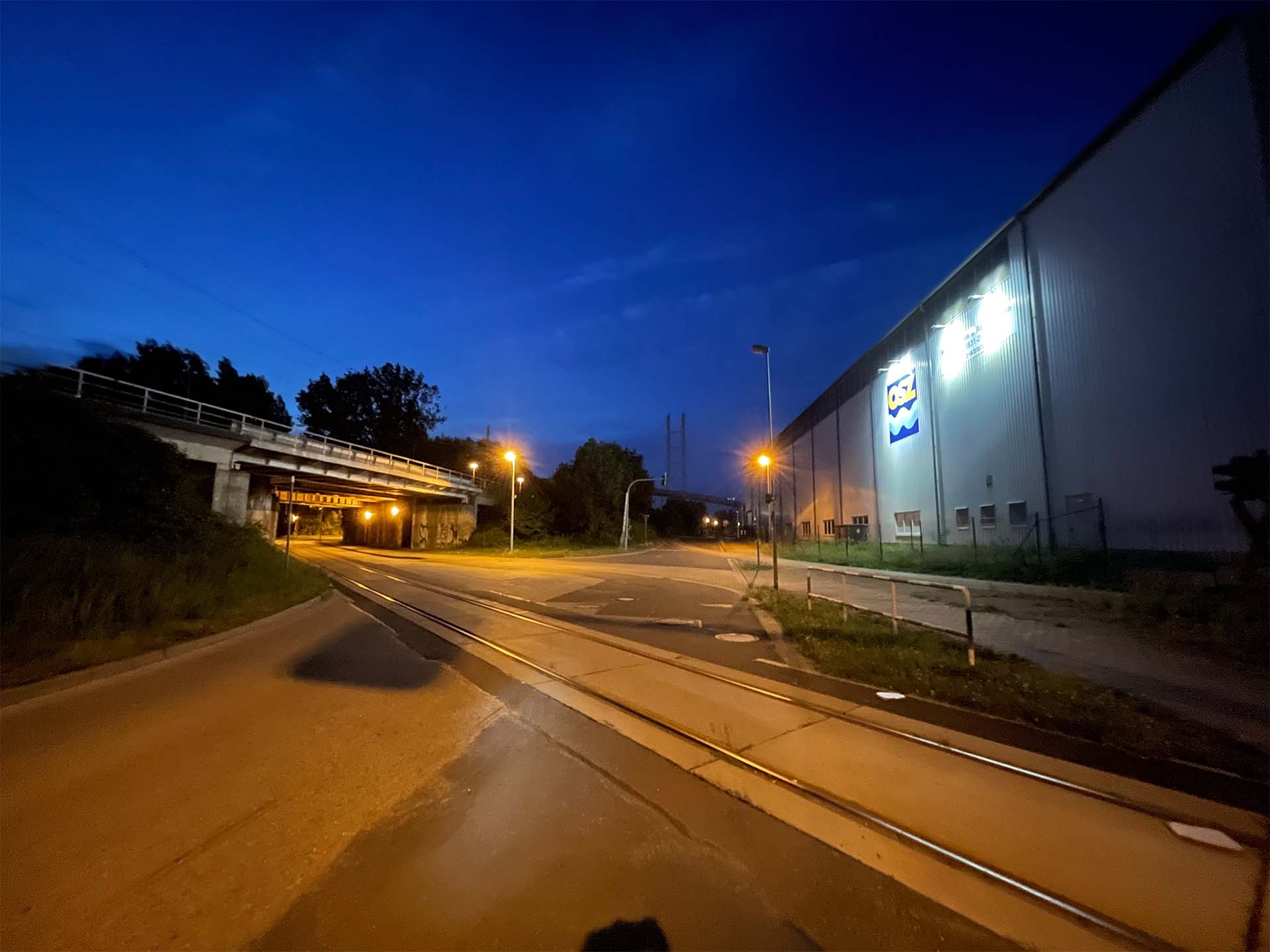
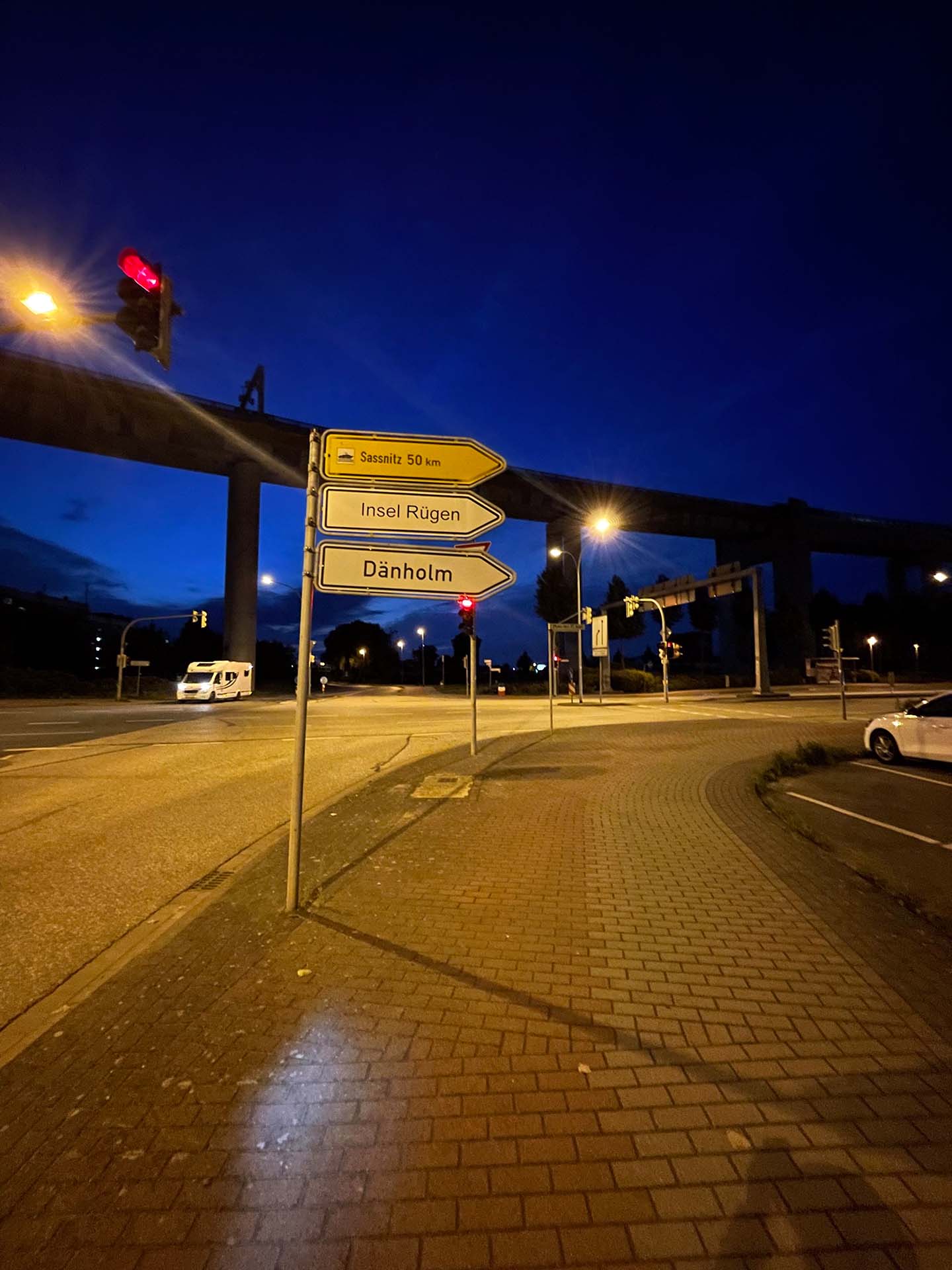
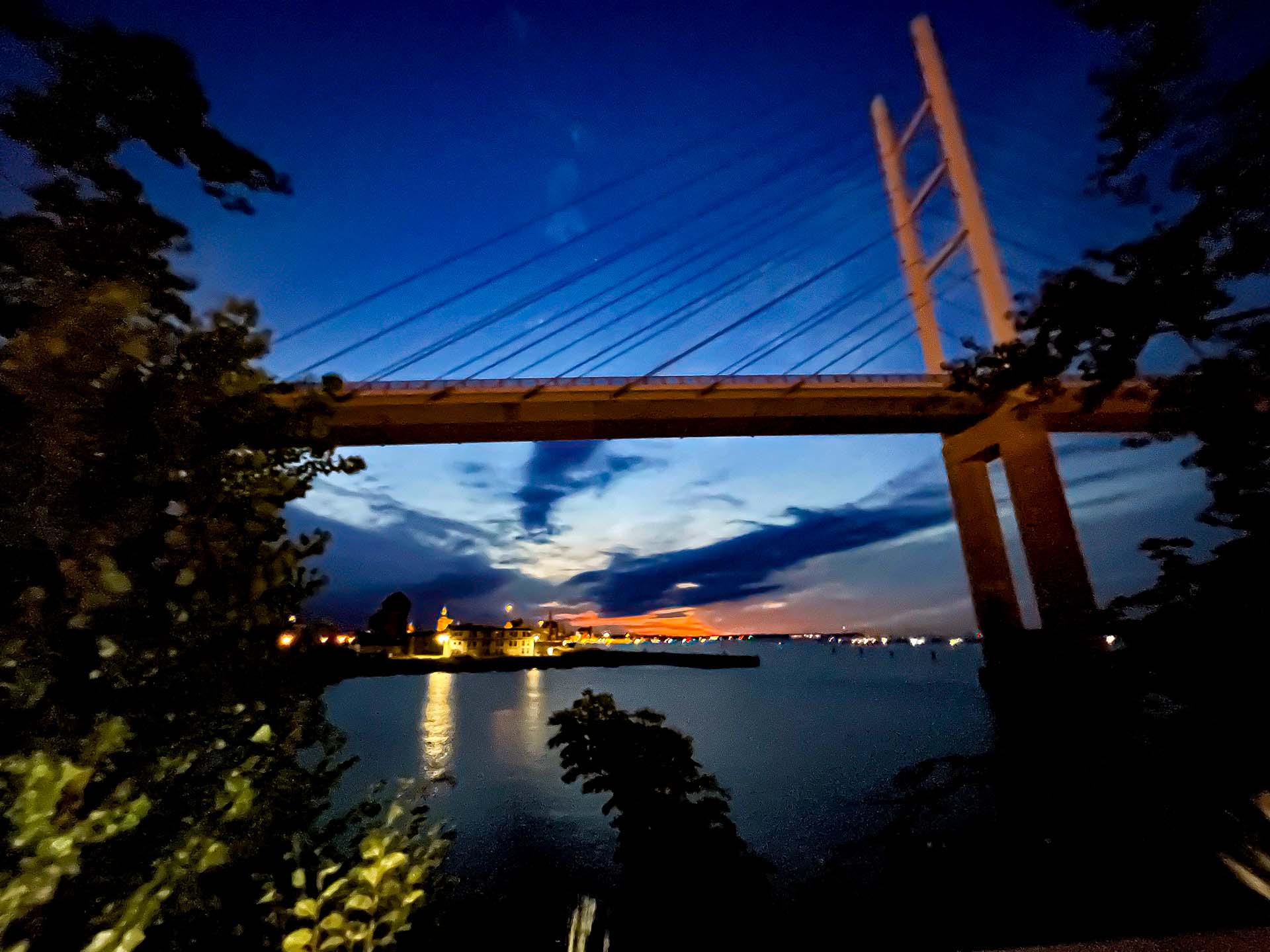
After far too many kilometers of cobblestone path, I finally arrived in Stralsund. The sun had long since set; only twilight remained. Standing in front of the mighty Rügen Bridge, the "official" bike tour began the way I had planned it — just six hours later than hoped and three hours later than expected.
With the Rügen Bridge, I left the German mainland, and on Rügen I then mostly continued along country roads toward Sassnitz. On the one hand, country roads are good for covering a lot of distance quickly; on the other hand, closely overtaking drivers who like to honk for no reason and pass with a speed difference of 80 km/h are not uncommon (especially in Germany). So country roads aren’t exactly pleasant either, but I don’t think I’m telling you anything new there. What was interesting that evening while riding on the country road was that countless combine harvesters were working on the island. The dust they stirred up was at times so thick that it felt like morning fog to me — except at night, in summery 20 °C, and under a starry sky. With 20 kilometers remaining, I first continued through smaller villages on a bike path, then afterward on a field path that kept getting narrower.
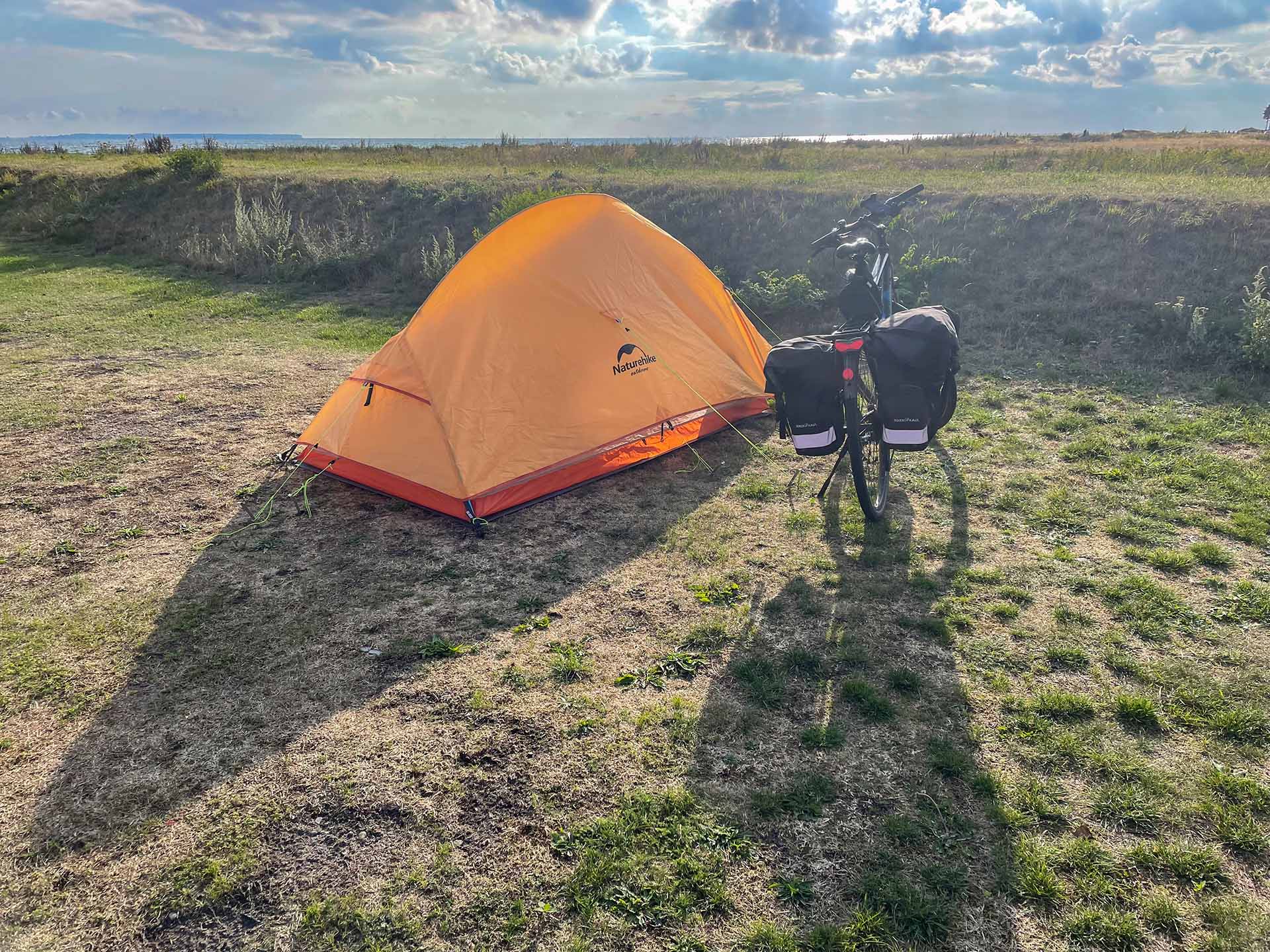
Suddenly I found myself in a patch of forest in front of a small path that ended abruptly, and thanks to the nettles I had brushed against beforehand, my legs weren’t exactly happy when I stopped either. A swarm of mosquitoes attacked me immediately while I searched for a way out of the forest with my flashlight. In complete darkness (I didn’t even try to get a photo), I first pushed my bike through undergrowth and then for a long time parallel to a field, until after a 25-minute detour I reached the nearest country road. I then followed that to continue toward Sassnitz. In the village of Litzow, about five kilometers before the ferry port in Sassnitz, I finally found a suitable place to pitch the tent for a few hours. By then it was 1:00 a.m.; with the ferry departing at 8:00 a.m., I would have to get up again by 6:00 a.m. at the latest. As the final part of this exciting and nerve-racking first ride, I pitched my tent, and by around 1:40 a.m. I could finally fall asleep.
On the catamaran ferry from Sassnitz via Ystad to Malmö
On the second day of my trip, I leave Germany and take the ferry to Ystad, then ride by bike to Malmö. In the process, I ride on the most beautiful bike paths of the entire trip.
The early bird catches the ferry
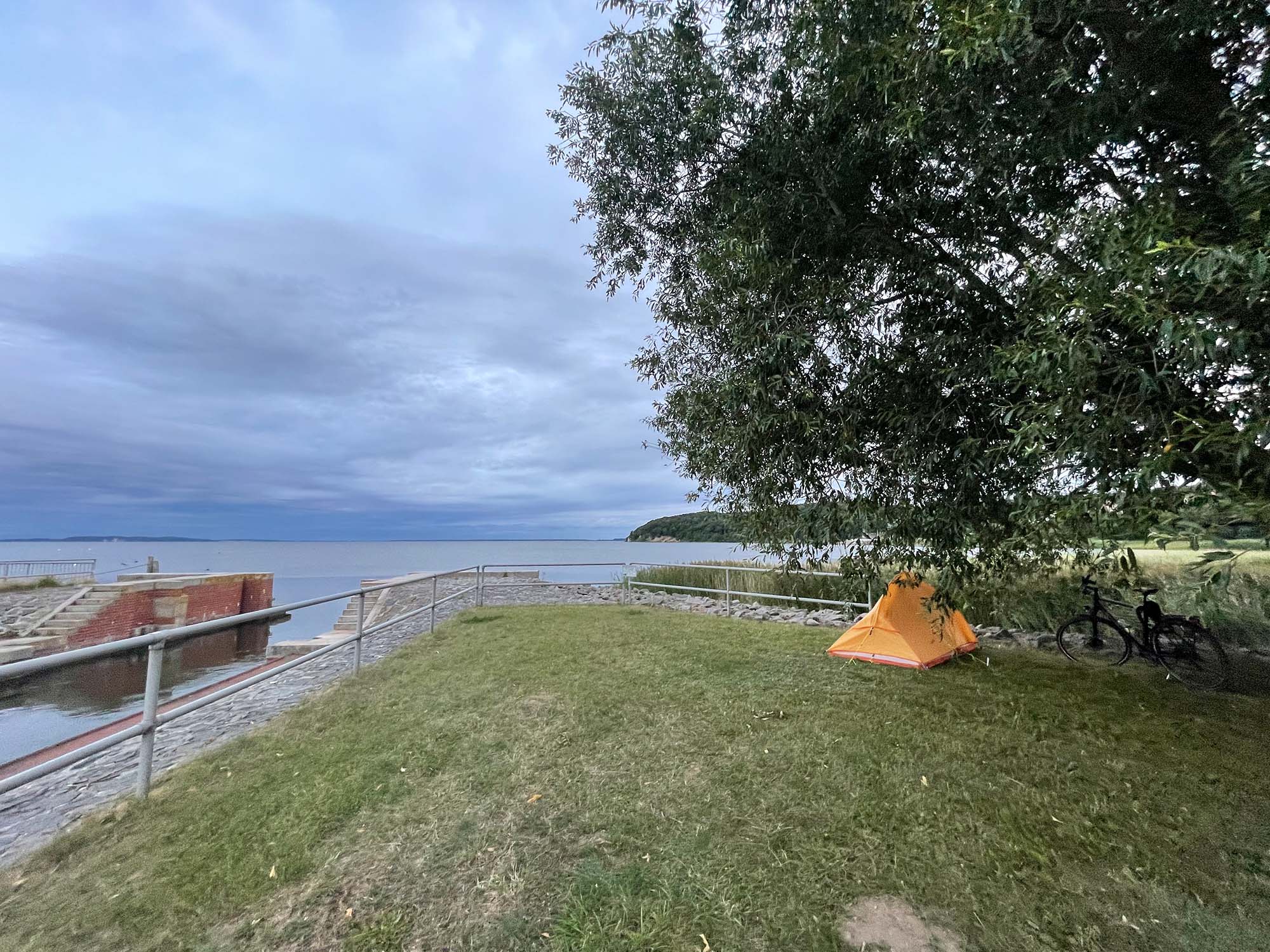
After a very short night near Sassnitz, my alarm was supposed to go off at 6:00 a.m. — but thanks to considerable noise (unfortunately I had pitched my tent right next to a larger rail and traffic route, as I could see in the first light), I was already awake at 5:00 a.m. after barely three hours of sleep.
Despite the tiredness, I quickly took down the tent. After testing the packing process once on a patch of grass back in Heidelberg, I managed the folding of the tarps the second time in a good twenty minutes, until all the parts fit into the right bags.
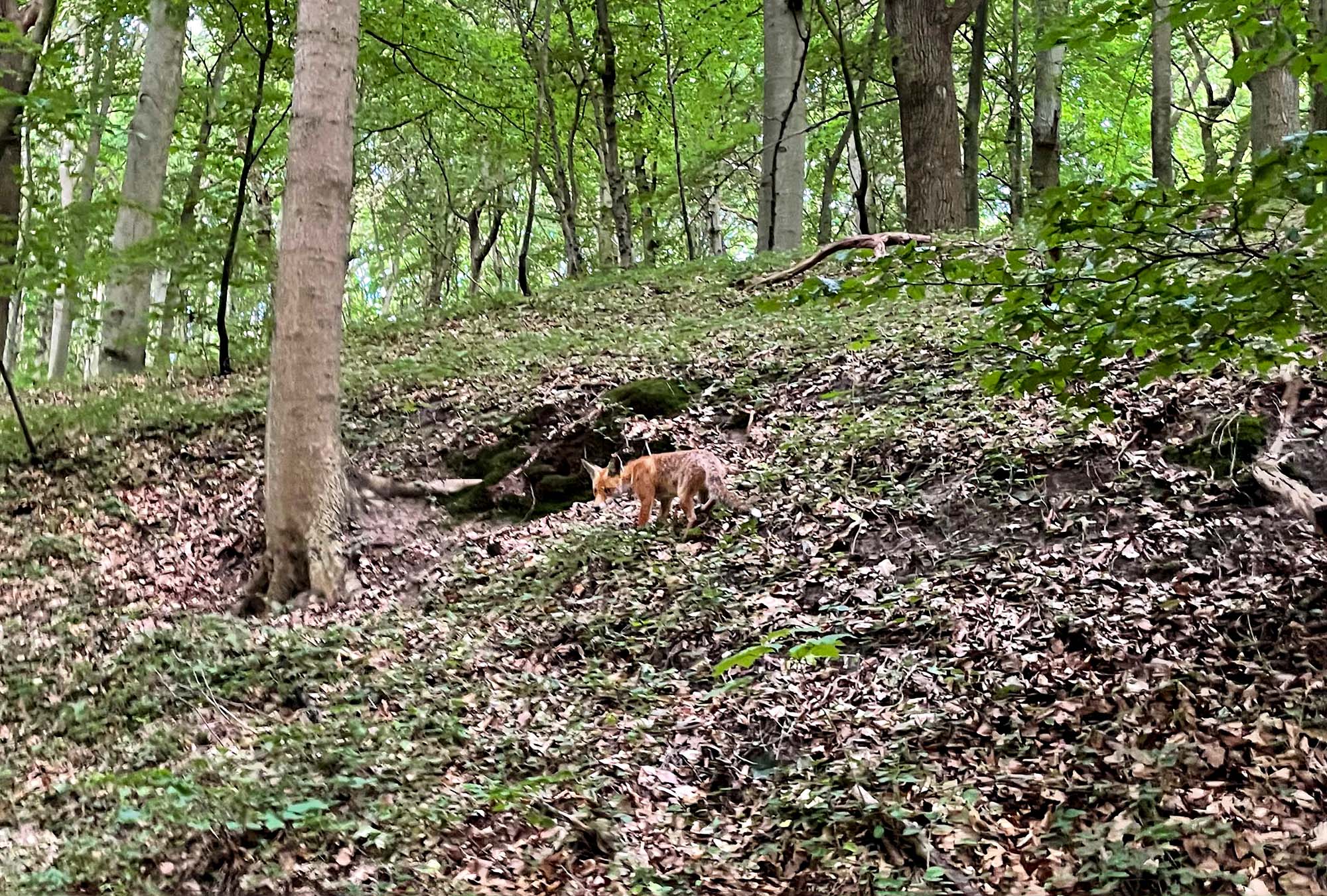
After that, I packed the bike again and set off toward the ferry. On the five kilometers from my overnight spot to the ferry port, the route led me through a forest on a well-developed bike path. In that forest, a deer suddenly jumped right onto the bike path in front of me and ran with me for about 30 meters before leaping back into the forest on the other side of the path. After that surprise (when I think about encounters with wildlife like that, I tend to underestimate just how big such deer actually are: the animal running in front of me was at least 1.3 meters tall), I also spotted a fox in the forest, which was surprisingly trusting, so I could even take a photo.
Then I continued to the ferry port in Sassnitz, where the car lane is separated from cyclists and pedestrians. For cyclists, the route then continues onto the ferry port grounds, though in my case that was initially made impossible: a freight train was being unloaded at that moment. Luckily I still had some time and was able to ask the very friendly unloading staff to move the train briefly across the road crossing and clear the route.

Across the Baltic Sea at 85 km/h
So five minutes before the official check-in time, around 7:25 a.m., I was standing with five other cyclists at the North Terminal of the ferry company FRS Baltic, all of whom wanted to make day trips to Ystad.
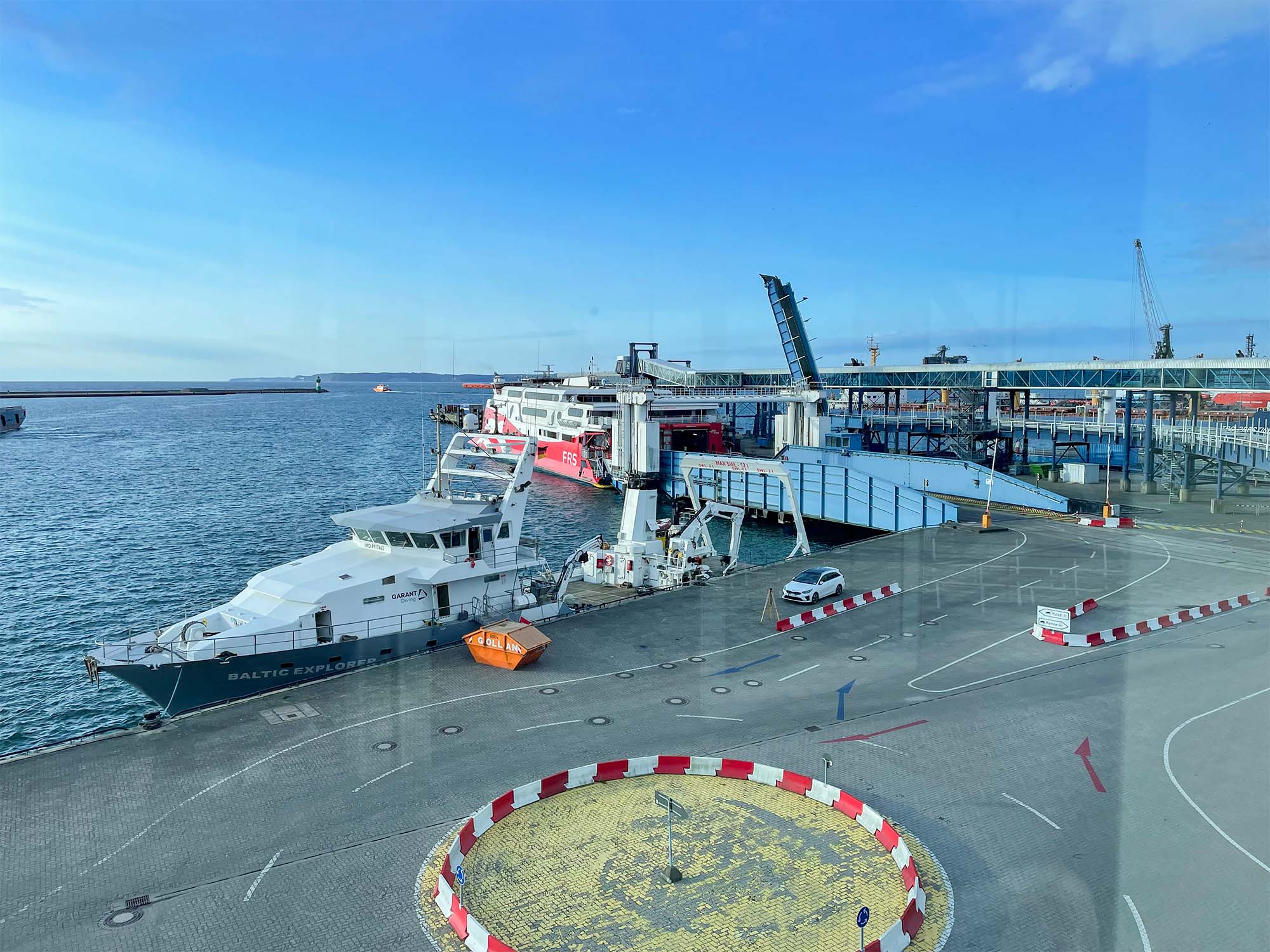
After we cyclists were allowed to board the ferry before everyone else, it was time to stow the luggage and tie down the bike. With semi-functional tension straps (for most of them, the ratchet function no longer worked), we fastened the bikes to a framework on the lower deck of the ferry. The luggage I didn’t want to carry through the ship, I wedged between the framework and the bike. That made it very unlikely that it would fall over or possibly slide under a car.
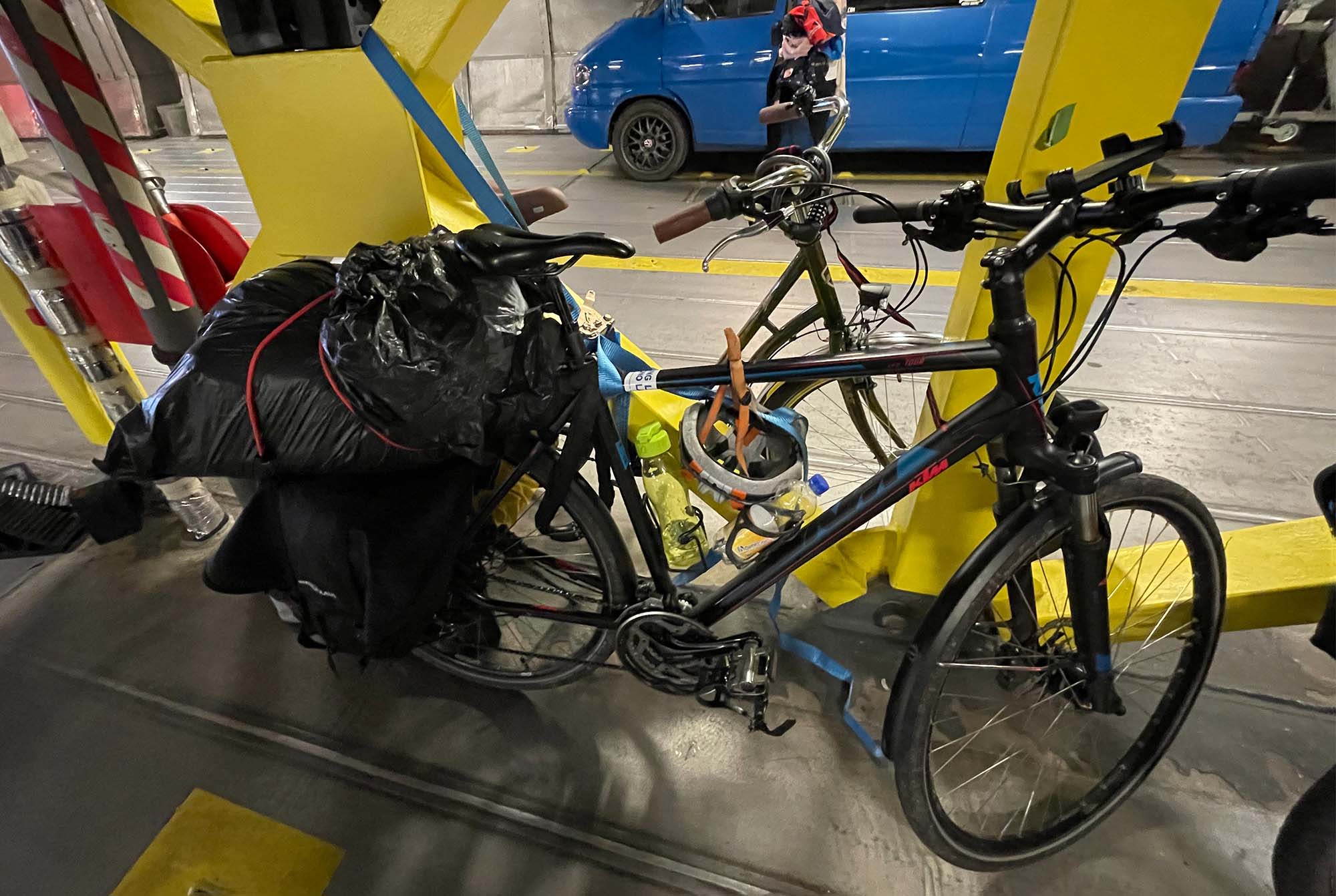
With my backpack, I went up to the rear deck of the 91-meter-long catamaran so I could still watch the rest of the cars being loaded. Packed with around 200 vehicles, we set off from Sassnitz to reach Sweden in 2.5 hours.
The farther we got from the mainland, the faster we became: at first it was still a very pleasant "standing outside" speed, where the wind from the ride wasn’t too noticeable, but a bit farther out it got so fast that you really had to hold on well (and your smartphone too, if you wanted to take photos or videos).
With its 40,000 hp jet propulsion, the ferry was able to accelerate to up to 88 km/h (measured by GPS) during the crossing and cut through the water so cleanly that I could hardly notice waves or anything like that anymore.
A ferry in catamaran design is really fascinating. We’re traveling at 85–90 km/h across the open sea, the wake behind the propulsion is 5–7 meters high, and yet it’s as calm as on a classic ferry. pic.twitter.com/sk9kDbaLadAugust 7, 2021
https://p3g3.de/content/media/2026/04/frsbaltic.mp4
This FRS catamaran, which operates on the route between Sassnitz and Ystad and which I took, holds the record for the fastest transatlantic crossing at 2 days, 17 hours, and 59 minutes. Since the record was set in 1998, it has remained unbeaten (the average speed on that crossing was 76 km/h).
After the German coast had been left behind, the duty-free shop opened and many passengers stocked up on alcoholic drinks: because of Sweden’s high alcohol taxes, shopping completely exempt from VAT was very attractive for both residents and tourists in the country.
I, on the other hand, spent almost the whole time on the upper deck and occupied myself with catching up on some of the sleep I hadn’t gotten during the night.
After a short nap (the modern Anglicism for that is probably "power nap"), Sweden was already visible on the horizon.
Since I had been advised while boarding the ship to start early with freeing and reloading the bike, I went down to the lower deck in good time, where I found my bike and luggage in the same condition as when I had tied them down.
"And all of this is really bike path?" - The first ride in Sweden on the best bike paths of the trip
And just like that, I was already on Swedish soil:
Hallå 🇸🇪! pic.twitter.com/1En6YLtAncAugust 7, 2021
It wasn’t even lunchtime yet and I had already found a bakery in Ystad that sold me a cinnamon bun. In the process, I realized with some horror that Sweden doesn’t use the euro: even though I had spent vacations in Sweden several times before, I had never been the one taking care of food myself back then. After all the euro pampering on my previous trips, I simply hadn’t thought about the fact that by no means all countries have adopted the euro.
As it quickly turned out, the foreign currency problem wasn’t nearly as big as I had thought: everywhere, yes really everywhere, you can pay easily with credit and debit cards. In this area, Sweden is years, if not decades, ahead of Germany. Even at the tiniest market stalls, you can just pay quickly and easily, without minimum amounts or absurd fees.
After the cinnamon boost, I moved on to the next problem, namely mobile service that no longer worked: for reasons that were still rather mysterious at the time, my smartphone connected to the network in Sweden only through my Telekom phone contract, not through my data SIM (so I use the device in dual-SIM mode).
Out of necessity, I booked a 50 MB day pass with Telekom for 2.99 euros and downloaded the route to Malmö. A bit frustrated by the whole mobile network issue, I got on the bike for the first 100 kilometers in Sweden.
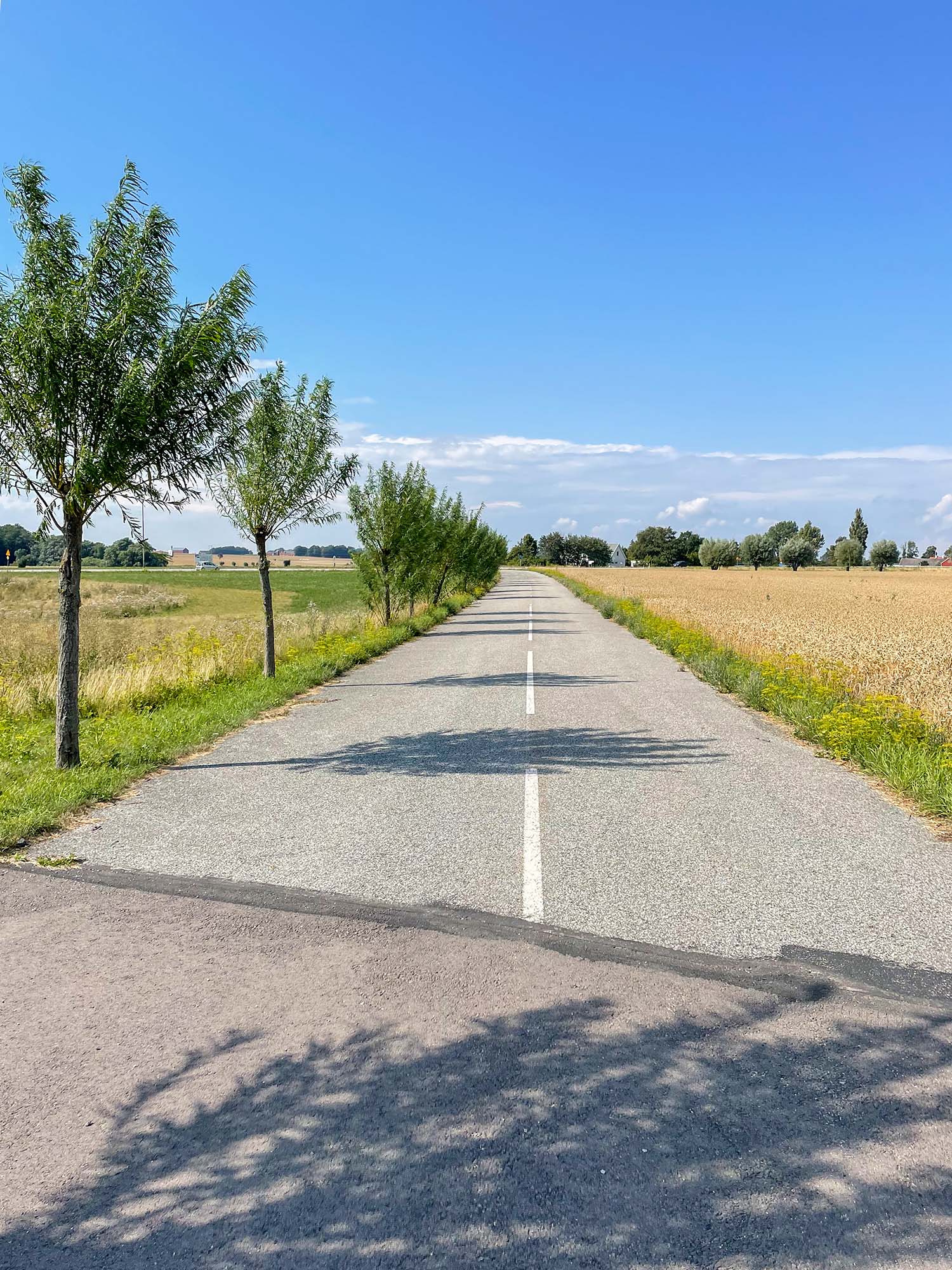
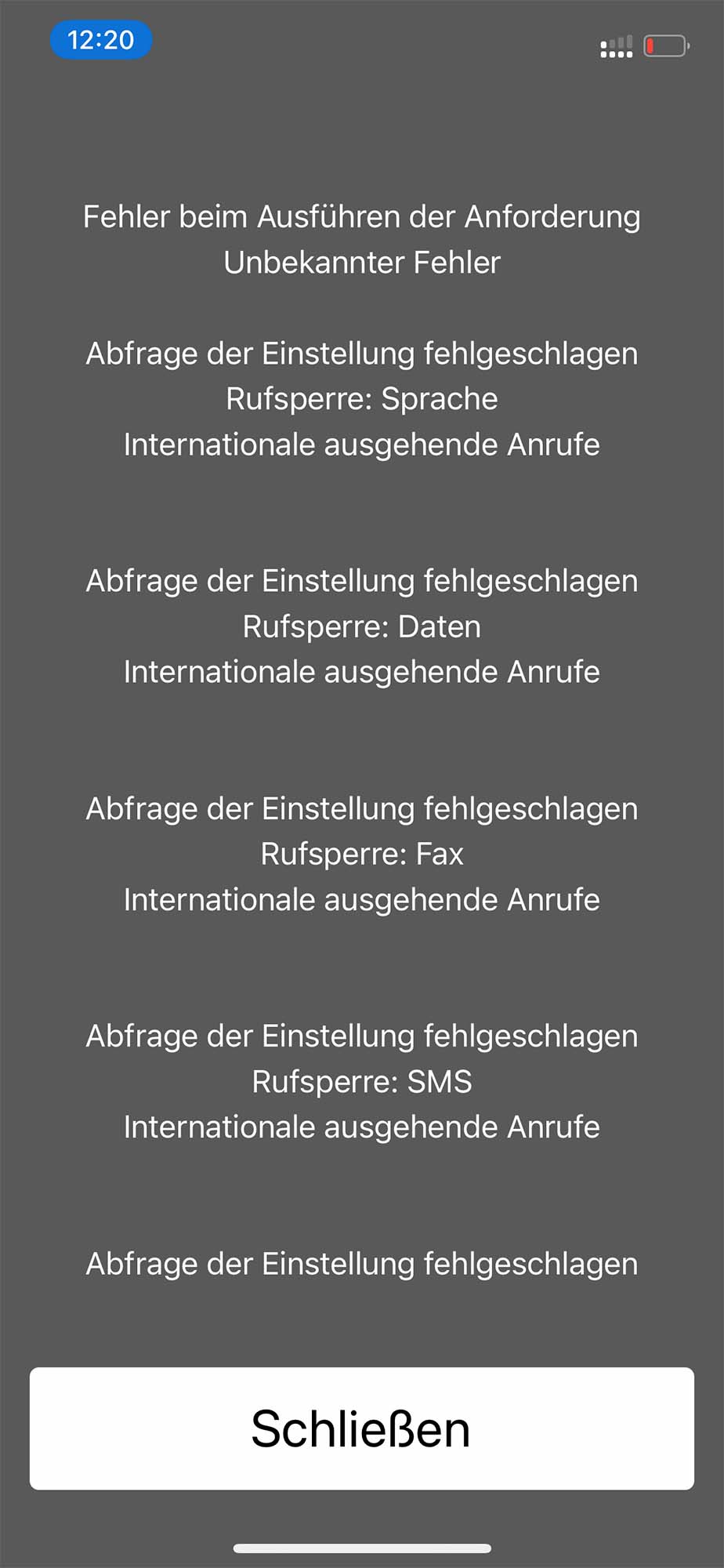
The first 50 kilometers were very pleasant to ride. Before Trelleborg, I took a break at a supermarket, where I dealt with the mobile service problem in more depth.
I even briefly called Vodafone’s international support, my data provider, to get to the bottom of the issue. Then suddenly the problem became obvious to me: thanks to dual-SIM operation, which I hadn’t yet used abroad until then, I still had to manually activate the data roaming setting for the e-data SIM in the settings.
That allowed me to reconnect to the excellent Scandinavian mobile network, and with fresh water supplies I was able to continue to Malmö in a completely relaxed mood. I arrived there around 6:30 p.m., pitched my tent at a beautifully located campsite by the sea, and then turned to a question that in Sweden is often associated with very high expenses: what did I actually want to eat?
At a fair in Malmö
While looking for food, I walked for quite a while along Malmö’s beach, where I found a fair. After two years without visiting an event of this kind, I could really appreciate the unique atmosphere at a fair like this: people were dancing and riding the Ferris wheel as if Corona had never existed.
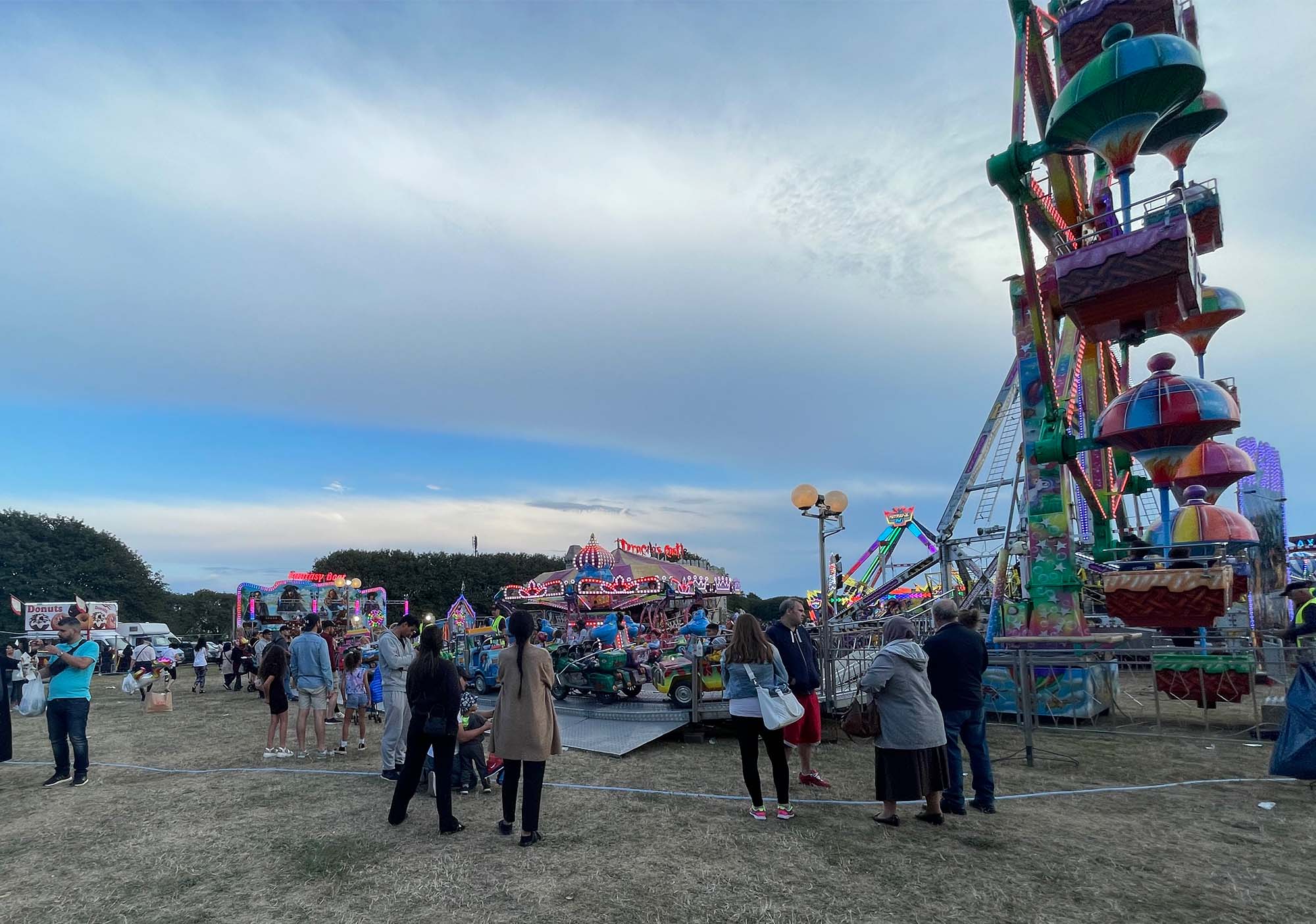
Unfortunately, I didn’t find any culinary bright spot at the fair, because I didn’t want to fuel all that exercise with typical fair food like churros or sausages. My path led me farther into the city, and after four kilometers I found a pizzeria where I could buy a medium pizza for 149 Swedish kronor: a cool 15 euros, so at least the pizza tasted very good. But by then it became really clear to me that Sweden is very expensive to live in.
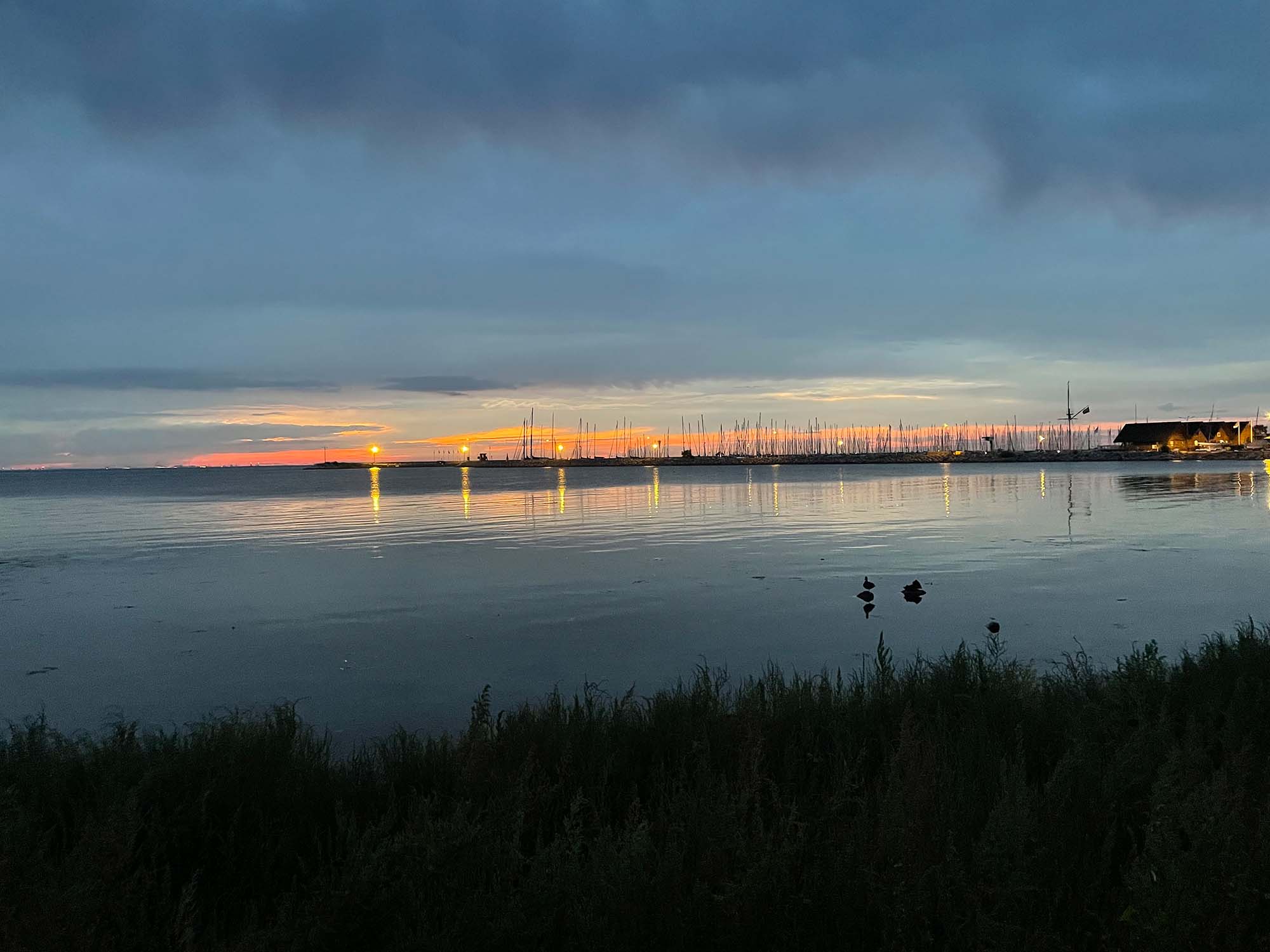
After three hours, I got back to the campsite at dusk, where I went straight into the tent to catch up on the sleep I was missing.
Via Helsingborg to the northernmost point of the trip — and a pancake buffet
On the third day of the Sweden trip, I ride through bright sunshine and torrential rain to the northernmost point of the trip.
The size of the Øresund Bridge
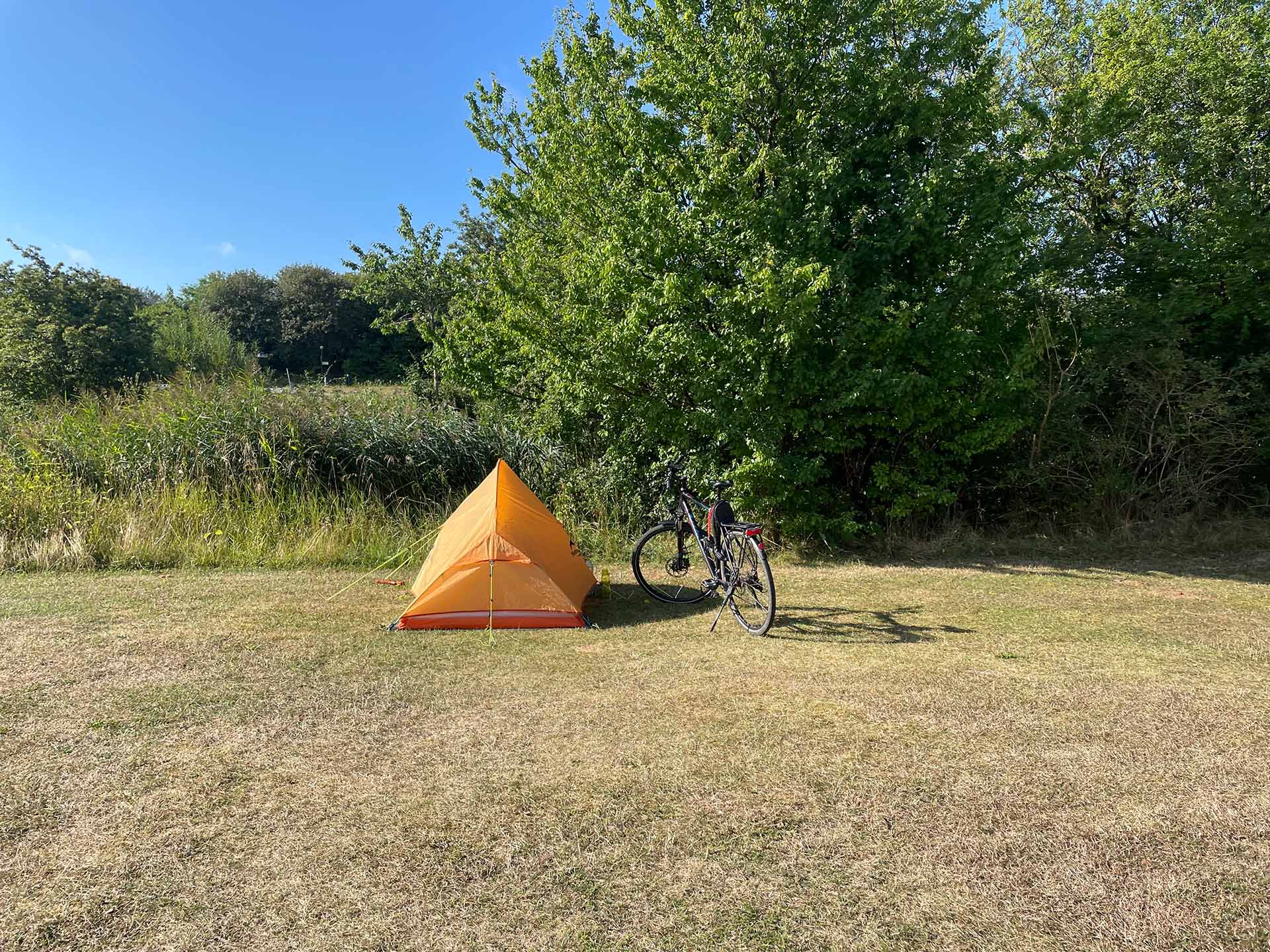
With the best weather, I got up around 9:00 a.m. on the third day of the tour with a slight soreness in my muscles. After a short breakfast, I went swimming in the Øresund and got ready to cover the distance to my day’s destination, Helsingborg. But after packing up my tent, I went back once more to the Øresund Bridge to explore it from afar with my drone (larger metal structures are very bad for the radio connection and IMUs inside the drone).
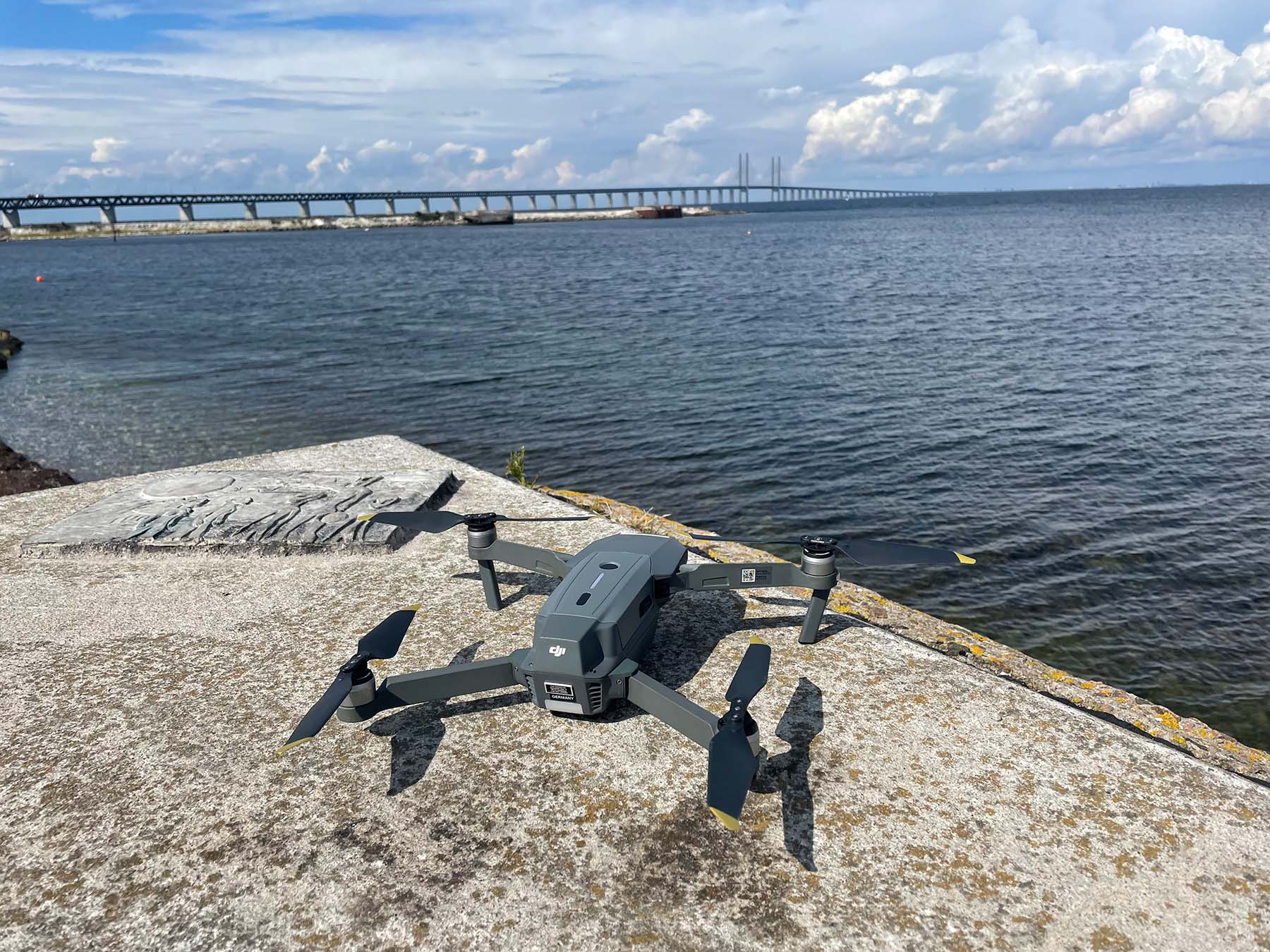
Only once I was in the air did the true size of the structure really become clear to me: my Mavic Pro, with its 50 km/h and 20 minutes of flight time, couldn’t even make it halfway across the bridge.
On top of that came strong winds and even stronger gusts, enough to make me sweat despite my 100 flight hours across 550 flights: after 21 minutes and a critical 11% battery remaining, I landed again after seven kilometers of flight distance, happy to still have my drone — if the wind had shifted on the way back, the whole thing probably would have ended in a water landing.
Even in the time-lapse video along the bridge, you can clearly see the gusts when the camera shakes a little — that only happens when the drone is overloaded by a gust and can no longer compensate enough to maintain its speed):
https://p3g3.de/content/media/2026/04/oeresundbruecke.mp4
After this unintentionally excellent wake-up call, I said goodbye to Malmö and got on the bike to tackle the journey to the northernmost point of the tour. Along wonderful Scandinavian bike paths, the route followed the coast through small villages and towns where Pippi Longstocking could easily have lived.
Around lunchtime, after the first 35 kilometers, I spontaneously stopped at "Farmor Annas Matstuga," a pancake buffet restaurant. Even though I hadn’t looked into the restaurant beforehand and had simply found it because it was right by my bike route, I was more than thrilled by what it offered. It’s very rare that I rate restaurants on Google, but in this case, 5 stars were the minimum expression of my gratitude.
The restaurant is really a great tip and it’s a joy to eat there — but it’s only open on weekends (at least in the off-season).
After a delicious meal, I continued toward Helsingborg — the next 50 kilometers there passed uneventfully under increasingly cloudy skies. That weather, with the sky growing darker and darker, turned from pleasant touring conditions into a threatening pre-thunderstorm atmosphere. I was very relieved when I pitched my tent on the coast of Helsingborg around 5:30 p.m. At the first drops, I first put the luggage into the tent, then very quickly myself as well. Seconds after I closed the rain-protection zipper, the thunderstorm that had been building for hours suddenly poured down over me and the tent. For around 20 minutes, the rain hammered down on me and my tent with incredible force, until suddenly the sun started shining again. That made it far too warm in my tent; it was now just before 7 p.m. — too early to spend the evening in one place and actually too late to head farther north again.
The next northern milestone was 42 kilometers away, which was no longer manageable before sunset. But since I also had no idea how else to spend my evening, I decided to tackle that distance anyway. I left my luggage in Helsingborg. At an average of 26 km/h, the estimated arrival time for Kullens fyr, a historic lighthouse near the small town of Mölle, quickly shifted from 9:25 p.m. to 9:00 p.m. and then to 8:50 p.m. Sunset that day was forecast for 9:08 p.m., so actually watching the sunset would still be possible! Motivated, I rode along empty roads and through smaller forest sections that always had great bike paths and were also deserted (probably because of the thunderstorm earlier). In the end, I covered the 42 kilometers in around one hour and 50 minutes — so I arrived at the lighthouse at 8:54 p.m. To finish the ride, there was one more ordeal up the hill to the lighthouse, which challenged me nicely — and afterward I was all the happier to have reached my goal.
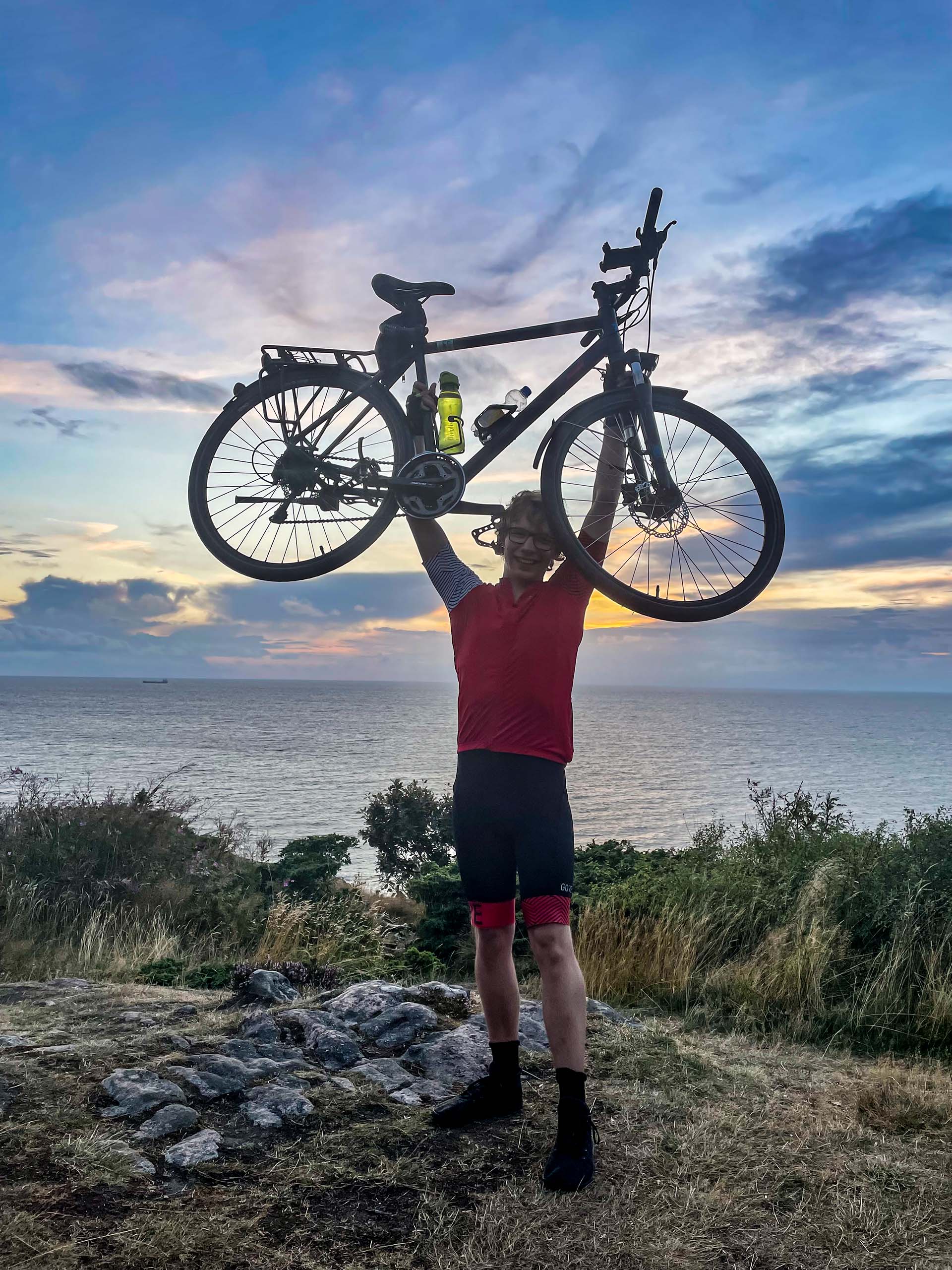
For the next hour, I enjoyed the sunset over the sea and the very beautiful surroundings. It got darker and darker, and with that the beam of the lighthouse became more and more visible:
https://p3g3.de/content/media/2026/04/kueste.mp4
Around 10:00 p.m., I started the return trip south — it was slowly getting cold and I wanted to be back in Helsingborg before midnight. On the way back, I couldn’t enjoy the scenery without light, but after that day, the anticipation of sleep was more than enough to motivate me to an average speed of 23 km/h.
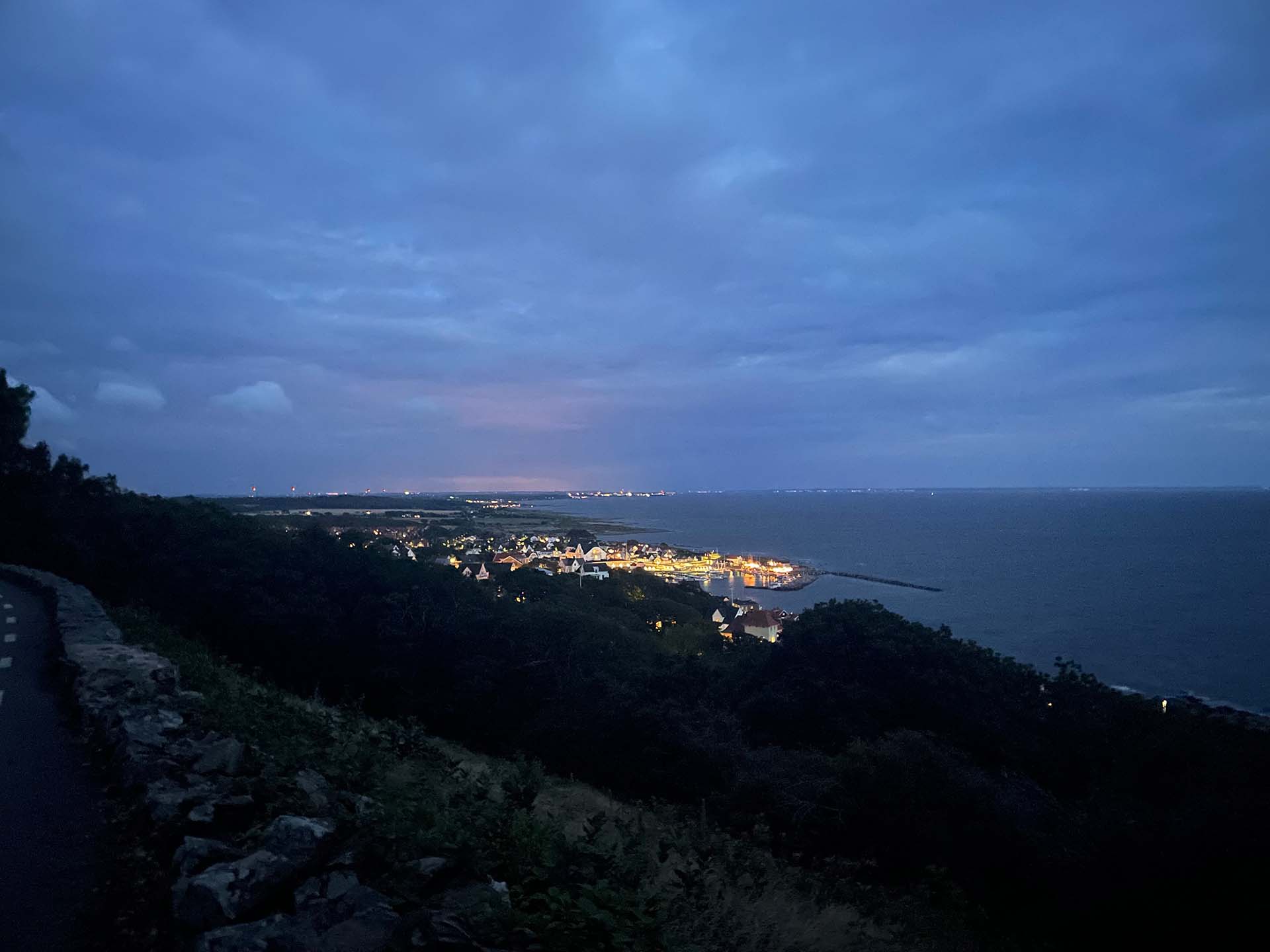
After around 160 kilometers for the day (and a completely drained Apple Watch), I got back to my tent at 11:58 p.m. Slightly chilled and definitely tired, I was looking forward to eight hours of sleep so I could leave Sweden by ferry the next day.
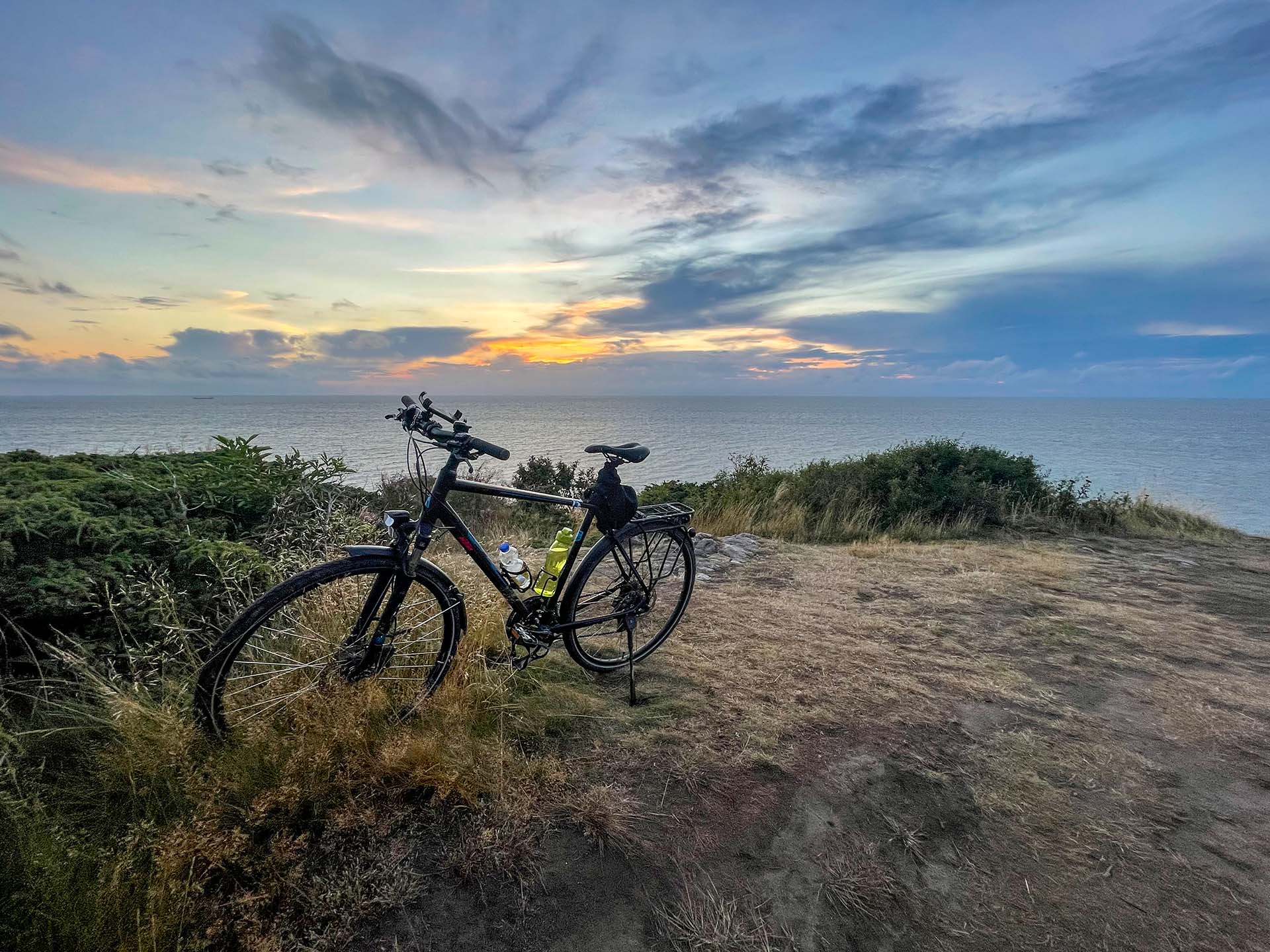
Looking back, this evening excursion was one of the most impressive experiences of the vacation — such wonderful scenery, a magnificent destination, and lots of fun on the smooth-running bike thanks to the missing luggage.
Buy coffee and off to Copenhagen
On the fourth day of the bike trip, I cross the Øresund in heavy rain to Helsingør and then continue to Copenhagen — one of the most beautiful cities in Europe.
Across the Øresund on the electric ferry
On the morning after the 160 km tour, I got up at 10:00 a.m. — contrary to my expectations — without sore muscles. Since I had pitched my tent pretty much right in Helsingborg, I wanted to go into town for breakfast. The destination on this fourth day of the tour was Copenhagen; I hadn’t pre-booked the crossing from Helsingborg to Helsingør over the Øresund and was therefore very flexible (the route is not long and the ferry runs every 30 minutes).
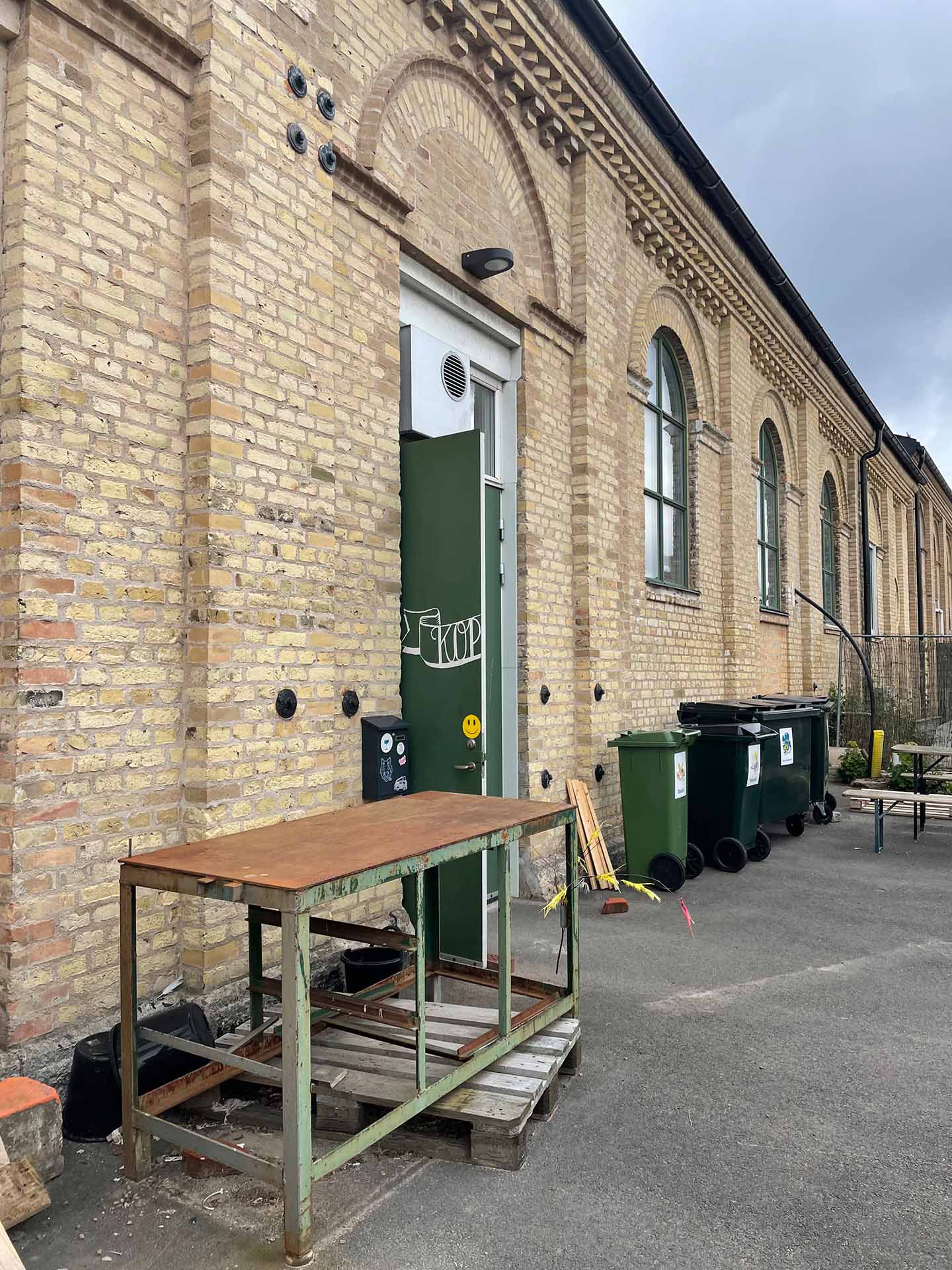
So I took down my tent and loaded my bike once again so I could get going quickly. My first plan was to have a coffee before continuing on to breakfast. I wanted to drink the coffee at Koppi, a coffee shop in Helsingborg’s industrial area. But when I got there, I realized that the place is purely a coffee roastery. In conversation with the very friendly owner, he managed to convince me to buy a 250-gram bag of Koppi coffee. I was also able to refill my bottles and, fully equipped again, jump back on the bike and continue into the city center.
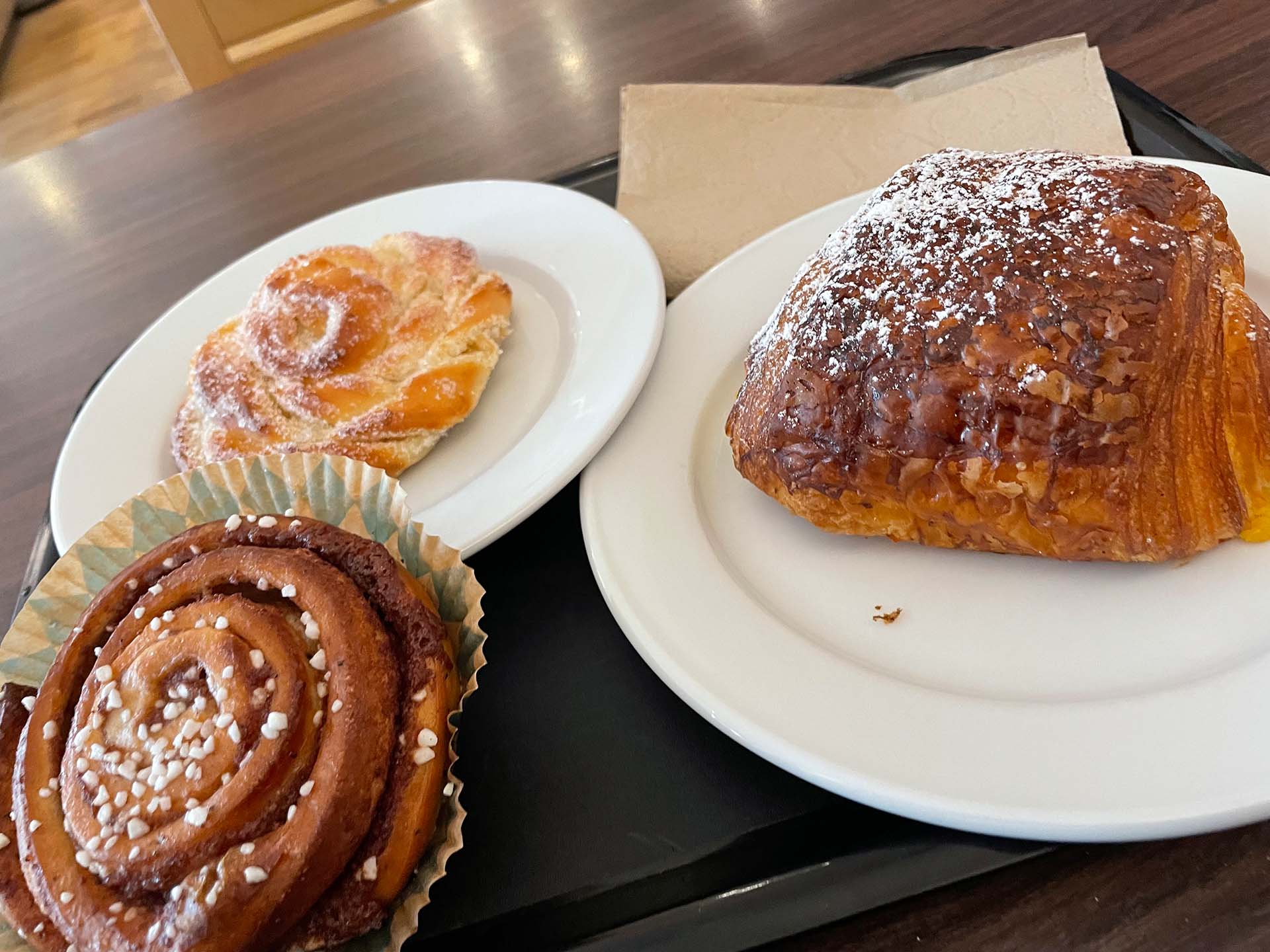
Once there, I sat down in a bakery where I sampled the selection with three smaller items. After that boost, I quickly went into a Swedish supermarket to get a little food for the road for the afternoon.
Back Next
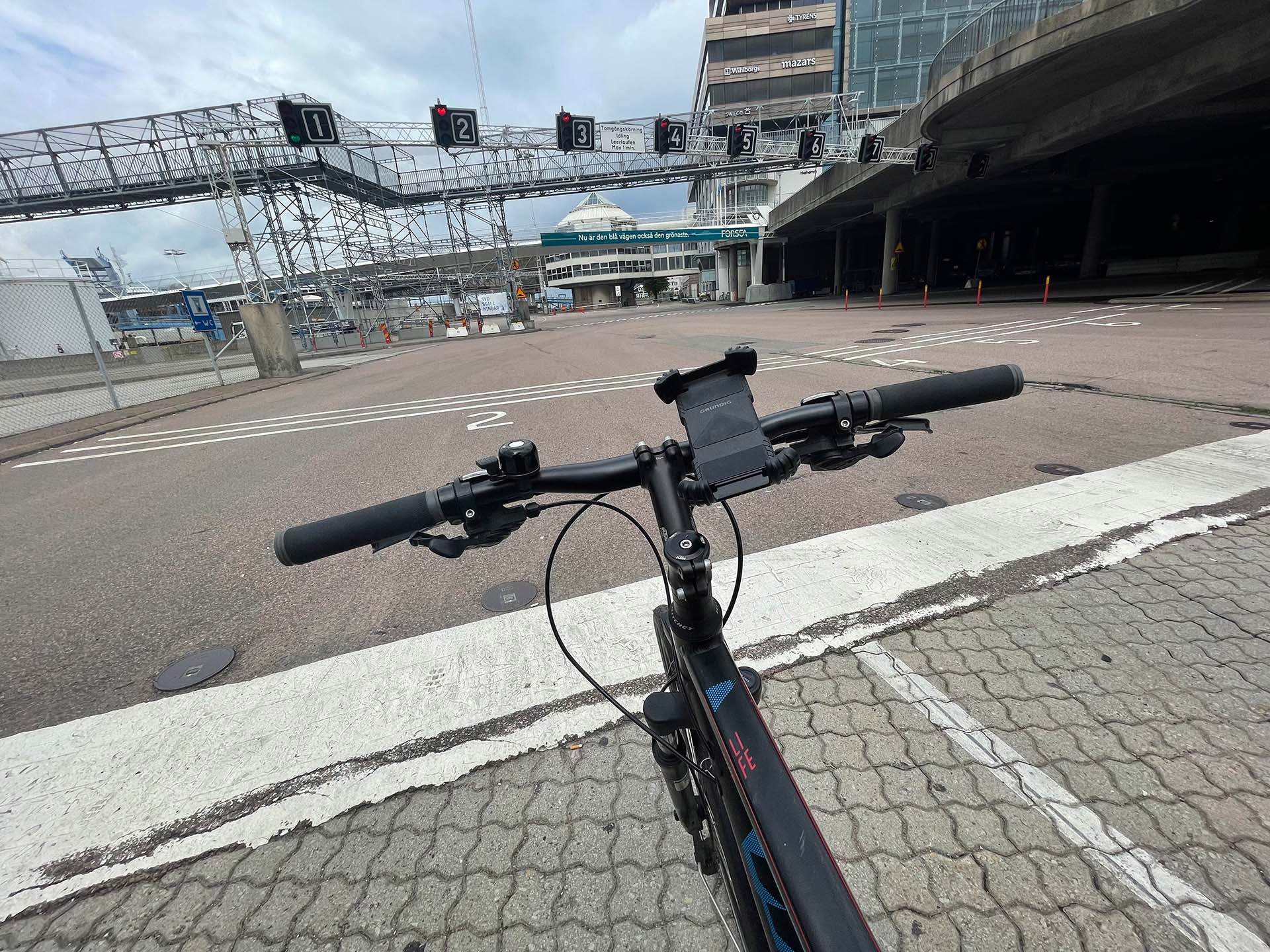
At 12:20 p.m., I was standing at the ferry port in the rain, trying to get to Denmark — not even 15 minutes later, I was already on the water.
The ferry I took was powered entirely by electricity. That made it, even compared to the catamaran ferry, almost eerily quiet on the water. On the other hand, the ferry wasn’t nearly as fast; for the 17 km I was on the way for 45 minutes. At least I could spend that time under cover, because it kept raining outside for the entire crossing.
https://p3g3.de/content/media/2026/04/faehre_oeffnung.mp4
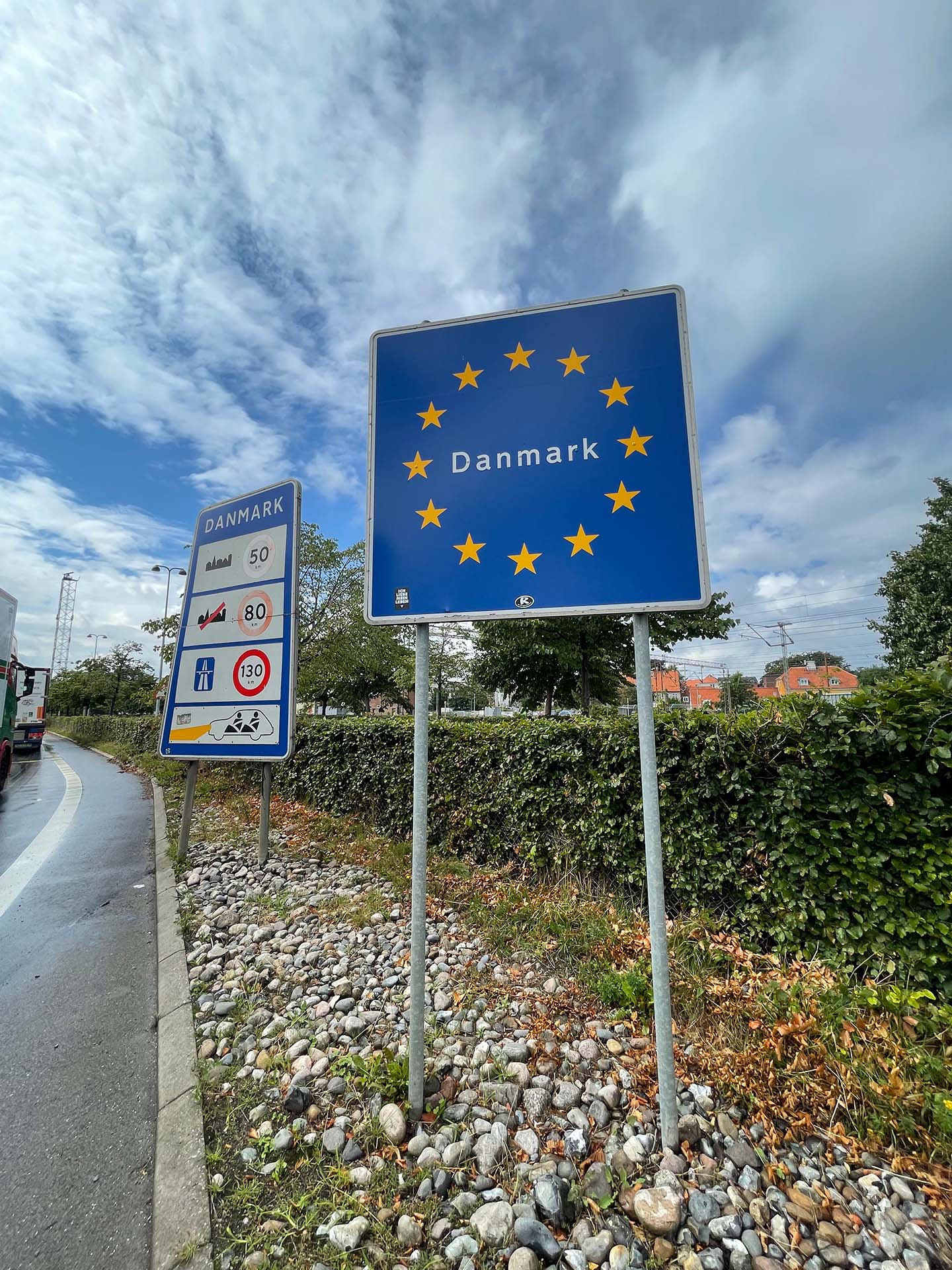
At around 1:20 p.m., I was standing on Danish soil for the first time — greeted by drizzle and big roads, a picture that would repeat itself more often over the next few days. So off we go, the 65 km to Copenhagen should be easy enough. After I managed to fix a few issues with my load (the bag that held my sleeping bag and tent together had unfortunately torn), I went from drizzle into proper rain, which soaked not only my jeans but also my shoes.
Slightly demotivated and a bit chilled, I gathered up all my motivation for Copenhagen once more and first rode 30 kilometers along a coastal country road before turning off onto somewhat smaller paths. Unfortunately, there was no proper bike lane on the country road, so I had to ride a lot with cars overtaking me very closely — quite an adjustment after Sweden. Before Copenhagen, it got really unpleasant once again when I was caught in a heavy rain shower along a narrow bike path. With no way to take shelter, I got completely soaked yet again. Slowly I started worrying about my clothes, which were exposed to the elements with only the textile bike bag protecting them.
Once I arrived in Copenhagen, the rain stopped. For five minutes, I was able to move through the city without being attacked by rain. But 20 minutes and 3 kilometers before my youth hostel, which I had reserved for the night, the sky opened up once again — this time with such force that I had to take shelter under construction scaffolding. I have rarely experienced such heavy rain in my life; even the cars stopped in the streets. For 20 minutes, the world stood still, and more and more people joined me under the scaffolding.
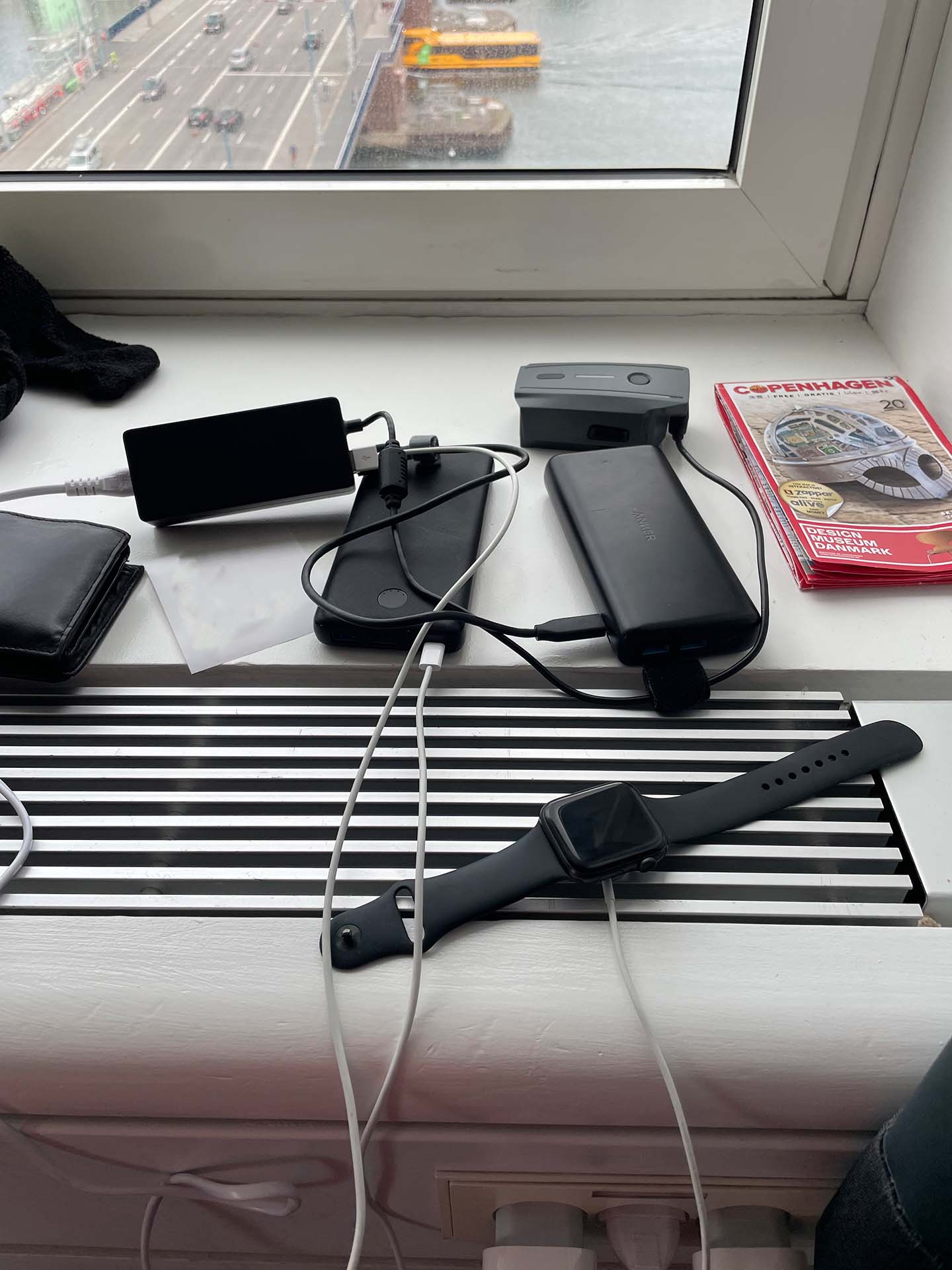
After the rain, however, the sun came out immediately, as if it wanted to apologize for the downpour, and accompanied me all the way to my arrival at the hostel. I was very relieved when I got there, and was immediately able to deal with the next problem: my reservation at the youth hostel had been made for a day later. Thanks to the nice staff at the desk, however, this mistake was quickly fixed and I received the room card for my bed in the shared room. After three trips between the room (located on the 8th floor) and the bike, I had all my things in one place again and could begin the charging apocalypse — after four days, being supplied with electricity again for the first time meant trying to charge two power banks, one drone battery, a tablet, a phone, a watch, and a pair of headphones as efficiently as possible one after another.
One night in Copenhagen
Once the devices were plugged in, I quickly took a shower and changed into fresh clothes before I wanted to explore a bit more of Copenhagen.
I set out to find somewhere to eat for the evening and found what I was looking for at Kristinedal Burgers. Amusingly, the lovely owner spoke German, because he had studied in Germany for a few months. Full and happy, I continued walking through the city, past Tivoli (see below) and all the way to the sea.
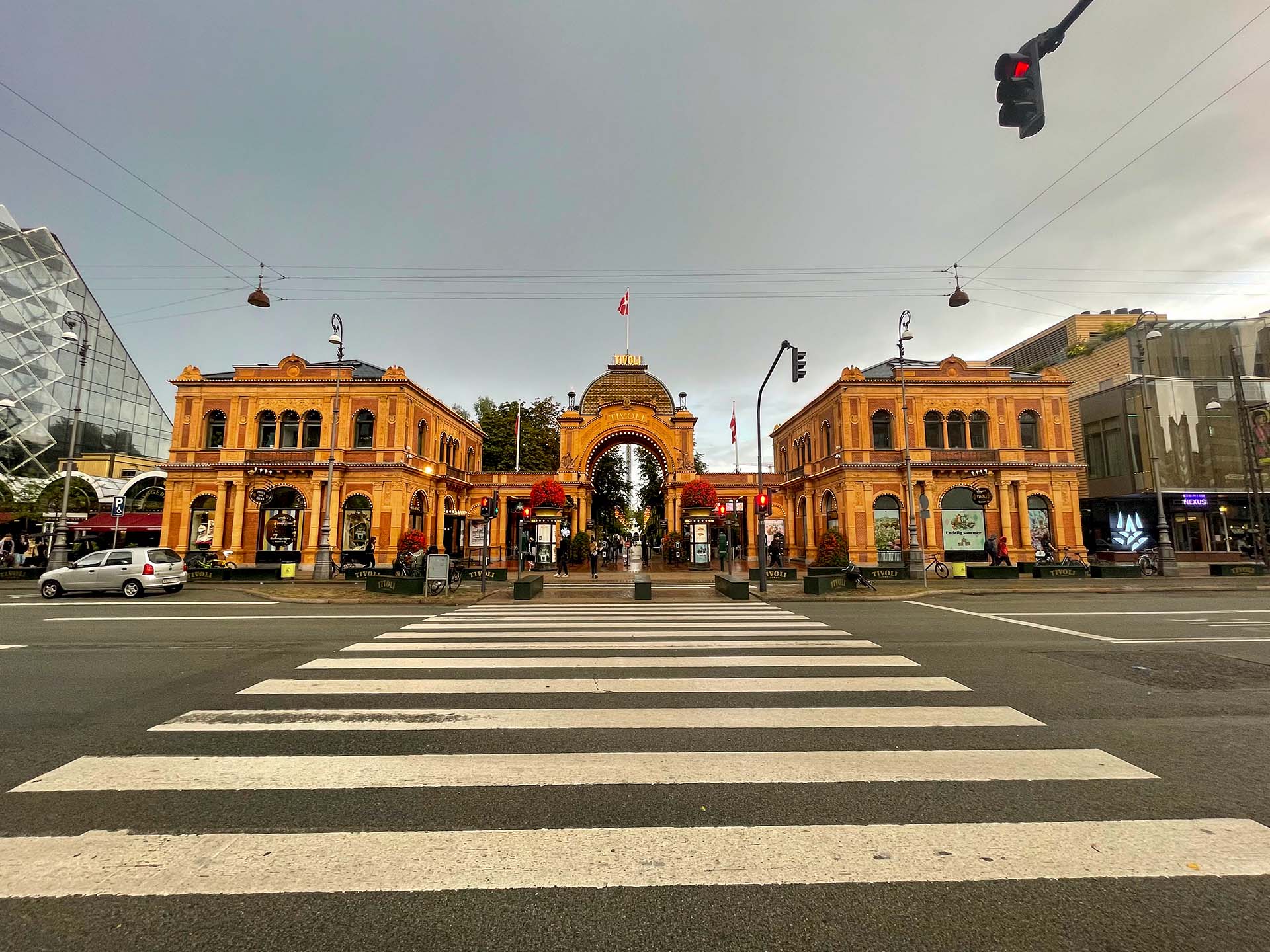
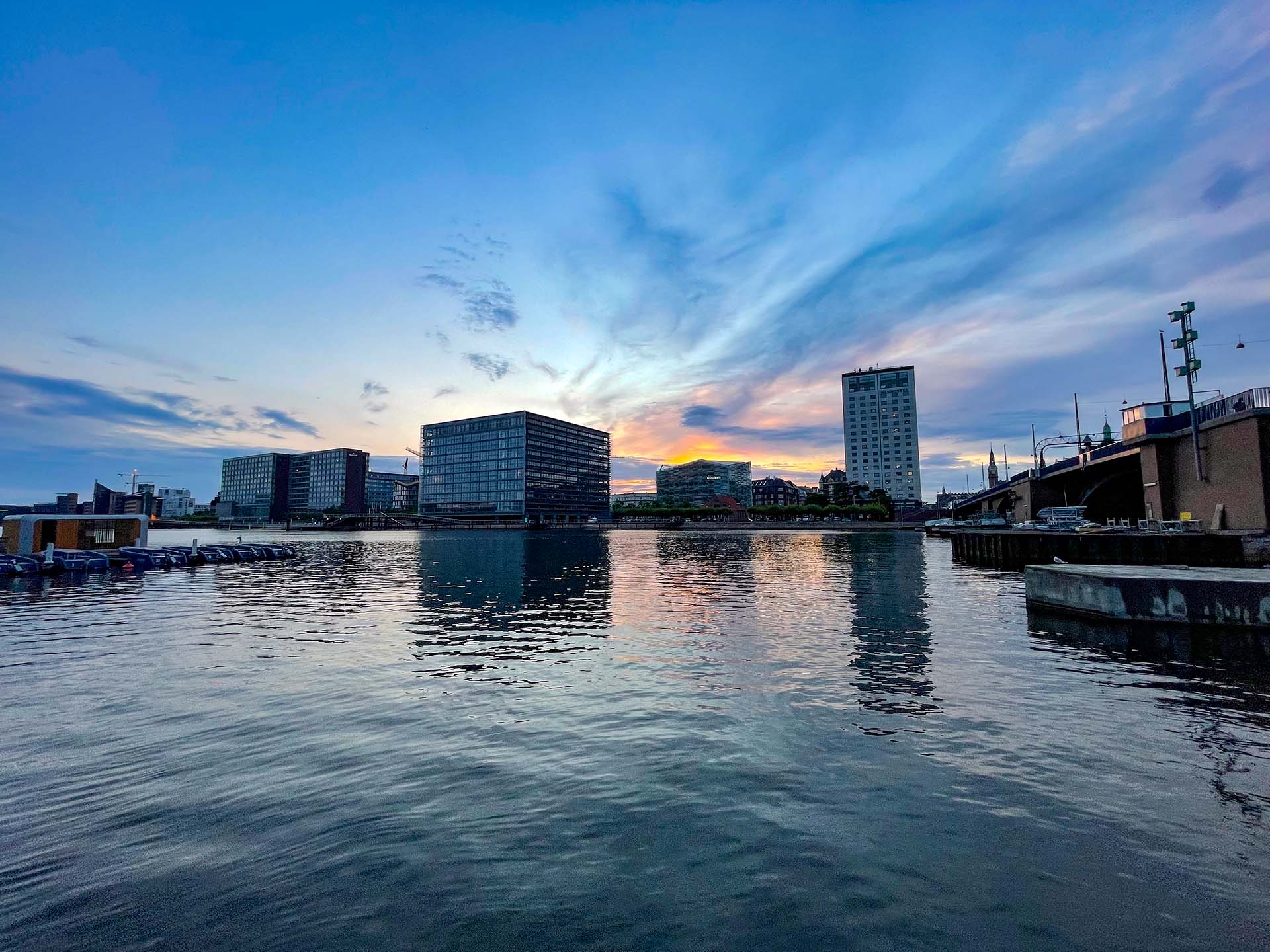
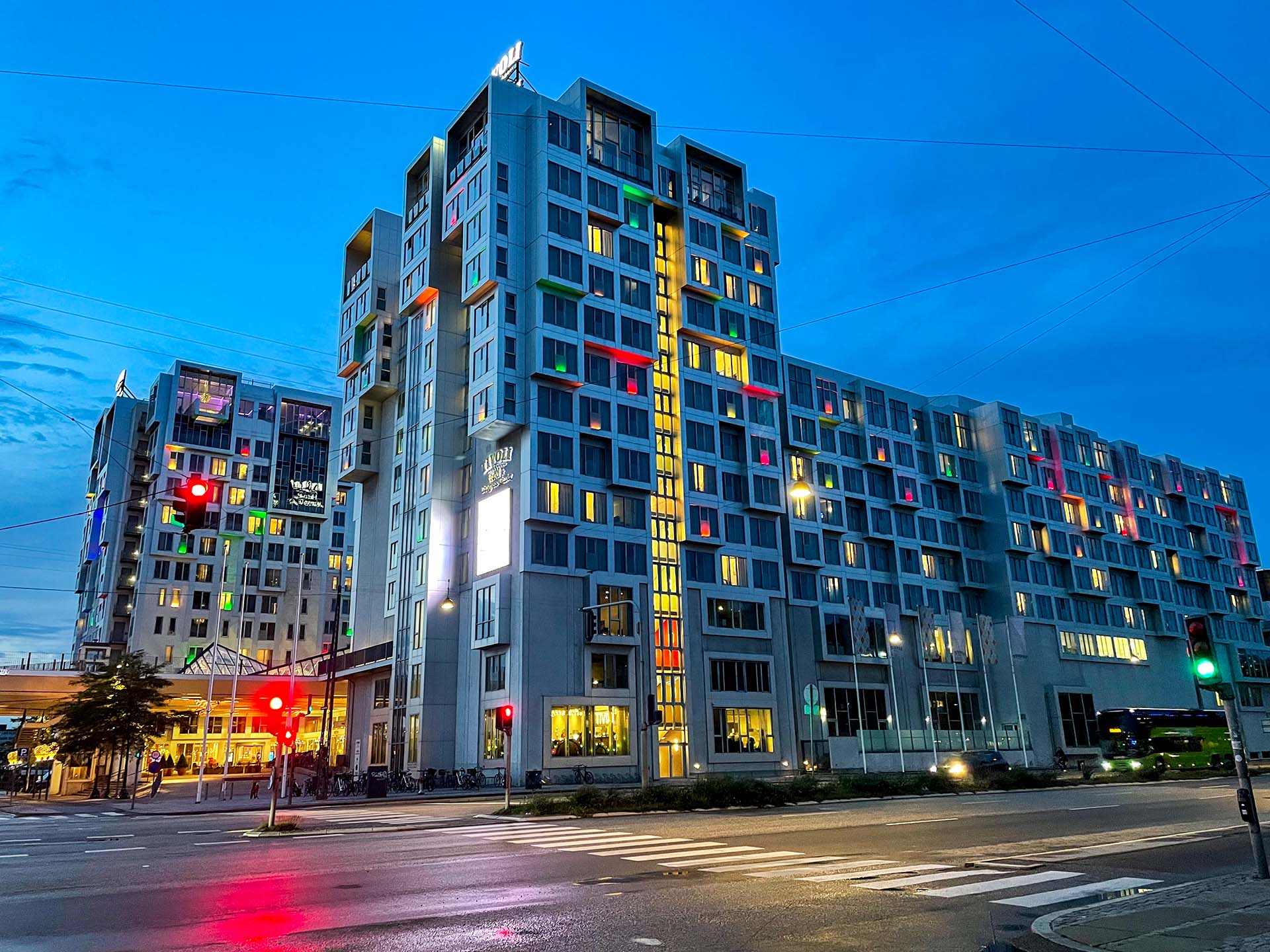
All in all, I then walked many more kilometers through the city during a beautiful sunset. Unfortunately, I was only in Copenhagen for this one evening, but I found the city very beautiful. The architecture in particular is impressive, and the sea right next to it is wonderful too.
Back Next
When I returned to the youth hostel, I also met my other roommates: a philosopher visiting Copenhagen for a conference and a traveler on her way farther north, both from Germany. We also had a football player from Milan in the room, who had a trial with FC Copenhagen.
So in the evening we were still able to talk about God, the world, and Munich’s rent index before going to sleep around 10:00 p.m. During our conversation, we also discovered a shared fascination with the philosopher Friedrich Nietzsche.
That evening I learned that sometimes a hostel is really helpful in between all the camping. Being able to charge all your devices and take a relaxed shower has its charm, and in mixed shared rooms you always meet very interesting people. At this point, many greetings to my roommates from that night :).
Danish hill tour to Vordingborg
Actually, the bike trip had one common theme on all days: lots of variety. The landscapes I rode through were mostly flat and a bit monotonous, but in return I passed through many different towns and route sections, so the day before I had ridden everything from country roads to bike paths. That variety was supposed to change on this fifth day when I rode from Copenhagen to Vordingborg.
Out of Copenhagen
When I got up at 9:30 a.m. in my youth hostel, my remaining roommates had already left. With my power banks recharged again and my (somewhat dried) clothes packed, I loaded my panniers once more and carried them one by one to my bike, where I mounted them while trying not to let the bike fall over: because of the asymmetrical load after the first pannier had been attached, the bike simply tipped over — so I placed the panniers next to the bike while I fetched the next one, hoping that no one would take an interest in a pannier filled with clothes and my drone. Once I had the rest of my luggage together, I could load the bike and set off, out of Copenhagen.
After the first few kilometers, the urban jungle slowly faded away in strong winds and I reached country road number 151, which would accompany me for the next 90 kilometers to Vordingborg. What I had not expected: Denmark is hilly. Not mountainous, but many dozens of hills with elevations of 30–90 meters lay ahead of me.
As soon as I was out in the countryside, I got the idea to look for food — unfortunately I was far too late with that thought. Out in the country, I couldn’t find another larger town before Vordingborg where a restaurant or supermarket was open (I didn’t want to build more than a 30-minute detour into my route just for food). When it also started raining around halfway through the route near the village of Rode, I sat down for 30 minutes in a reconstructed American village called "Bournonvilles Wild West."
Off we go in Copenhagen: at the moment with a strong headwind, hopefully that changes 🌬August 10, 2021
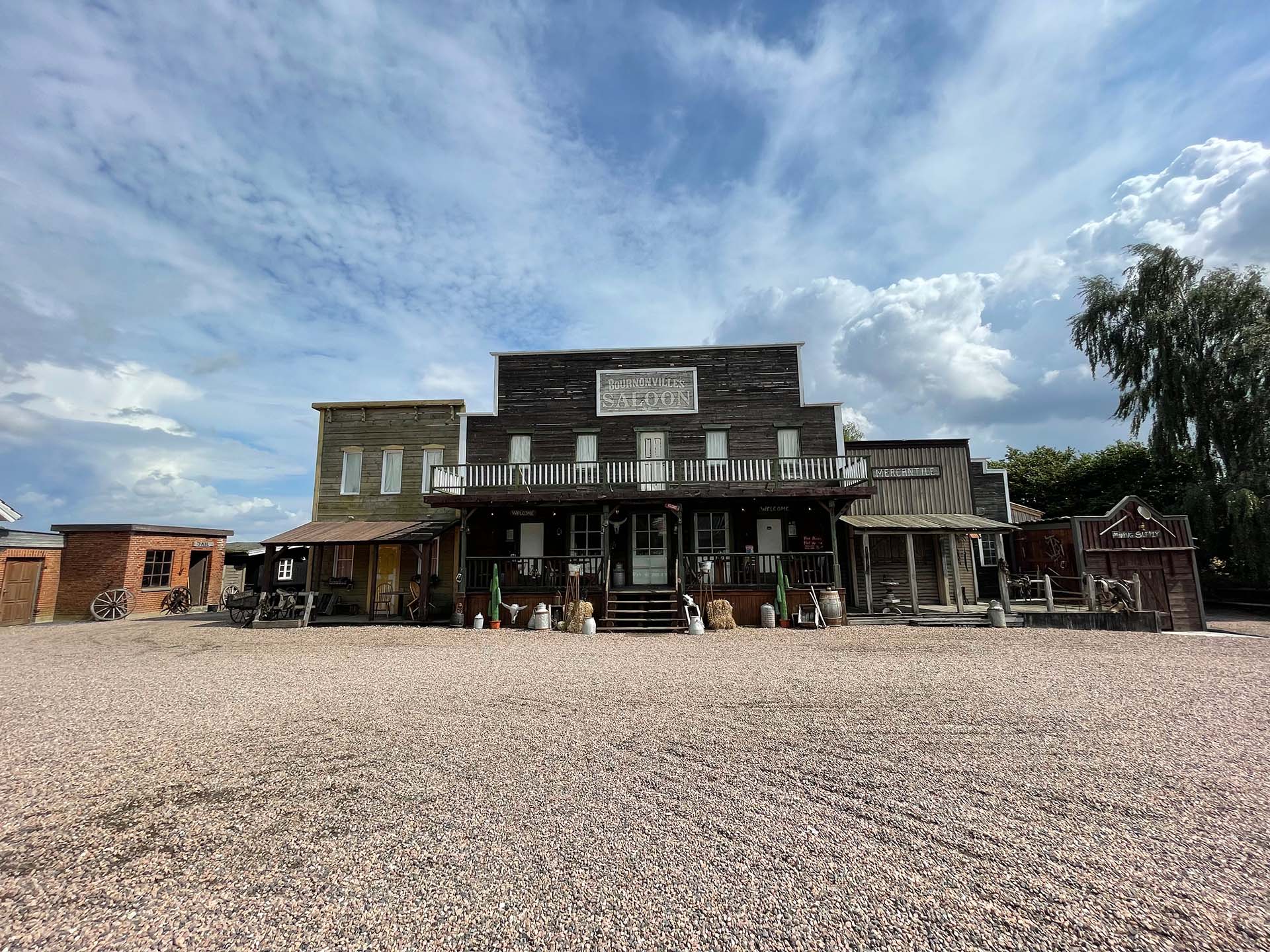
Coastal weather, you just have to love it 🌧 pic.twitter.com/eTUYVUQ2n4August 10, 2021
After I sat down in the main building of the little village (which, like the American-style construction itself, was realistically done, because it was still dripping nicely even through the ceiling — unfortunately they weren’t open that day), it once again started pouring properly.
At least I had excellent 5G reception in the middle of nowhere, so I could at least go through the latest news during that time. During the shower, the owner of the place also stopped by, and I was able to chat with him. A nice man, as American as a Dane could possibly have been — he drove a big 4x4 pickup truck and wore a cowboy hat, even in pouring rain. Once it looked like the rain would stop again soon, I got back on the bike. I was only able to continue for not even two minutes in the drizzle before the next rain shower came, this time driving me into a strip of trees off the road. I had actually wanted to shelter there, but unfortunately the trees were already wet from the previous shower and offered hardly any protection. So I got completely soaked once again on the tour.
At least this rain shower only lasted a few minutes, so I was able to continue fairly soon, farther in the direction of the German border.
Camping one last time
A bit frustrated by all the rain, I set off to ride the next 40 kilometers to my day’s destination.
That stretch dragged on quite a bit, because many hills continued to make the ride harder. On top of that, the constantly monotonous landscape wasn’t particularly exciting to pass through, and the country road with the tiny "bike lane" next to it (really just the shoulder of the road with a maximum width of 35 cm and no physical separation from the road) truly made this one of the toughest rides, especially mentally — physically everything was still fine.
Very happy, I reached my campsite in Vordingborg around 5:15 p.m. One more time — and for the time being the last time — I pitched my tent, took off the panniers, and went looking for dinner. I had actually planned to ride another roughly 30 km each way to a restaurant farther south (= 60 kilometers total), but I abandoned that plan after the first few minutes because I wanted to save enough energy for the next few days and the ride had already worn me out quite a bit.
So instead I visited a black Netto in Vordingborg, where I bought myself a small dinner. But with the minimum purchase quantity of six bread rolls, "small" didn’t really happen, so I also bought toppings for the coming breakfast and lunch and then headed back to the campsite.
Once there, I ate dinner first, then set out on foot along the coast with the drone for a little while.

Back to Germany - via Gedser to Rostock
Get up. Have breakfast. Pack up the tent. Load the bike. Set off.
That, or something like it, was what I had already gotten used to as the mornings of the bike trip, and so on what was now the sixth day of the journey, I started the same way again.
On this day, my bike trip was supposed to take me back to Germany; in the afternoon I would still need a ferry connection — I hadn’t pre-booked it, so I wanted to get to Gedser, the border town with the ferry port, as quickly as possible.
Gedser and even more rain
Back Next
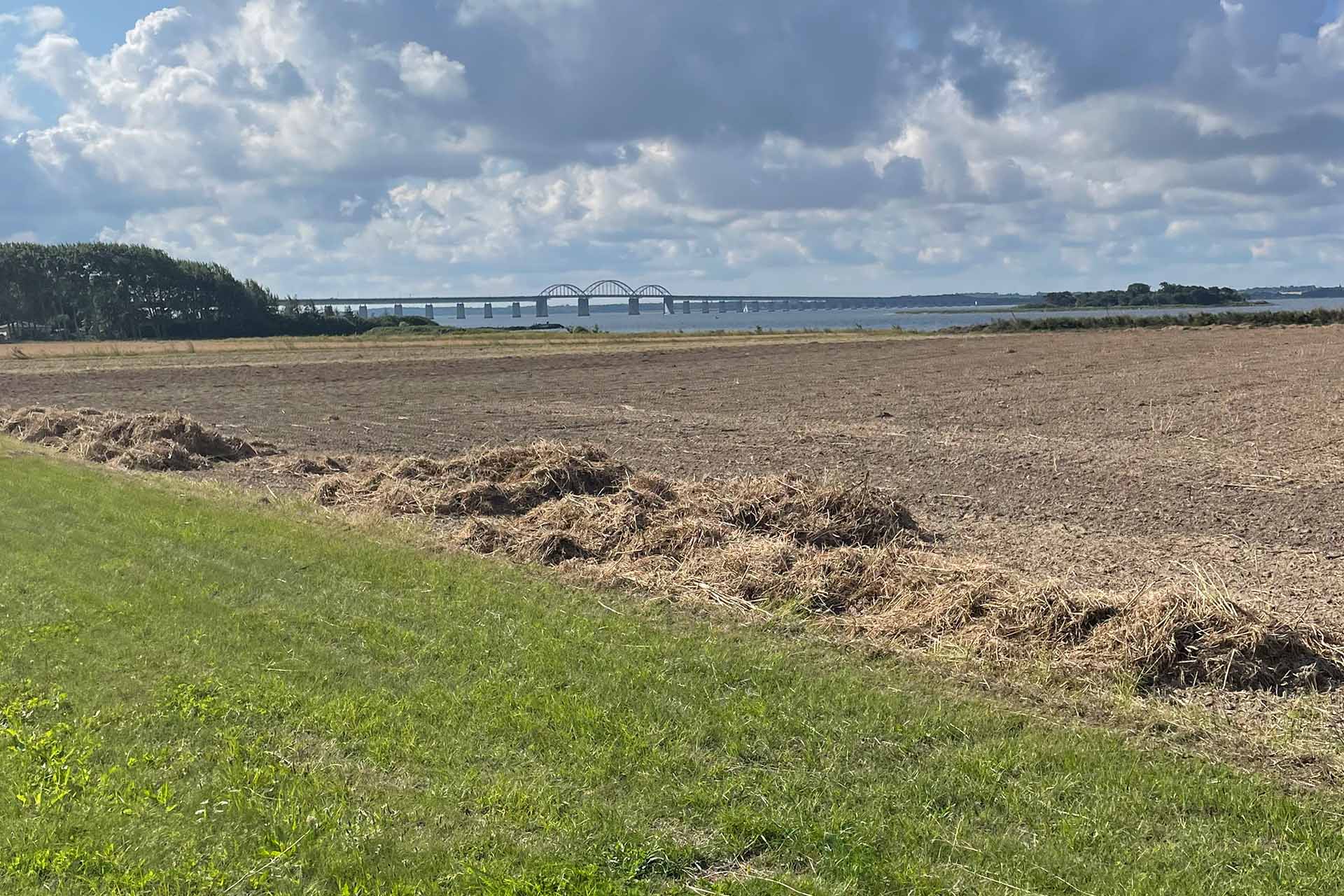
After crossing several large bridges over the fjords of Denmark’s southern islands, I rode around 55 kilometers through Denmark’s familiar landscape to Gedser. On this day too, I was caught in a major rain shower in between: dark clouds followed me the whole way from Vordingborg to Gedser and to the ferry, and then suddenly broke around midday, delivering a downpour like the one I had already experienced in Copenhagen. This time, however, the cloudburst only lasted a few minutes.
https://p3g3.de/content/media/2026/04/skandinavien21_regentankstelle.mp4
The rain had already almost died down again when I recorded the video; in the meantime, even the drain in front of me had overflowed.
After this rain, the cloud cover held for the rest of the route to Gedser without any more rain, so I was able to continue on my way to the border town.
The southernmost point of Denmark
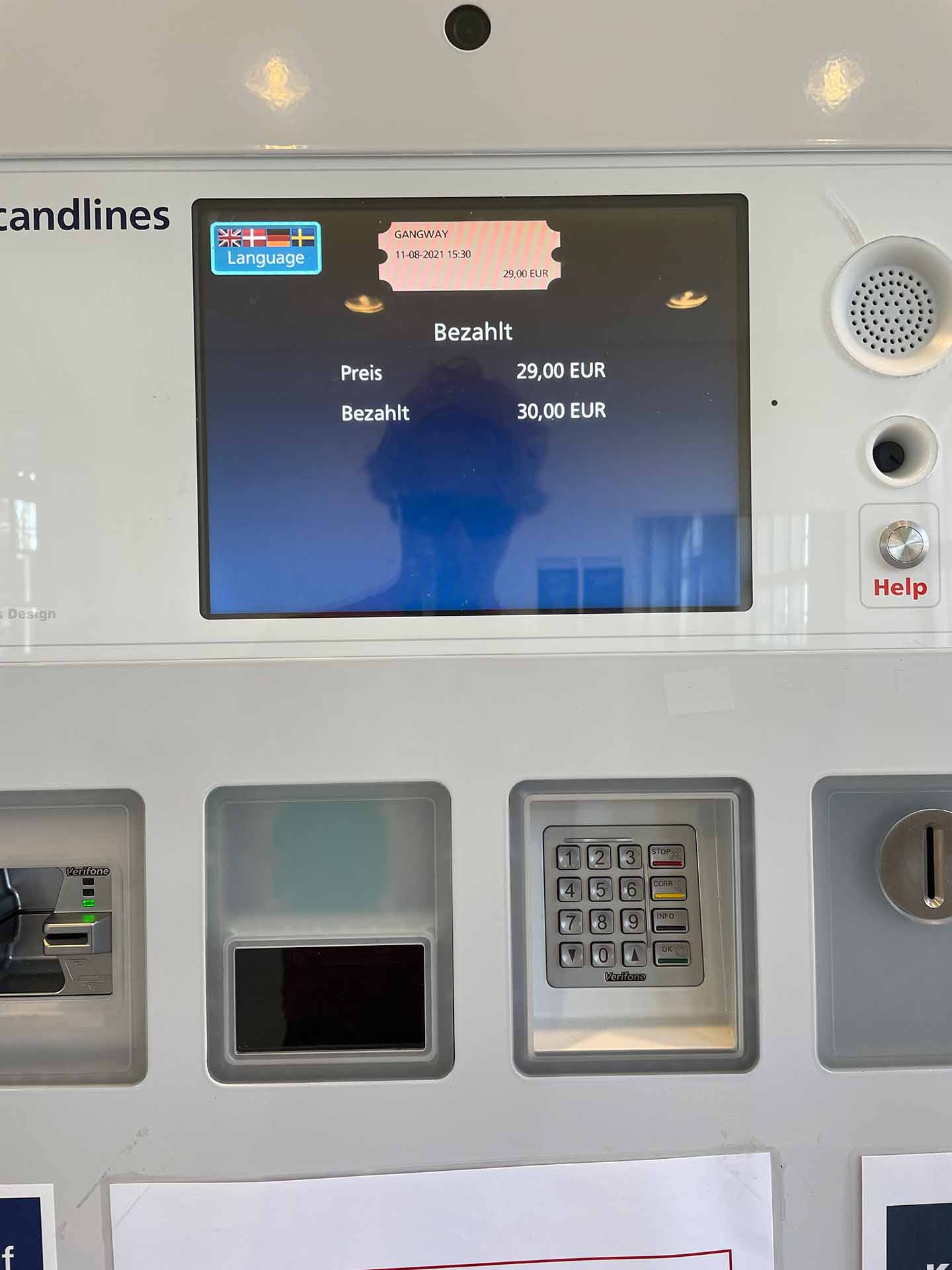
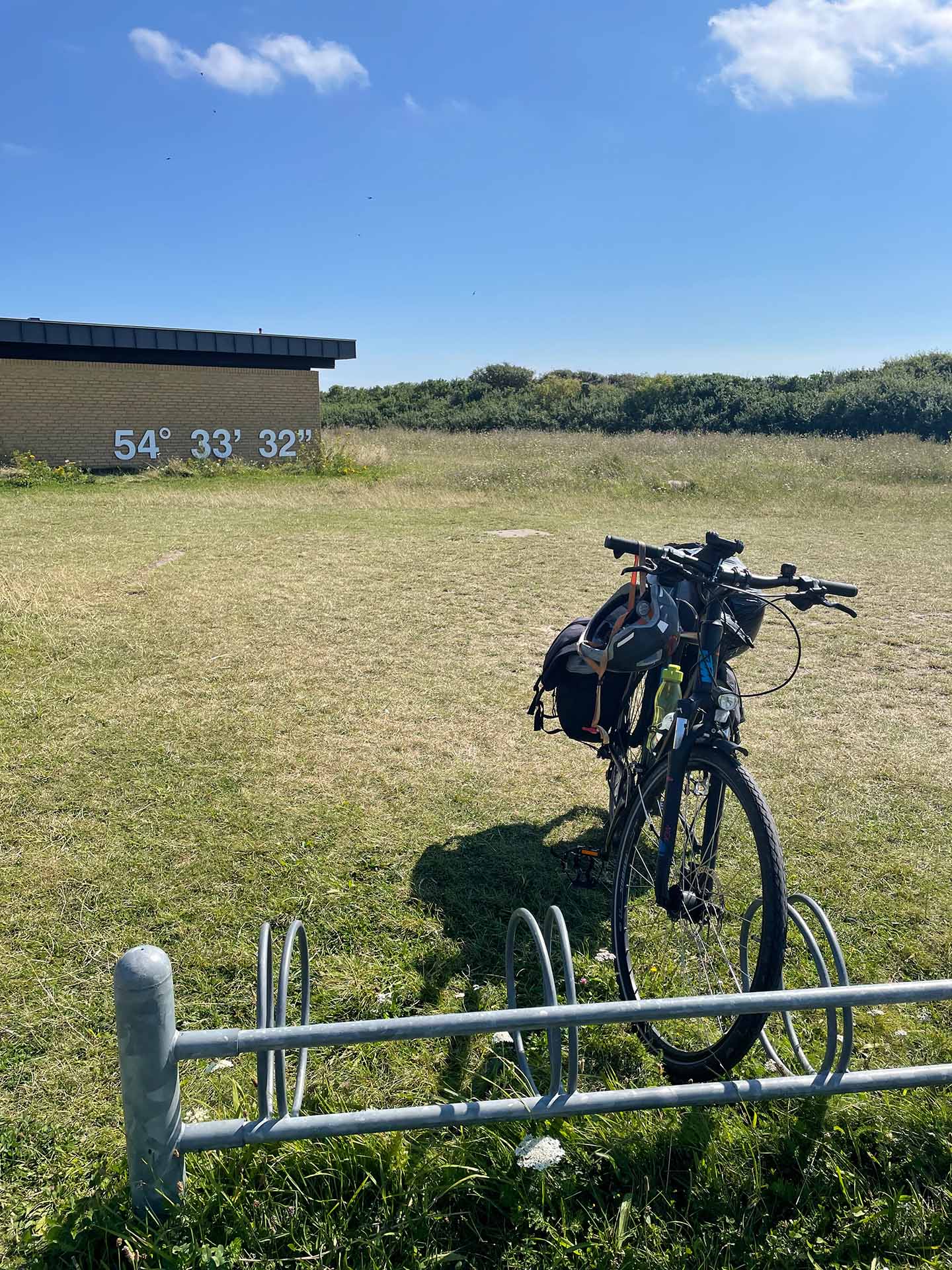
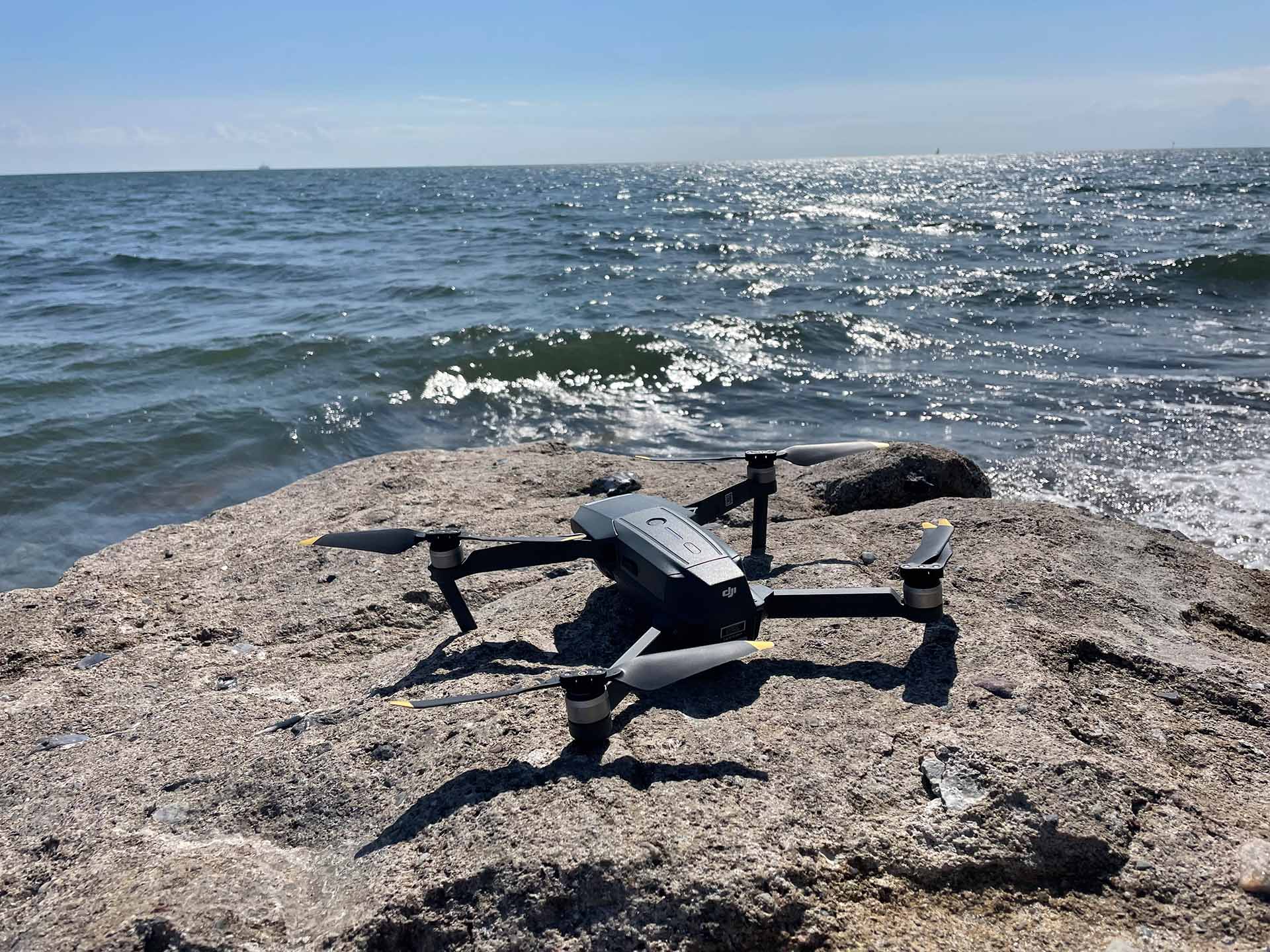
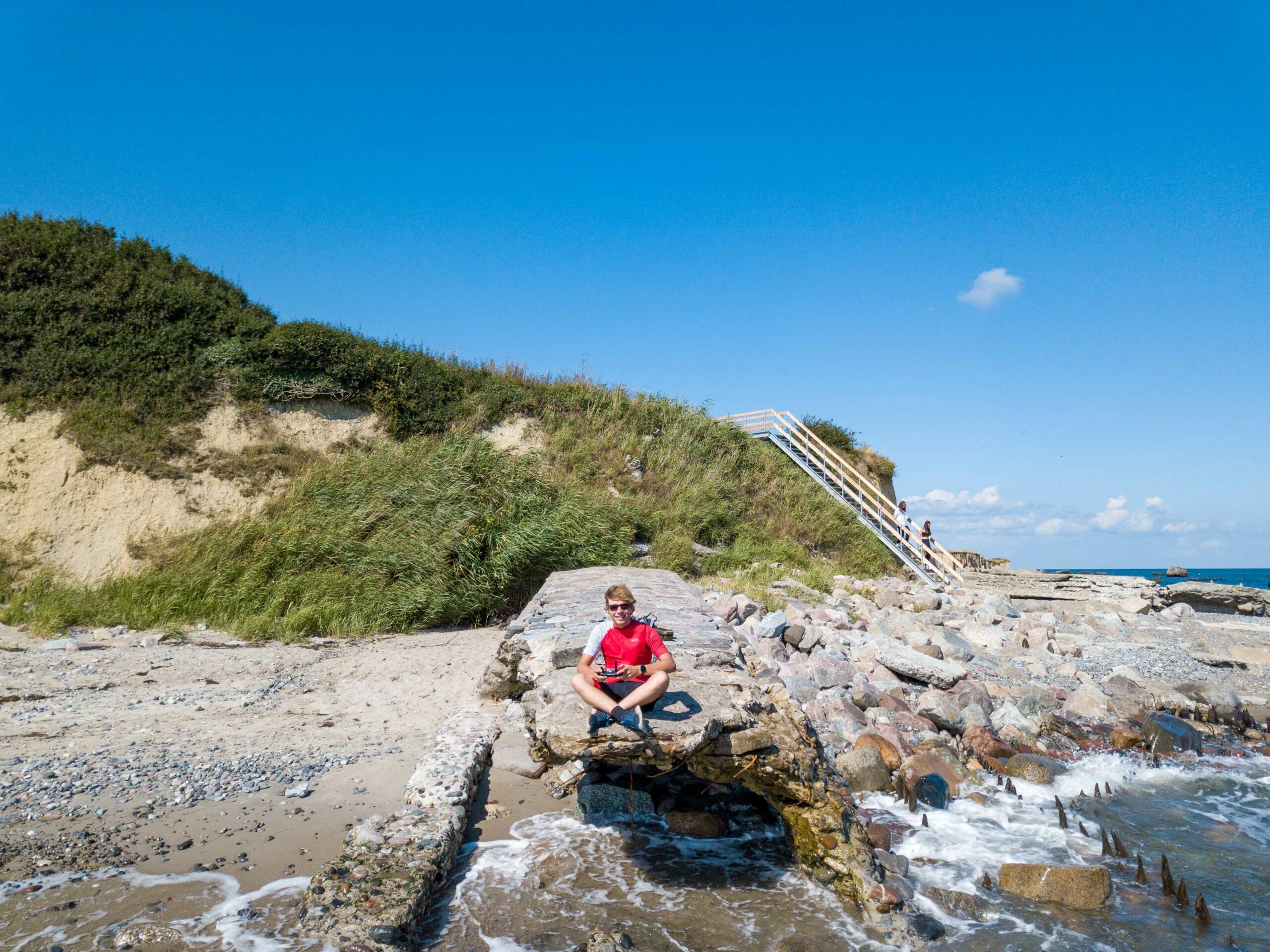
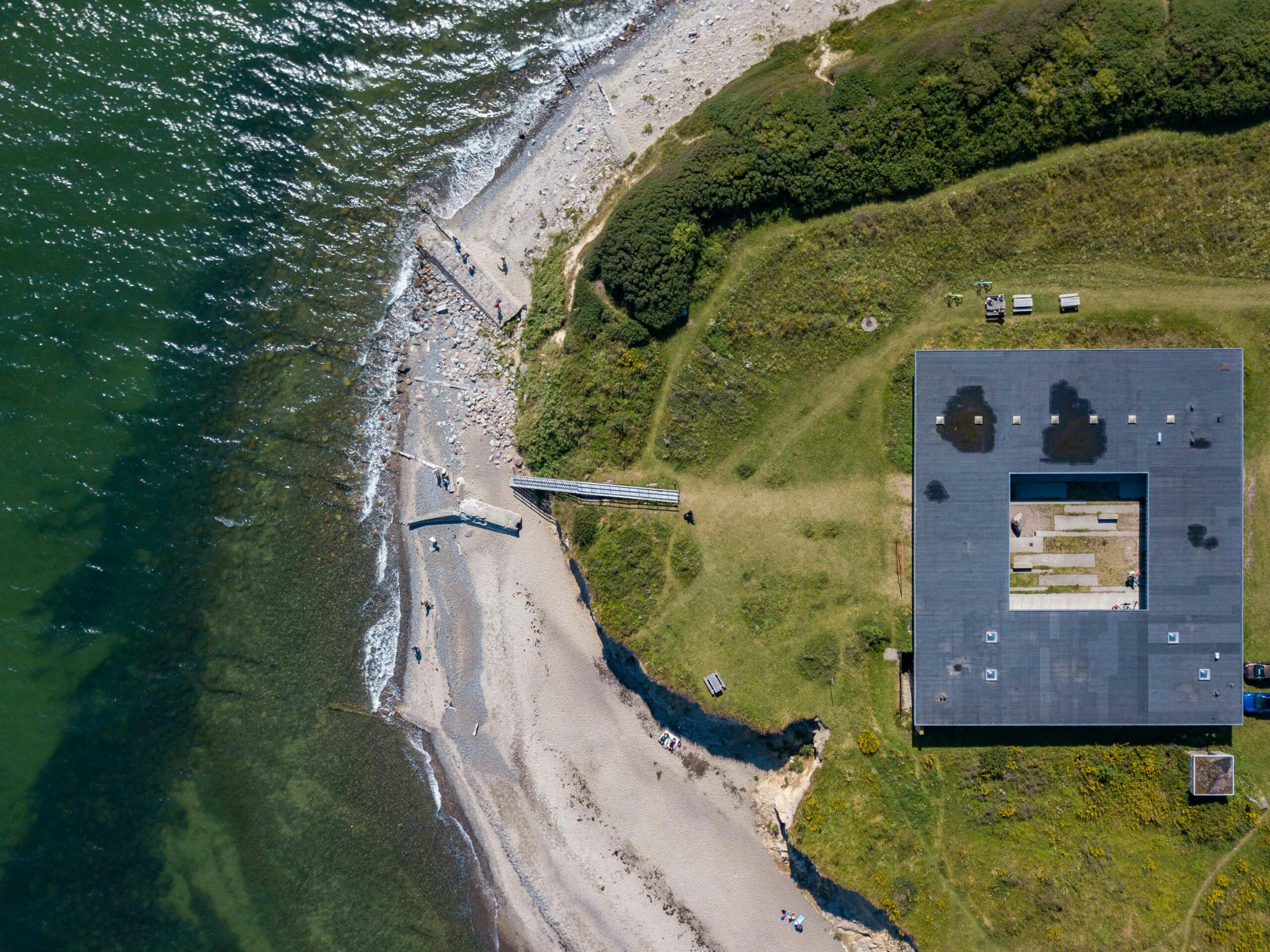
Once I arrived in Gedser, the first thing I did was get a ferry ticket for the next crossing that would take me to Rostock. Since that trip was still about an hour in the future, I decided to make a detour to the southernmost point of Denmark: Gedser Odde Park right on Denmark’s coast.
Back Next
After flying my drone, taking a few more photos of the surroundings, and (very importantly — otherwise I hardly mention this in this travel story because so little happens during those moments) simply resting for a few minutes, I quickly headed back toward the ferry port.
Those few kilometers were covered quickly, but unfortunately the ship wasn’t even in the harbor when I arrived. Too bad — I could have stayed longer in Odde after all. But I preferred making sure I got the last ship of the day back to Germany rather than sitting on the beach for a few more minutes.
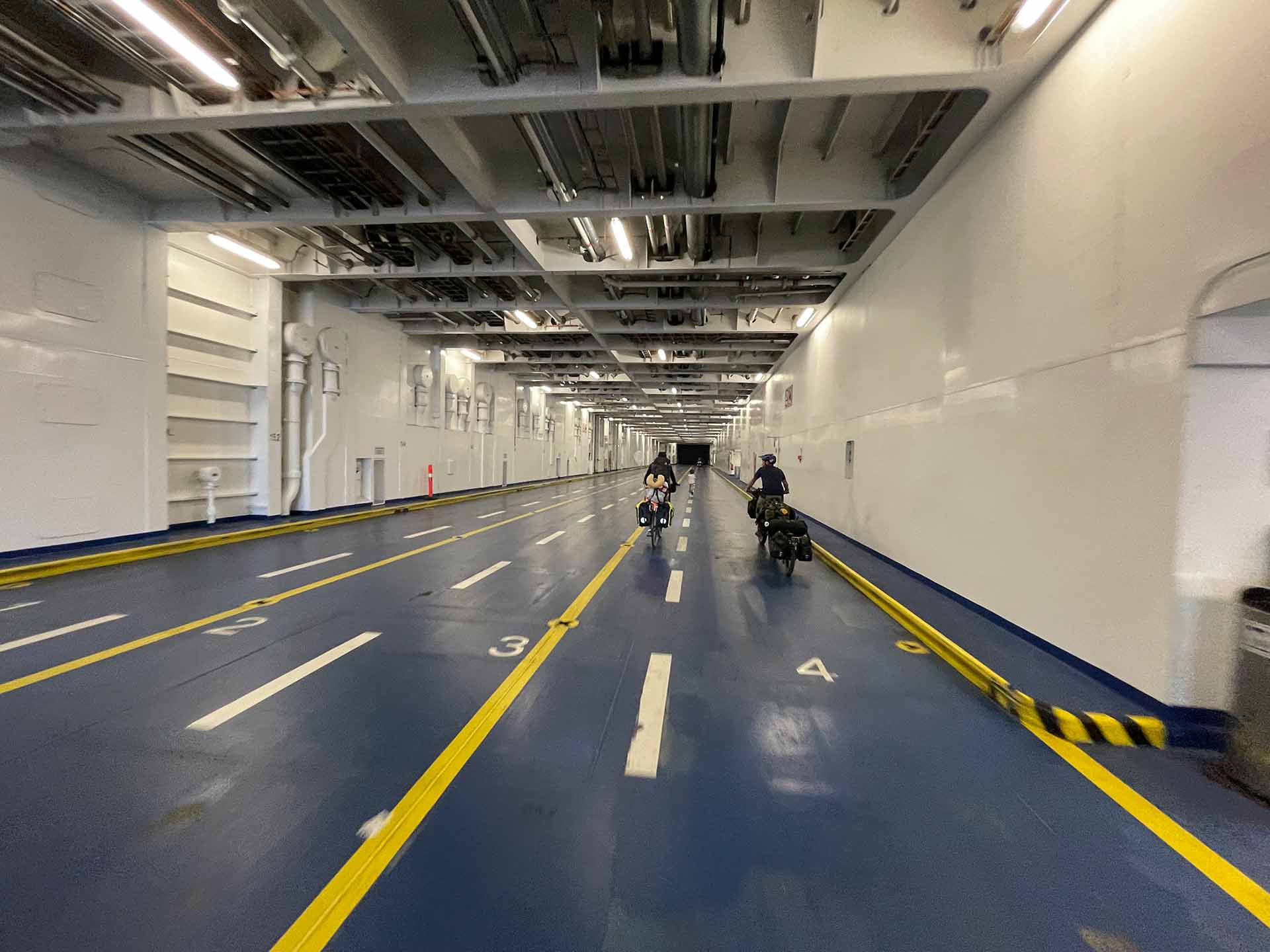
Around 30 minutes after my arrival at the port and 40 minutes after the official boarding time, the ferry finally arrived leisurely in Gedser. After a short unloading process, we as a small group of cyclists were already allowed to board the ferry.
Off to Germany
Compared to the two previous ferries, the Scandlines ferry (named "Copenhagen") was rather unspectacular, with one exception: a 30-meter rotor sail rises from the deck of the ferry.
This Flettner rotor is a propulsion concept that is more than 100 years old, in which a large cylinder is rotated rapidly by electric motors during the journey so that, paradoxically, the one-sided buildup and mutual acceleration of air creates forward thrust.
The concept behind this sail technology is called the Magnus effect. On the ferry itself, despite educational promotional films about the sail’s 4–5% CO2 savings when in use, I didn’t understand how it worked exactly; what this Magnus effect was all about only became clear to me now while writing this post by reading the Wikipedia article.
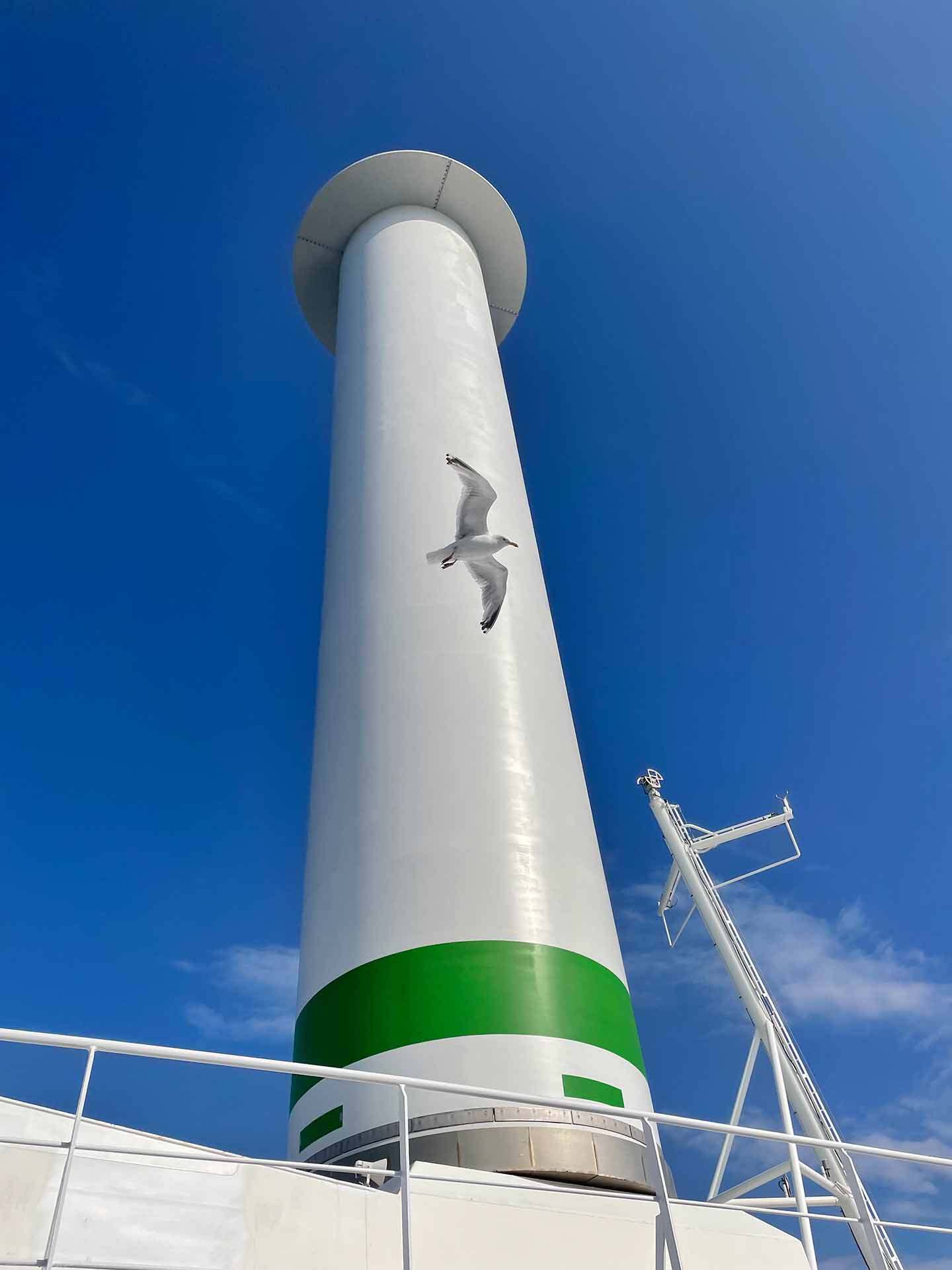
With those 4–5% CO2 savings, I chugged across the North Sea for 2.5 hours and 100 kilometers before German land came into view.
I actually like traveling by ship, even over longer distances, but on this one I was really looking forward to Rostock. First, I had absolutely nothing to do on the ship; neither "duty-free" shopping nor the very cafeteria-like restaurant were really my thing, and I couldn’t really get comfortable on the few seats on deck either. Second, I wanted to be in Rostock as early as somehow possible, because the next day a route of a completely different dimension was waiting — before setting off on that one, I at least wanted to cook and get a few hours of sleep.
Back in Germany: Rostock
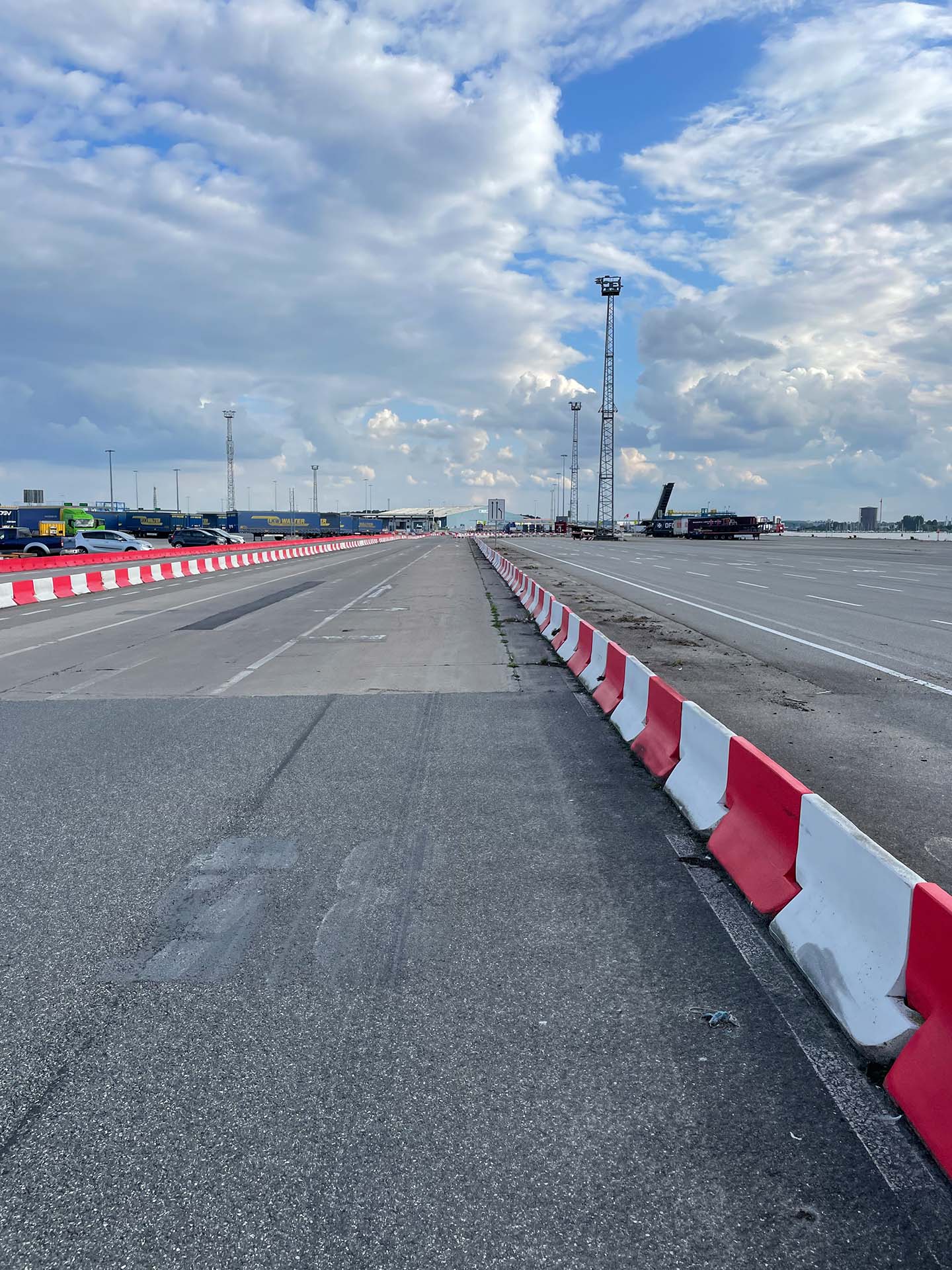
At exactly 6:00 p.m., I set foot on German territory again, in the form of the Rostock ferry port. We cyclists were allowed to leave the ferry before all the other motor vehicles, and shortly afterward the trucks followed.
Because of the trucks quickly catching up behind me, I probably let myself get a bit stressed and — at least I can’t explain it any other way — missed the bike turnoff from the road. At any rate, I suddenly found myself continuing together with the trucks on a fairly narrow road toward a bridge, where turning around or even simply stopping would have become really dangerous. When I passed a 50 km/h sign, I decided that the best way to defuse the situation was probably to ride as fast as possible (I’m rarely the kind of person in that situation who wants to make the vehicles behind me wait; of course, a risk assessment of that decision is always part of it): fully loaded, I accelerated uphill (!) to 50 km/h, the probably most exhausting 30 seconds of the entire trip — once at the top, I was able to take a breather at a roundabout with a smaller exit. In that short time, my heart rate had reached 200 beats per minute, so I was very relieved about the break.
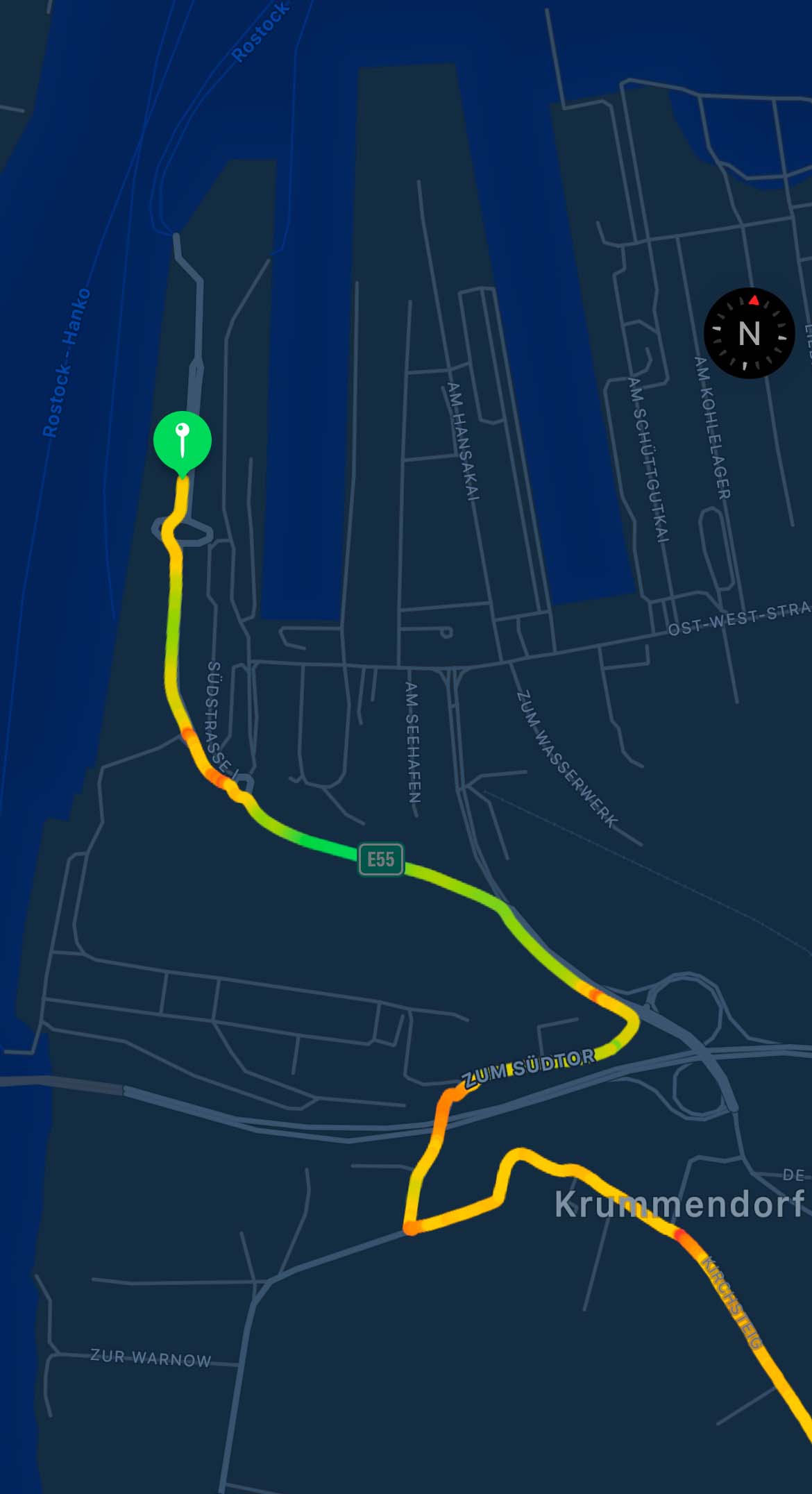
After this "active start" on German federal territory, I was immediately reacquainted with the bike path situation in Germany:
Back in Germany 😼 pic.twitter.com/GjGW7DiPMVAugust 11, 2021
There were still 14 kilometers to my hostel in Rostock-Marienehe, but I was able to ride them in a relaxed way along the Unterwarnow in a beautiful evening atmosphere. One hour after my arrival in Rostock, at 7:00 p.m., I reached my small hostel. There I immediately set off for the nearest supermarket, where I bought pasta and other provisions for the evening.
When I got back to the hostel, however, two vacationers from Saxony offered to let me eat with them — I gladly accepted, so I was able to eat pasta with vegetables and lots of curry and cheese without having to cook myself. In return, I did the dishes, and while doing so I chatted with the two Saxons. For me, it was quite interesting to be able to talk directly with two people — instead of about "the East Germans" — whose opinions and belief systems I could only with difficulty identify with.
So we talked about the existence of man-made climate change and the pros and cons of diesel driving bans, as well as the state of the CDU — on the latter, even if we were looking at the situation from different directions, we could agree quite well on "miserable," at least one common denominator. Despite the enormous thematic differences, the conversation was very pleasant, and I was even offered rum and milk (interesting combination!), but in view of the next day’s ride I politely declined.
At around 10:00 p.m., I fell asleep relaxed in a four-bed room, though I already felt a slight unease when setting the alarm for 3:30 a.m.
From Rostock to the federal capital - hypermiling on a bicycle
Up to this point, I had been able to sleep in almost every day. After all the cycling the day before, that was certainly necessary too, but on this seventh day of the bike trip I no longer had the privilege of sleeping until 9:00 or 10:00 a.m.
It’s 3:10 a.m., and I wake up. My alarm had actually been set for 3:30 a.m., but because of the very loud snoring of a fellow sleeper in my room as well as the tension about the upcoming bike route, I was already awake before the alarm.
I quickly packed together the few things I had in the room and grabbed a cold coffee and some food for the road from the kitchen. Then I brought my already prepared bike out onto the street, dropped the hostel key into the designated mailbox for checkout, and prepared the navigation to Berlin.
Off the tour goes
251 kilometers, 12 hours, 57 minutes.
With this calculation from Google Maps, I start the cycling workout on my watch at 3:25 a.m. I was wearing full cycling gear, but with another jacket "on top," because the nights were still cool. All device batteries were fully charged; I was most worried about my watch battery in view of the upcoming ride — but I had power banks within reach so I could charge it during short stops.
So off we go. Out of Rostock’s industrial area, through the deserted city where I saw neither a car nor any other road user, and out into the countryside.
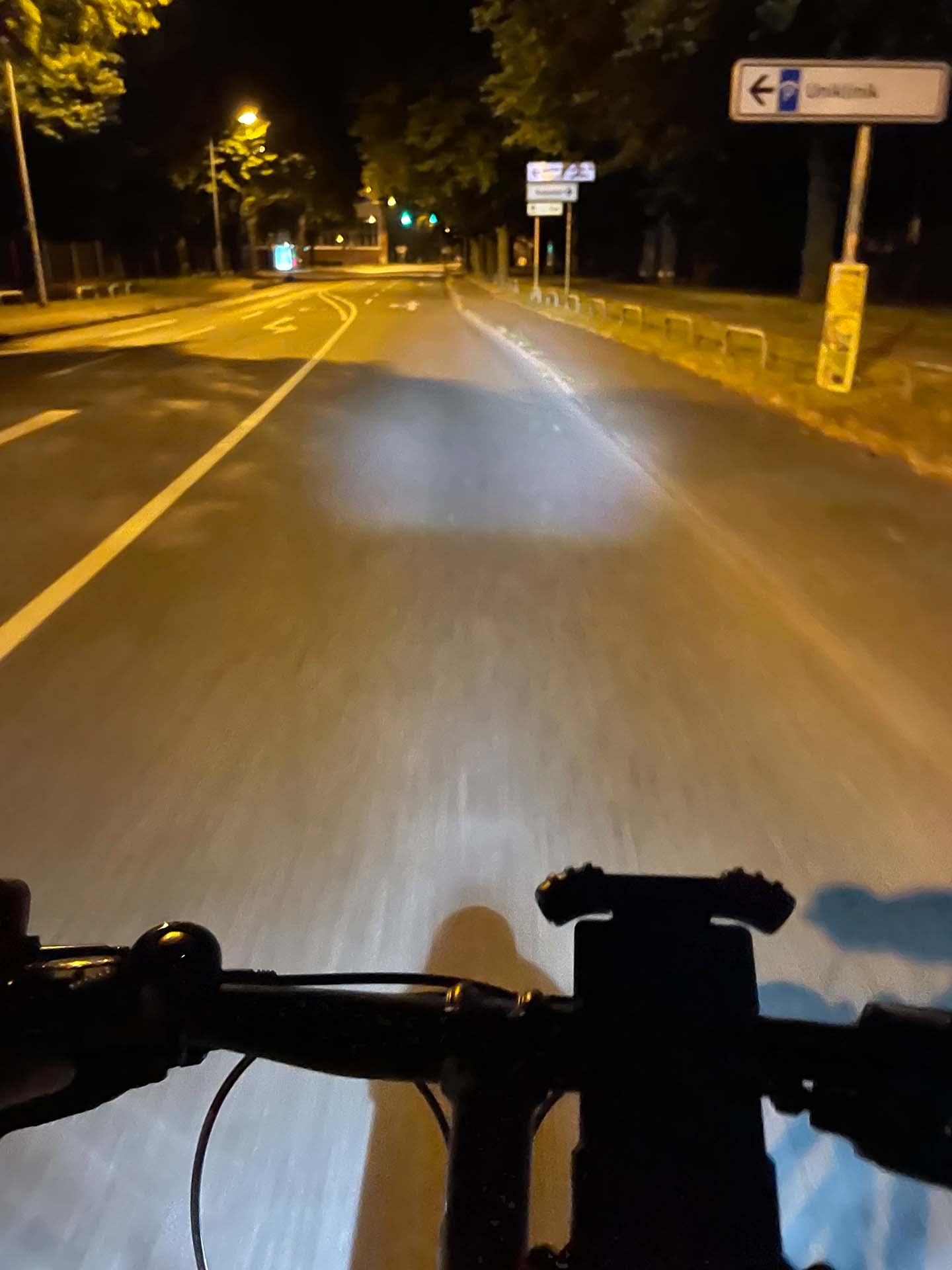
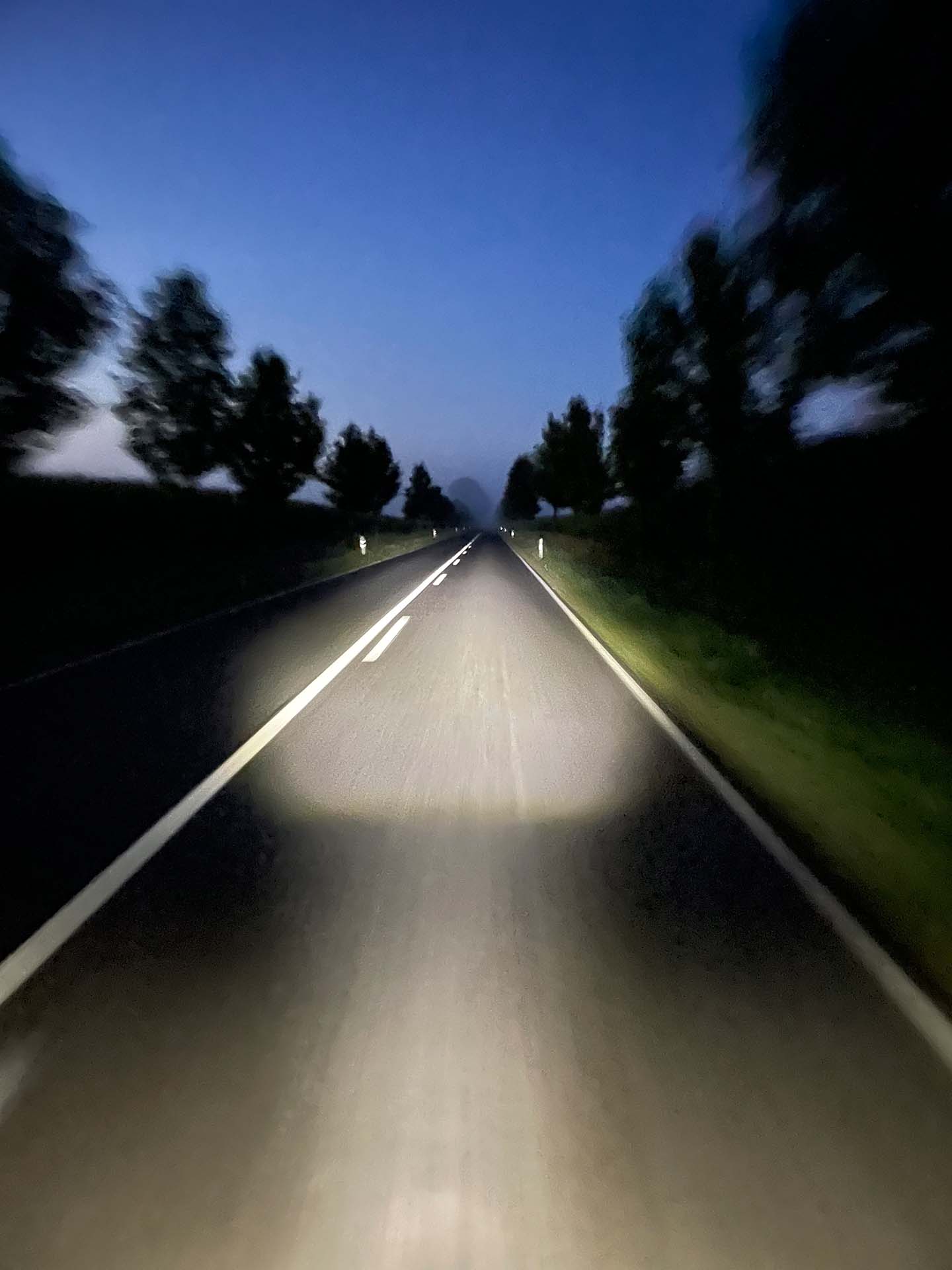
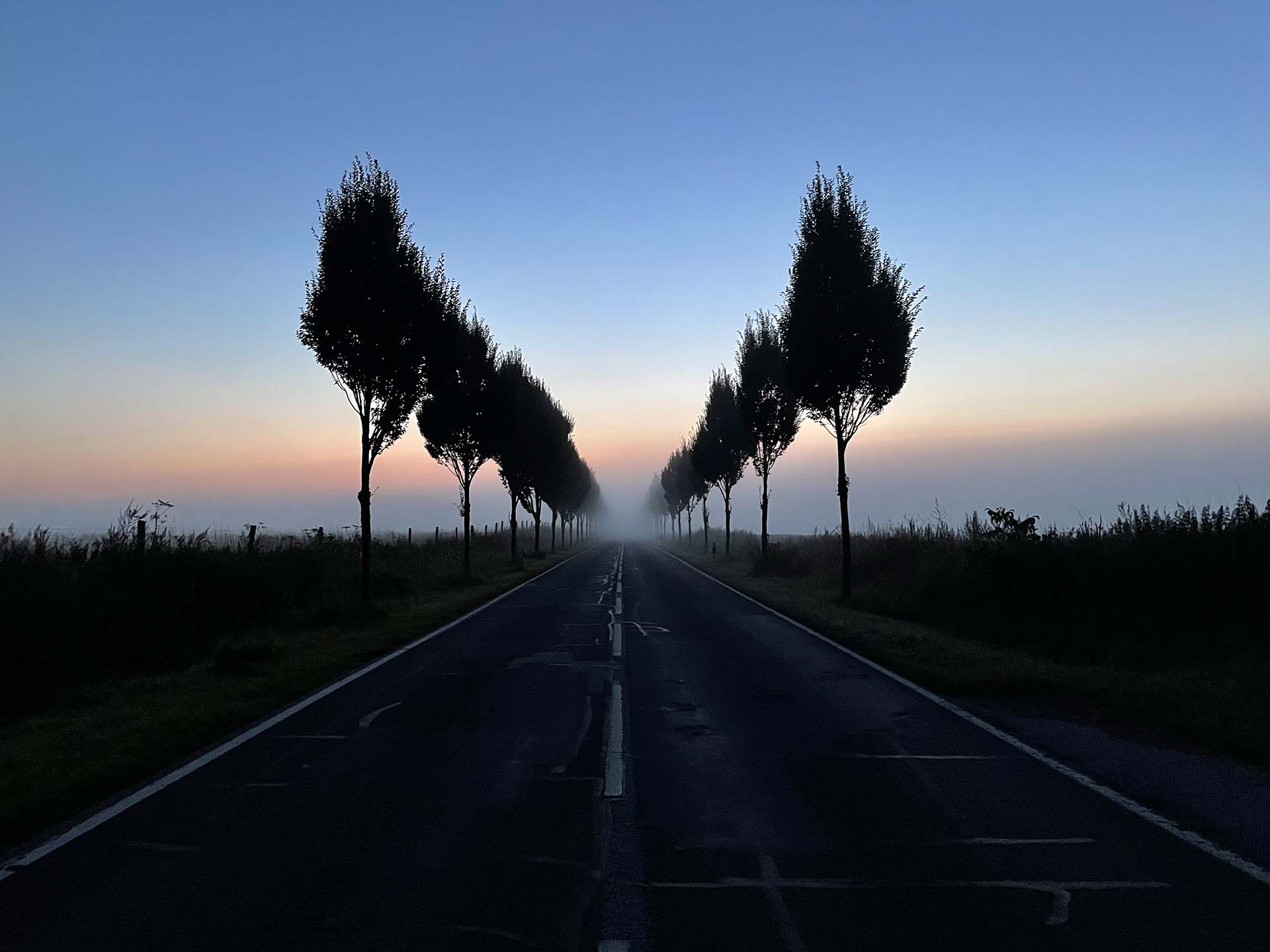
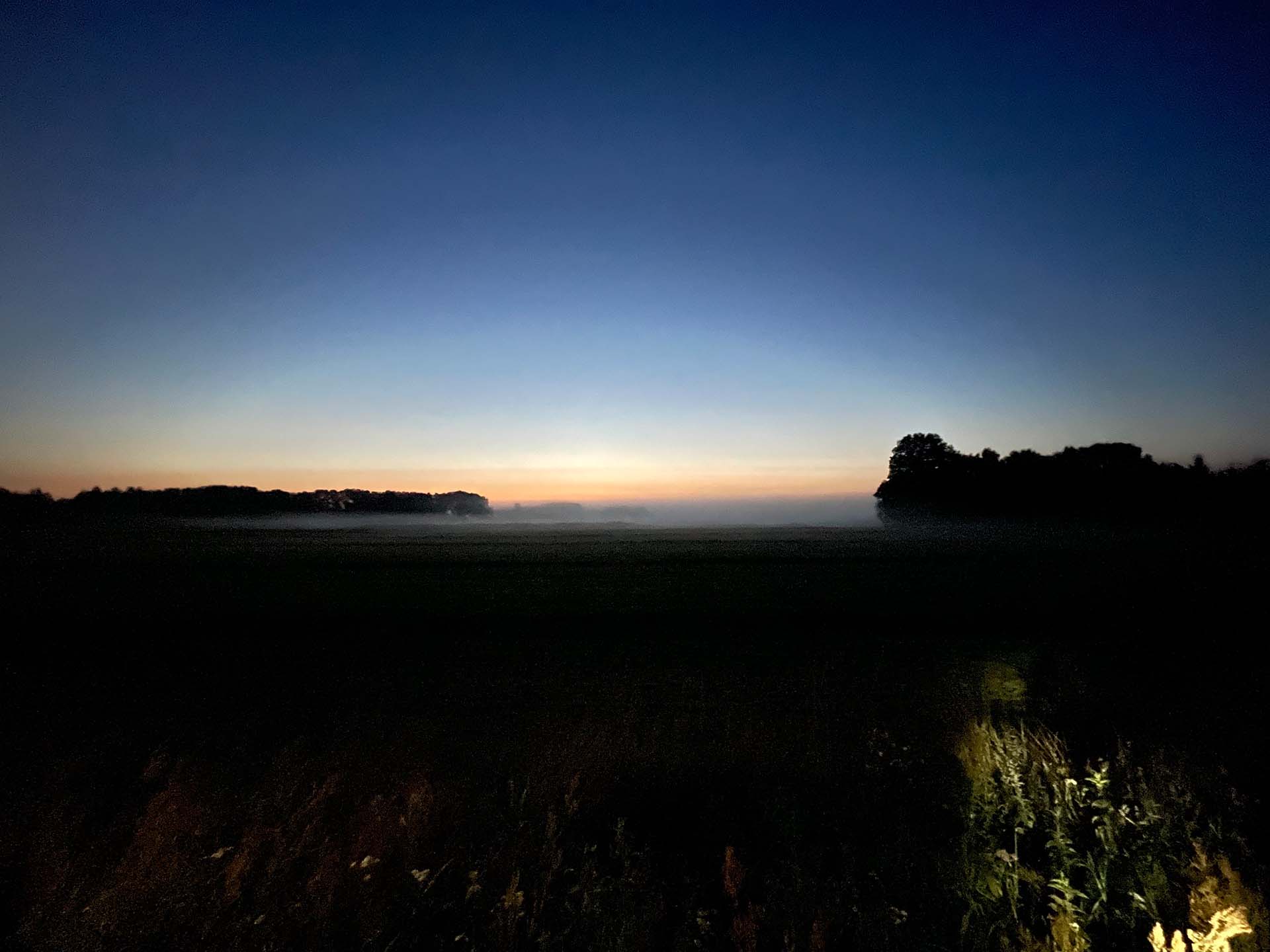
A wonderful night sky appeared as I rode the first kilometers toward Berlin over unlit sections of the route as far as Niendorf.
There I was forced to stop for the first time that day, because the bike path abruptly ended in a meadow for no apparent reason. So I pushed the bike over the small dirt mound that separated the meadow from the country road running alongside it. I rode on that country road for the next few kilometers via Benitz to Schwaan, and from there on to Güstrow.
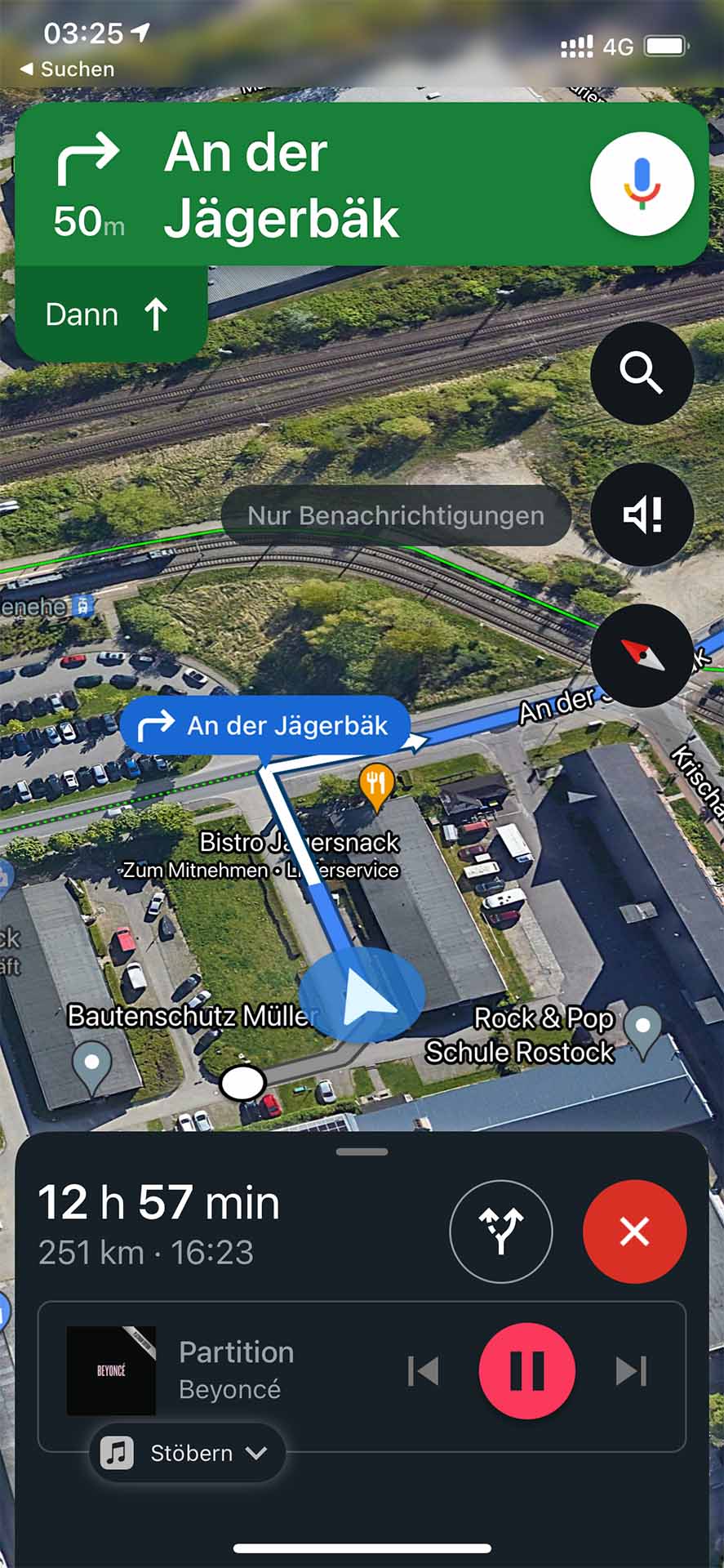
In Primerwald, shortly before crossing under the A19, I was able to have some breakfast. After that, however, I got straight back on the bike so I could continue covering good distance in the early morning hours.
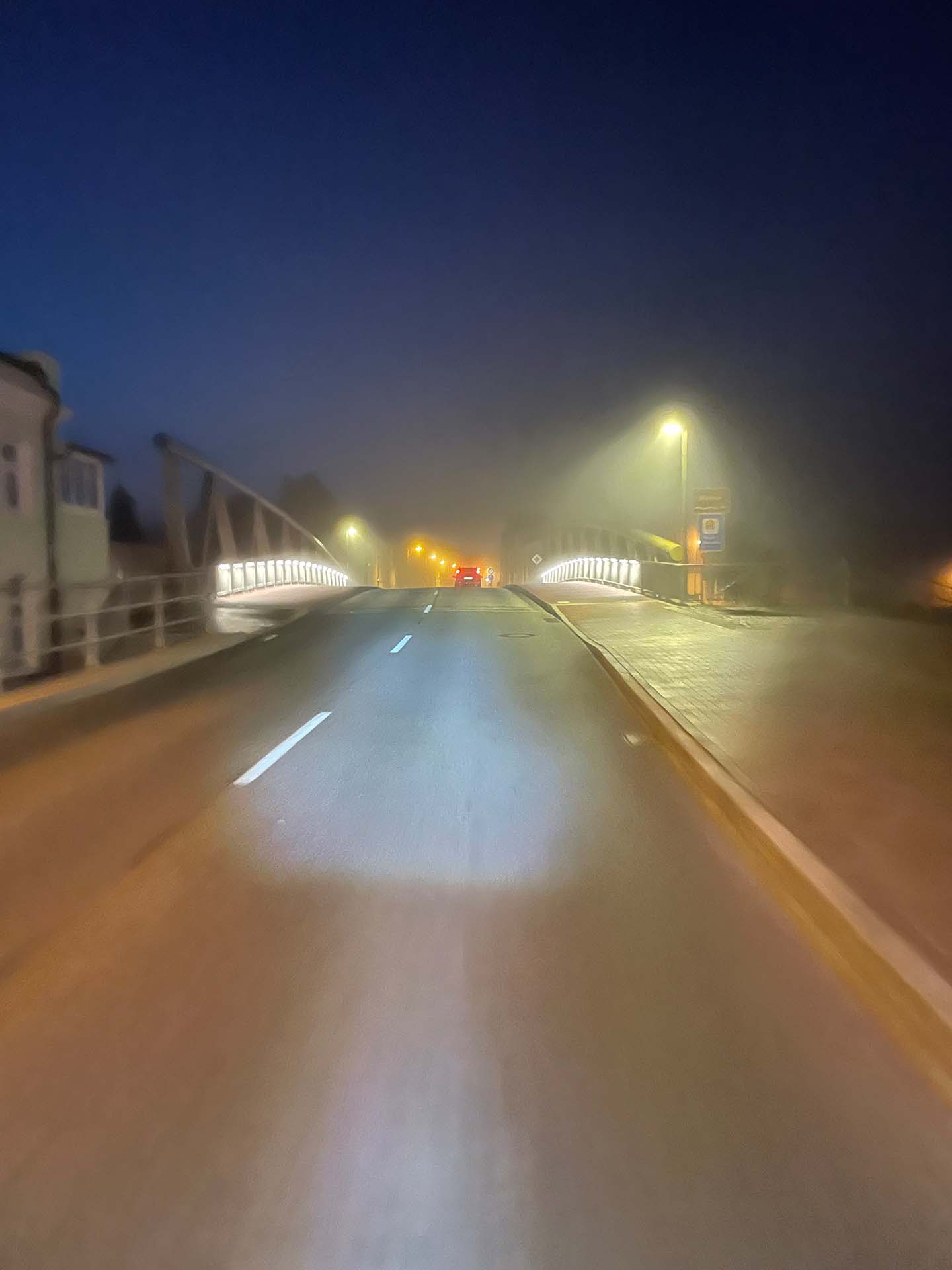
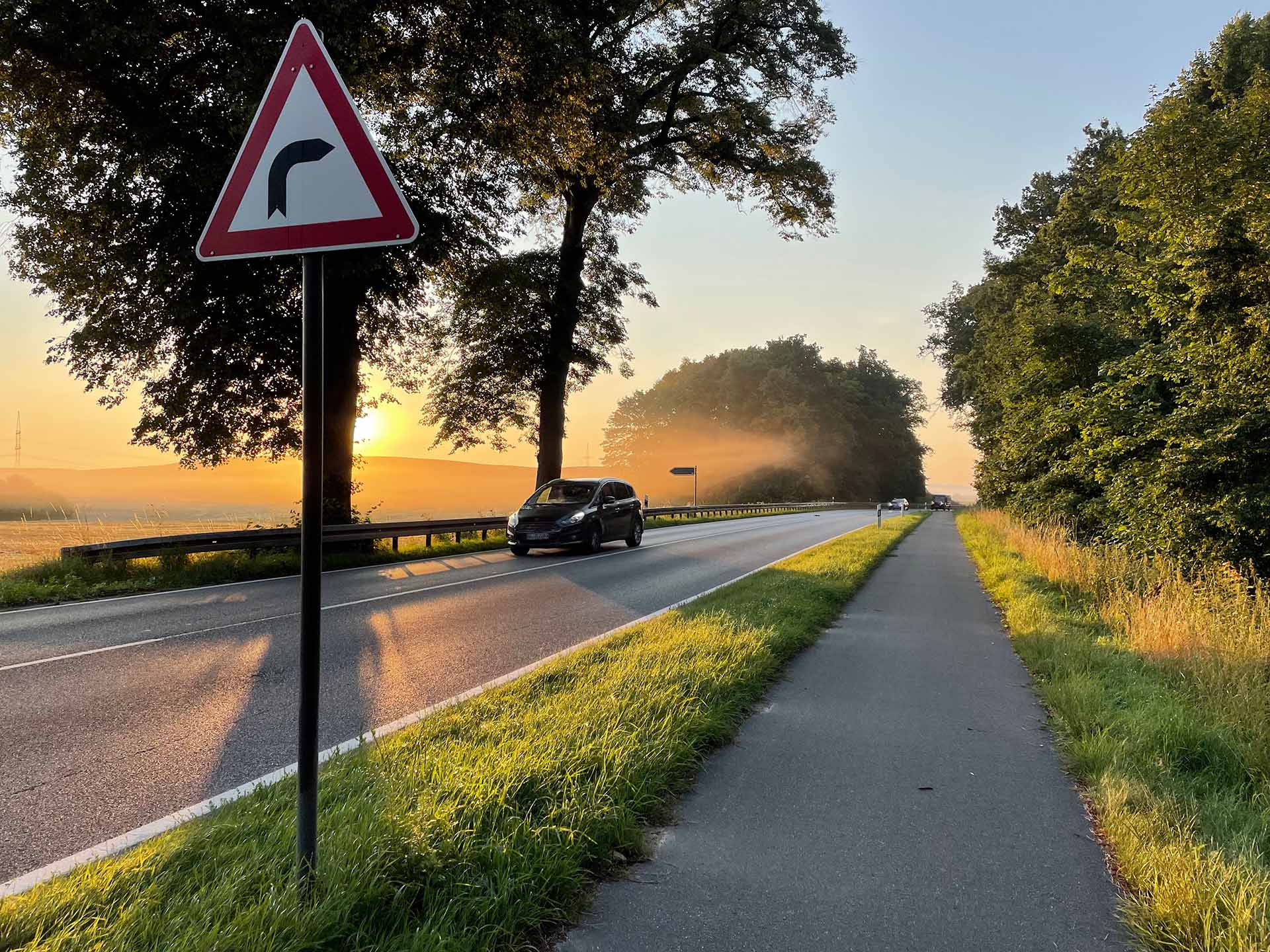
For the sake of clarity, all the pictures from the ride up to sunrise in one carousel:
Back Next
The first 50 km were very easy to ride, let’s see how it goes from here 🙌 pic.twitter.com/omDZMKSGGgAugust 12, 2021
Shortly after I posted the tweet about how easy the first 50 kilometers had been to ride, what had to happen happened: I got lost in Langhagen.
As I later discovered, Google Maps had sent me across part of the premises of the local Heidelberg Cement branch, where the path suddenly ended in front of a railway track. So I had to turn around again, ride back the last 1.5 kilometers, and find an alternative route.
My chosen route around the industrial site on an official bike path, which was however in very poor condition, led through a patch of forest where I had to ride through a puddle as wide as the path. I completely underestimated its depth, though, so my panniers got a free underbody wash, my gears rubbed slightly and made noises for the rest of the ride (right after riding through the puddle I also couldn’t shift properly anymore, but luckily that fixed itself fairly quickly).
After that surprise, my route led me through many wooded areas, but always on good bike paths and farther and farther away from the sea, which I had left behind in the darkness.
At around 10:00 a.m., I was happy to have reached the first major checkpoint of the ride: Waren, a place of recreation par excellence, gave me the opportunity to take a deep breath after 106 kilometers on the bike and enjoy the beautiful view before continuing once again:
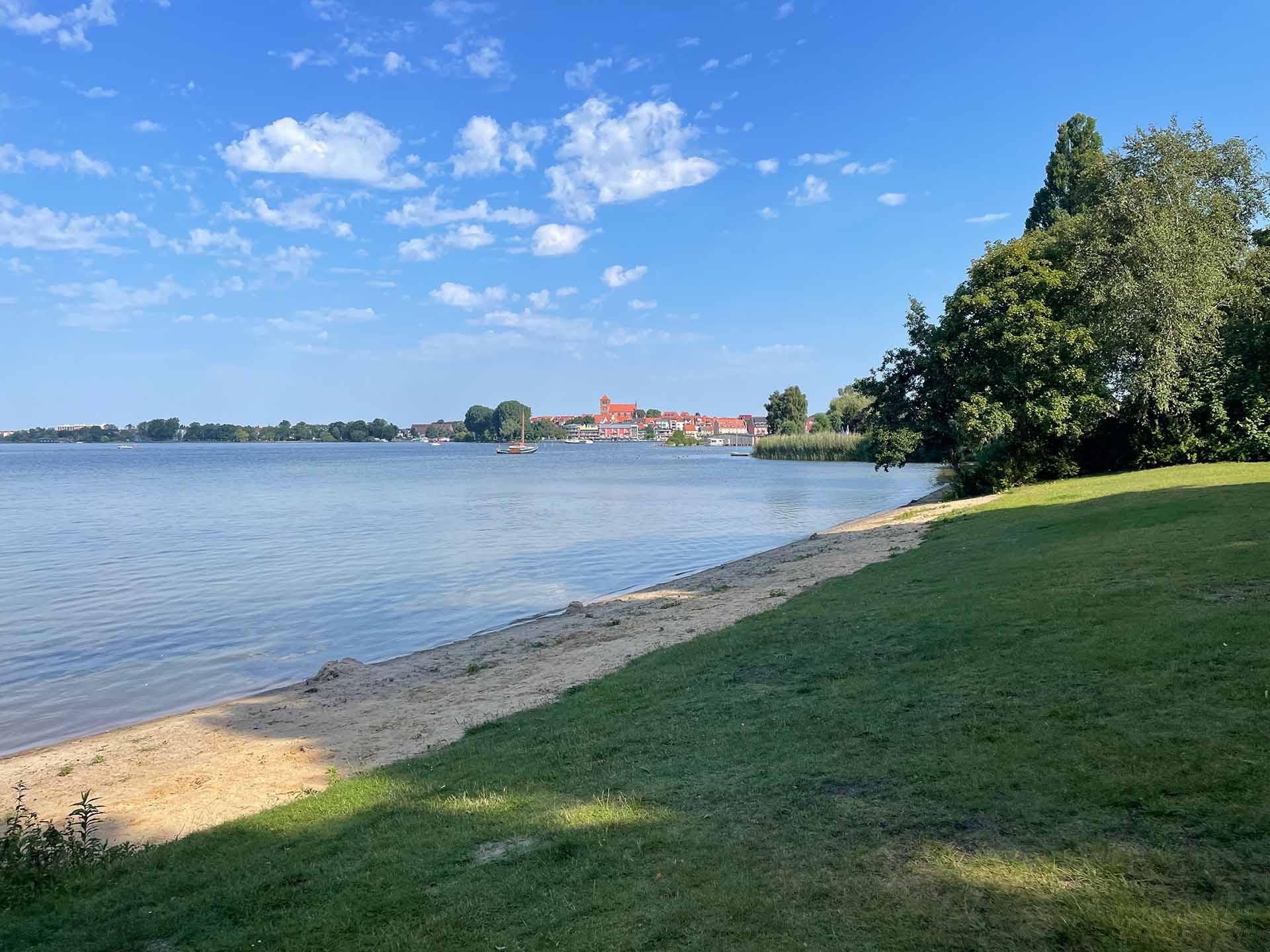
After this important point on the route (also because I cracked the 100 km mark within Waren), I rode along a little footpath until I stopped at the "Kuhtränke" viewing platform for the view over Lake Feisneck. At the same time, a group of retirees had stopped on that platform, who were out on a hike that day. I got into conversation with the group and told the interested older gentlemen about my bike trip and my plans to ride all the way to Berlin that day. They then wanted to invite me to eat, but I politely declined. Secretly, though, I was absolutely delighted that these older folks were so friendly, interested, and respectful.
The next kilometers of the route were rather uneventful again, but one small highlight for me was passing Müritz Airpark: every year (when COVID doesn’t prevent it), a festival called "Fusion" takes place on this site, and it has been recommended to me again and again. Maybe in 2022 I’ll manage to have that experience too. At least now I know where I’d have to go. To see the site in full, I took another unpaved forest path, which thankfully merged back into a larger, paved path. I even saved a bit of time through this route deviation.
Shortly after the airpark, my watch, which was tracking the route, showed the next success in terms of kilometers: I passed the 126 km mark, the (hoped-for) halfway point of my ride.
Software bugs, heat problems, and lunch
After visiting the Fusion site, I continued toward Mirow, where after 143.5 kilometers and 9 hours of riding, something very interesting happened: first, I ate a kebab at a Turkish snack bar, refilled my bottles, and cooled down, but above all the workout app on my watch became unstable. When I first noticed this instability, I initially assumed it was a throttled watch processor that couldn’t cope with the heat and the strain of continuously recording the route; but after Mirow I let the workout continue running for the time being, because the distance and time kept counting normally. In hindsight, I found out that the GPS recording had actually stopped at exactly kilometer 143.5.
At first, however, I continued on strengthened, though somewhat worn out by all the cycling, especially by the weather and the sun, which on that Thursday seemed particularly determined to shine strongly.
I crossed the next milestone in Prebelow, a small scattered settlement on the large Prebelow Lake: the border between Mecklenburg-Western Pomerania and Brandenburg.
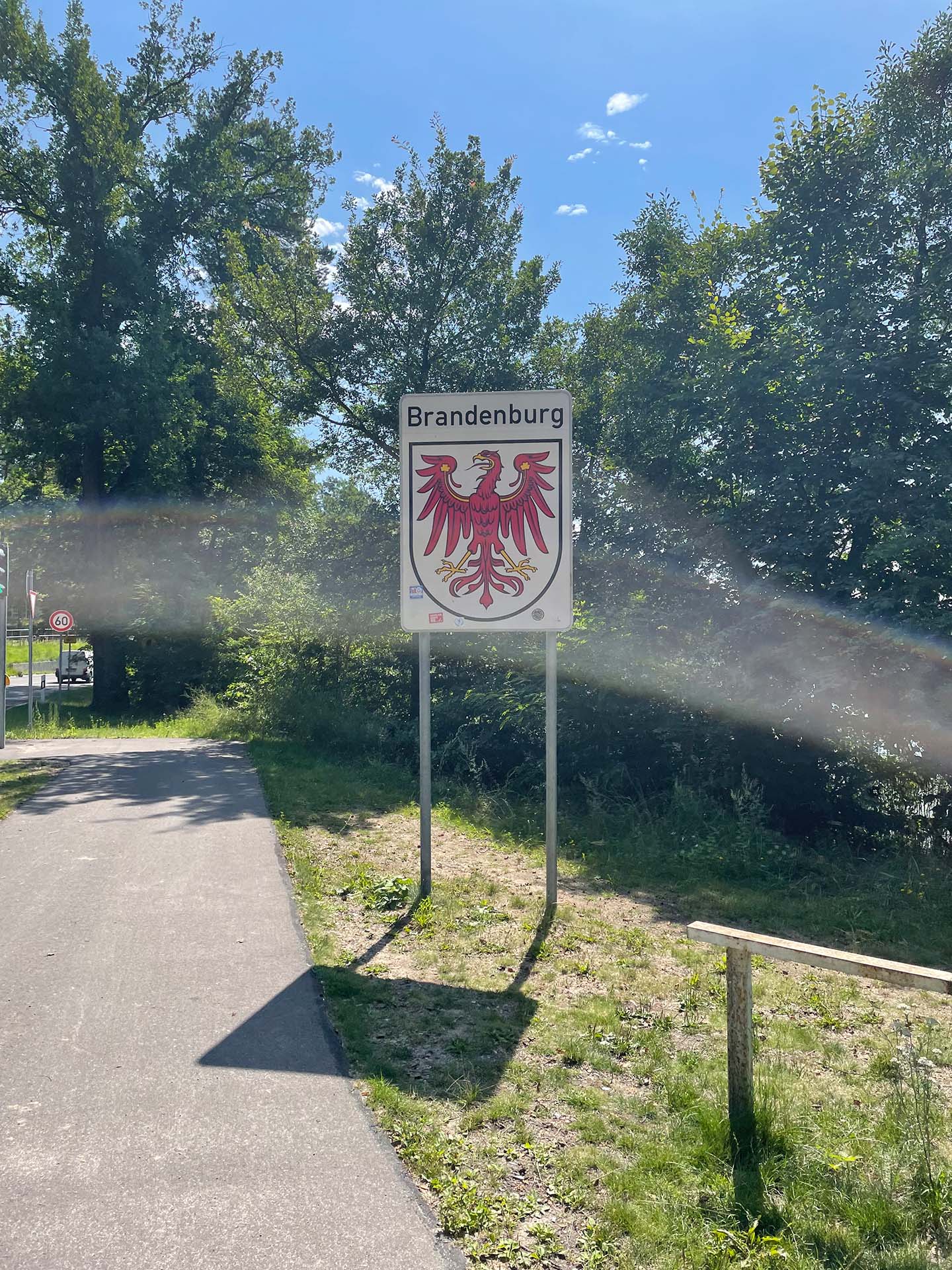
When, 20 kilometers later in the small village of Schulzendorf, I could no longer get the watch and thus the workout recording to respond at all, I restarted the workout — and that meant the ride, and especially the distance, was recorded again. In the same village, I also bought a small sweet pastry and water at the bakery — unfortunately I couldn’t refill my bottles there, so after asking nicely I was allowed to fill up water at a young family’s house.
The route to Oranienburg became torture for me, because the still enormous temperatures quickly depleted my water supply, and I became more and more exhausted. Above all, near Lindow (Mark), Google Maps sent me for more than five kilometers straight through the forest — 34 minutes of torture on sandy ground, through bushes and scrub, really worked on my motivation. When I was finally able to ride properly again, there were still another 70 kilometers to the destination, and now without the pedal hook on the right side — it had torn on the forest section. I still tried to replace it in Löwenberg, a smaller town in the Mark, at a little bike shop (with the very warm-hearted owner Peter Block, who for a small donation at least gave me a rag for roughly cleaning the chain, which had suffered badly from the forest ride, and some chain oil). In Löwenberg I also went to a supermarket (Aldi Nord — for me, as someone from the South faction, always a real adjustment in layout and product range) and bought drinks, especially isotonic ones.
The ride onward to Oranienburg went well, because I was now following only official signage and a proper bike path: the longer stretch had a positive effect on my motivation through higher speeds and more fun while riding.
Even so, in Oranienburg I briefly thought about just taking the S-Bahn to Berlin after all, because by then I was very exhausted and another 32 kilometers mostly through the city were not exactly an important source of motivation to look forward to. But no way! This ride is going to be finished now.
On the home stretch
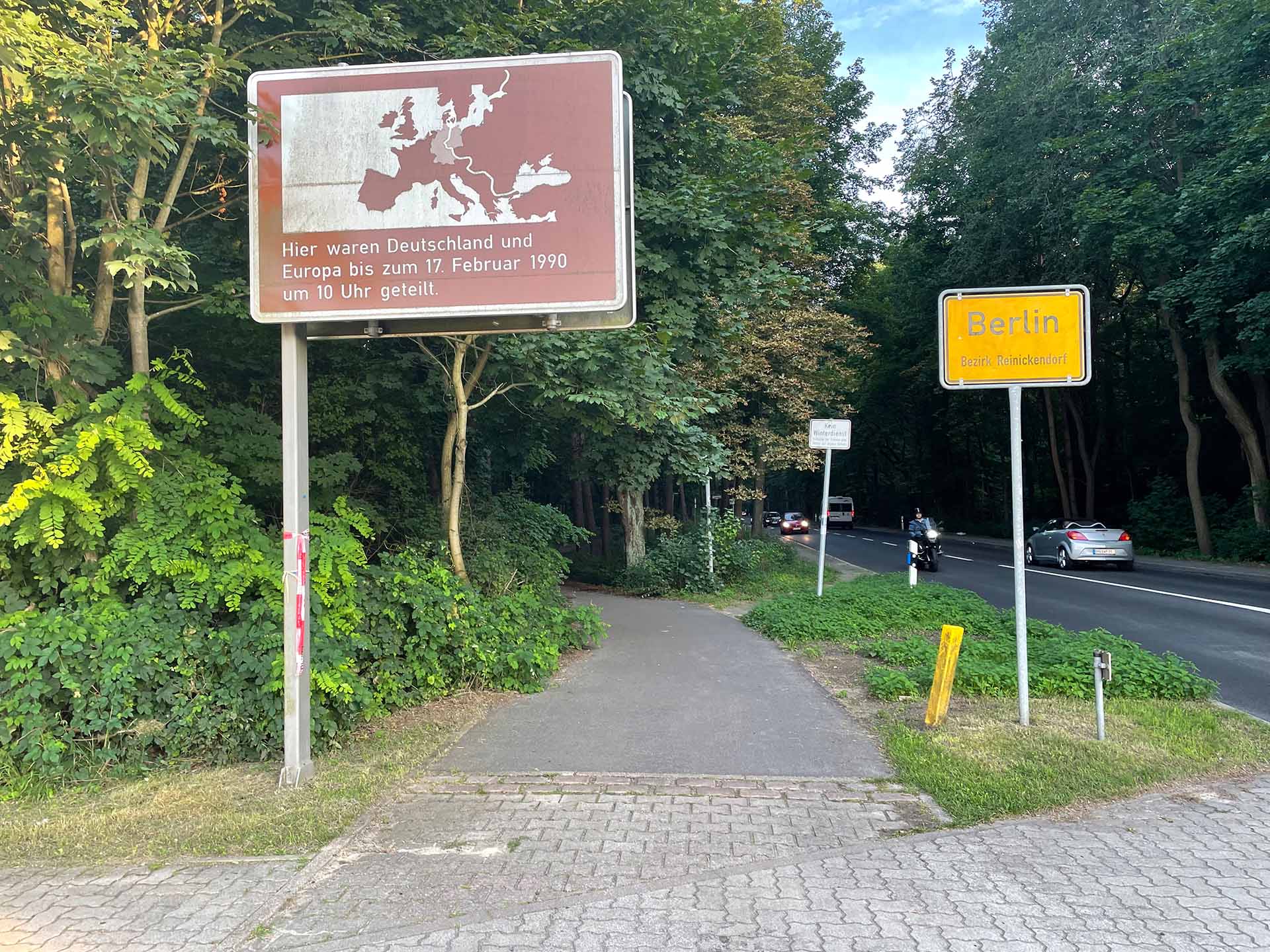
At 7:30 p.m., I finally crossed the border into Berlin. After passing through the forest area of Frohnau, I was finally able to experience the Berlin I had longed for along the route: the federal capital, plastered with election posters for the 2021 federal election and full of big roads, but also surprisingly many bike lanes and park paths that were pleasant to ride, shining with all its contrast between modernity and the past, beauty and confusion, and yet familiarity.
With a short message, I let the friend I was going to have dinner with know that I would be there soon.
Along the Ringbahn, the last kilometers led me on busy streets around the center, where I was going to spend the night. In Friedrichshain, I then turned toward my accommodation for the night, happy to have completed the ride.
So at 9:00 p.m., after 1.5 hours of pure riding within the Berlin city district, I actually reached Stayery, my accommodation in Berlin.
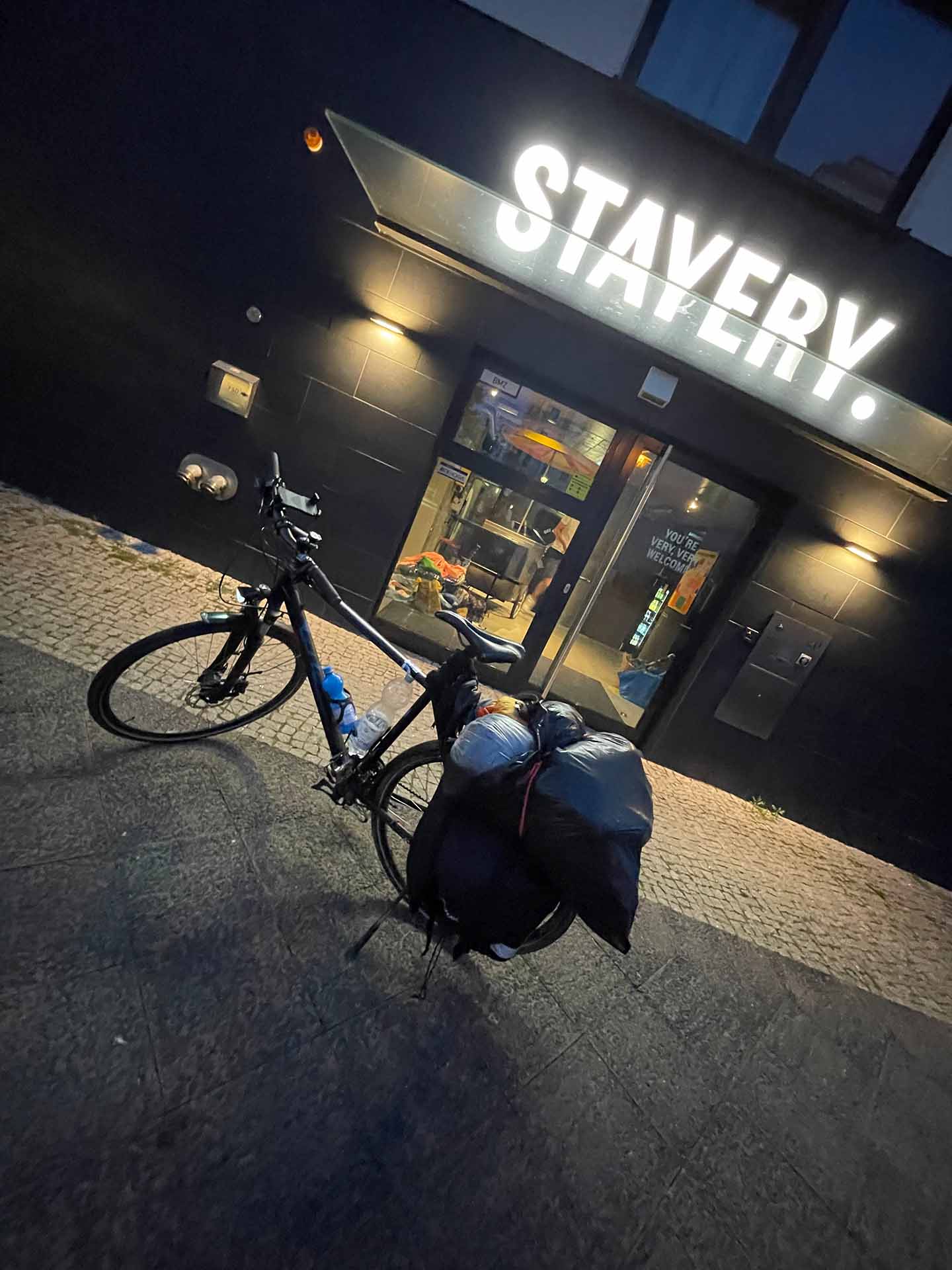
My ride that day covered 264.55 kilometers in 15 hours, 11 minutes, and 52 seconds — at an average speed of 17.63 km/h. In the process, I climbed 960 meters, burned a total of 6,969 kcal, and had been on the road for 17 hours and 25 minutes.
After storing my bike, I went out for Asian food and a toast to the ride — afterward I enjoyed a well-earned shower and quickly fell asleep, knowing full well that the next day I would be moving on again right away, for one final stretch into Lusatia.
Elon Musk, Armin Laschet, and "Hello, Lusatia"
Another stage after the Rostock-Berlin ride took me to the new Tesla site in Grünheide, where I happened to cross paths with Elon Musk and Armin Laschet — from there I continued on into Lusatia.
The morning after
After nine hours of sleep in the federal capital, I once again set about packing up my things, loading the bike, and setting off — for one last ride into Lusatia, where my journey would come to an end for the time being.
But before this final ride really got going, I wanted to spend a little time in Berlin, since I was already in the city after all.
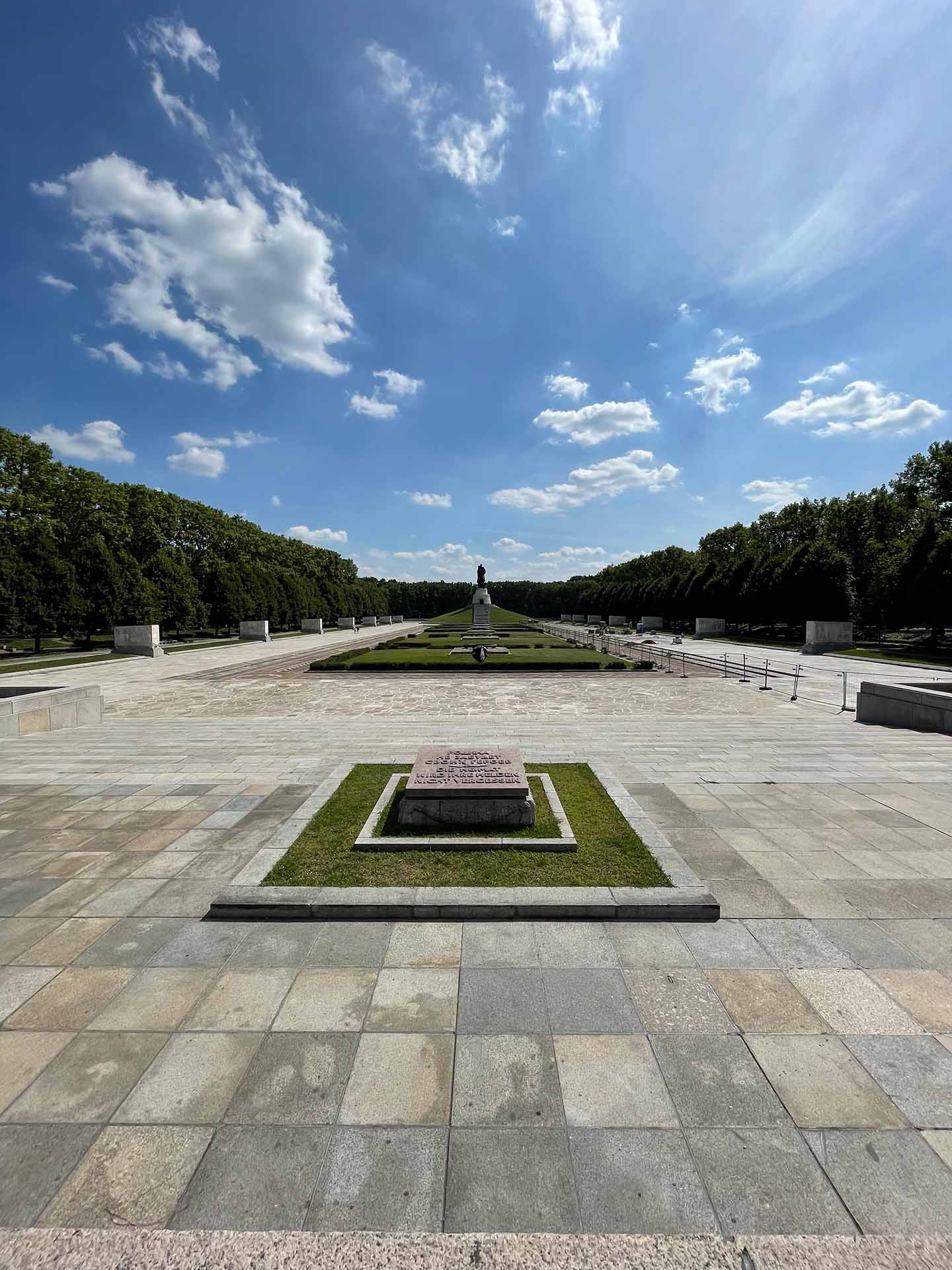
So I spent the morning in Treptower Park, with a short detour to the Soviet War Memorial in Treptow.
Off to Grünheide!
After the lovely morning — and one that was exceptionally relaxed compared to the previous day — I continued on to Grünheide, where I wanted to take a look at the Tesla factory up close, having previously only been able to imagine its size from the way it was described in hundreds of articles.
The route led me out of the heart of Berlin through Plänterwald, through Köpenick, then a short stretch along the A10, and then to Grünheide (Mark), where after less than two hours and 36.6 tour kilometers I reached the Tesla factory and was confronted with a larger crowd of people.
Without having planned it beforehand or knowing in any way at all, I had chosen exactly the day for my visit to the site on which Elon Musk and Armin Laschet (for those who have by now completely erased the name from memory: Armin Laschet was the CDU’s candidate for chancellor in the 2021 federal election and probably the biggest possible miscast imaginable) were visiting the new Tesla factory in Grünheide.
As a result, a larger group of demonstrators, mostly residents of Grünheide, had gathered around the access roads to the site. I rode along the demonstrators on my fully loaded bike until I was standing right at the fence of the huge area. From there I could get a pretty good overview of the site, but I also wanted to capture it from another angle with my drone. So I moved to a safe distance from the site, far away from the crowd, and sent my drone up. For legal reasons, I made sure to fly my drone only over still publicly accessible construction land in order to avoid possible no-fly zones.
Above all, the flight produced a huge panorama, which you can admire quite well with my embedded panorama viewer:
The panorama is more than 140 megabytes in full size large (and that’s already with JPG compression; the TIFF is around one gigabyte) and consists of 21 RAW photos, which I stitched together into a panorama in Lightroom and then uploaded to the panorama page; however, not all browsers can display it.
Next stop: Cottbus
After the detour to Grünheide, I boarded a regional express train toward Cottbus so I wouldn’t have to ride the entire stretch through Lusatia that same day. I already knew that route, and another 110 kilometers just weren’t that important to me, especially since people were already waiting for me in Forst, the destination of my trip.
After almost 2 hours of travel, I arrived in Cottbus — the last checkpoint of my trip before the finish.
Déjà vu in Lusatia
After Cottbus, there were fewer than 30 kilometers left to ride to my destination. After just a few minutes, I left Cottbus and rode along a beautiful park toward my goal. I noticed that all of a sudden the signposts had become bilingual — in addition to German, the place names were now also given in Sorbian.
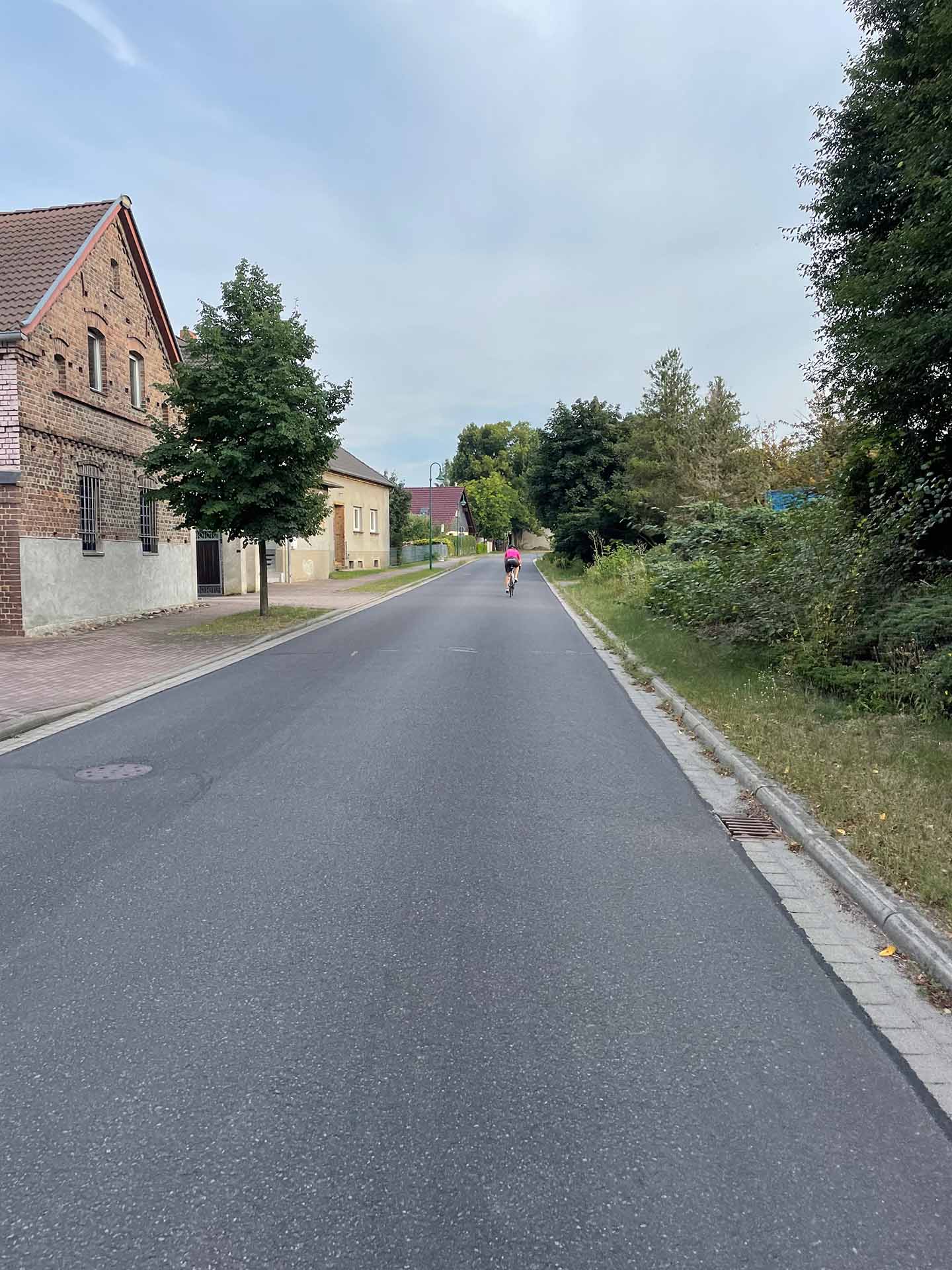
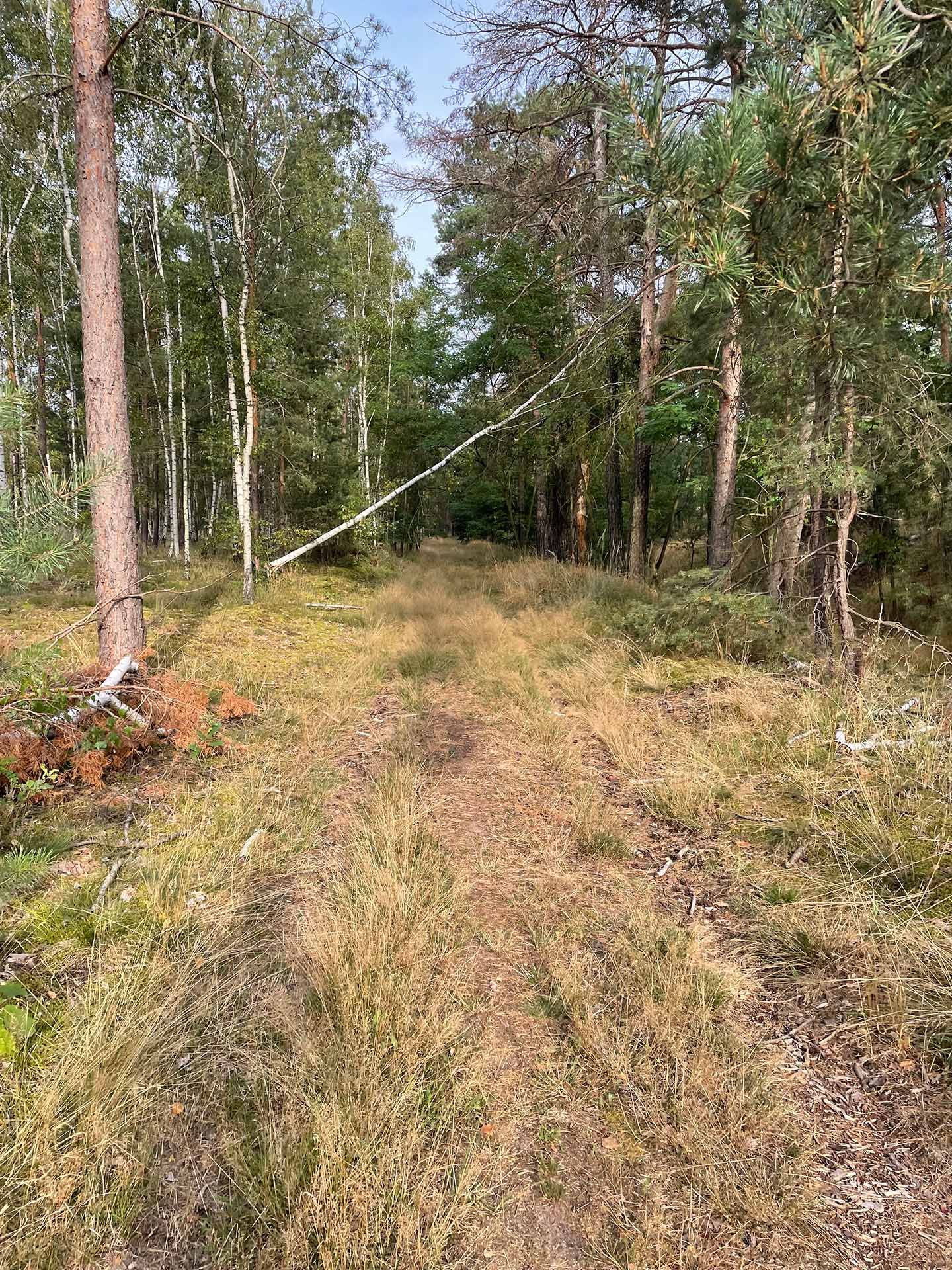
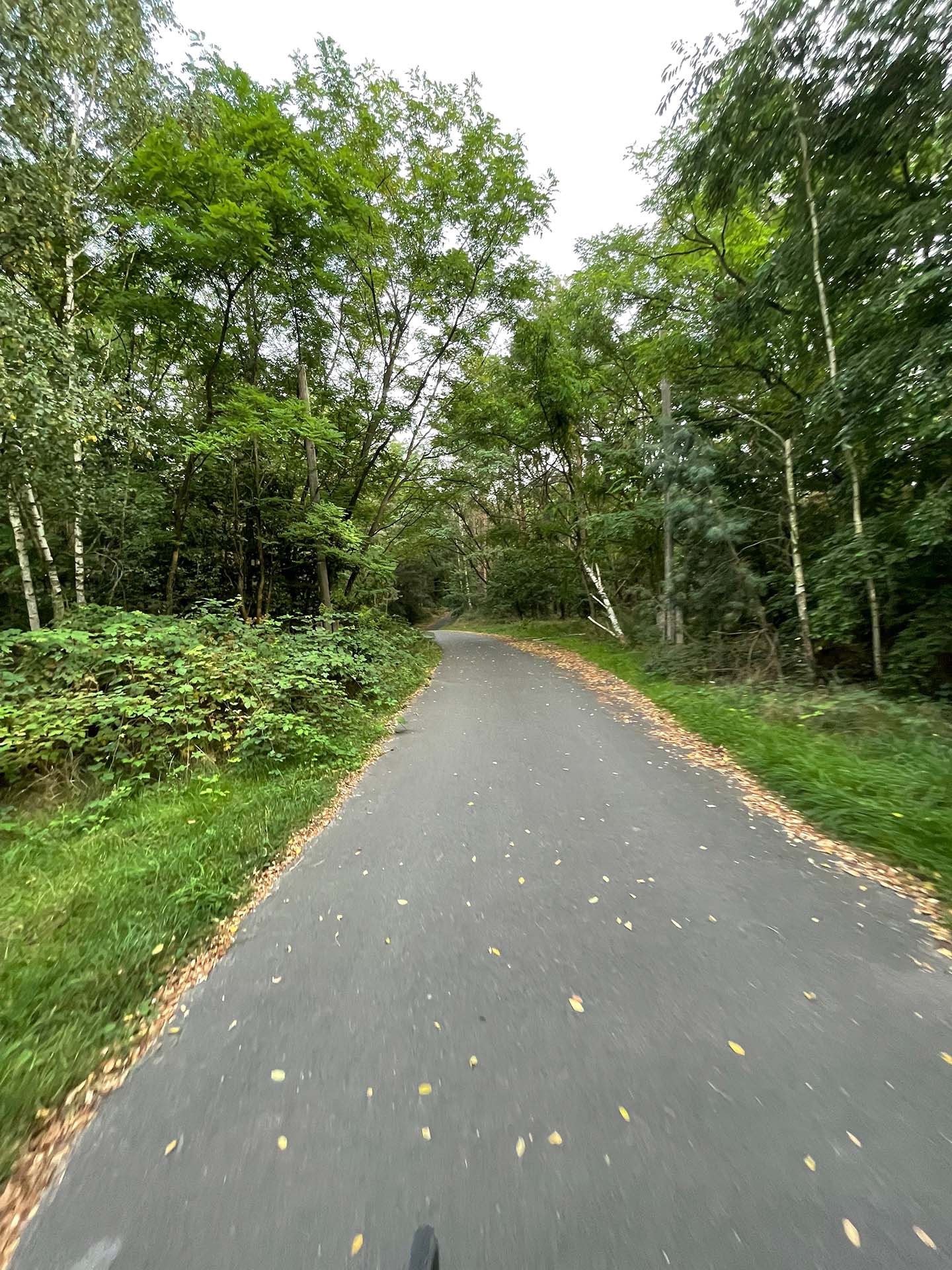
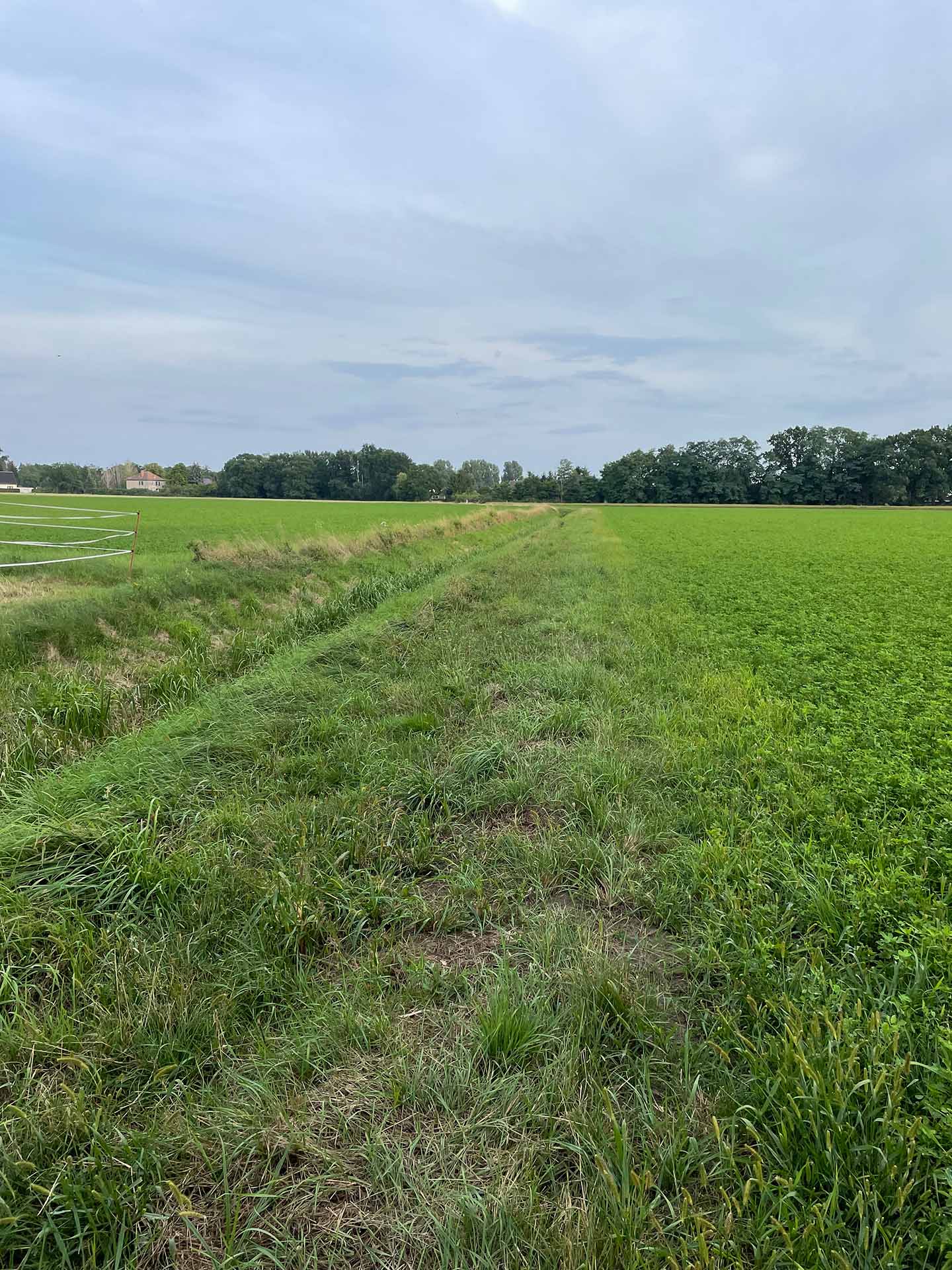
After Cottbus, mentally already done with the ride, I got a complete repeat of the landscapes I had ridden through over the previous seven days on the last 14 kilometers of the trip: first through a small village, then onto a forest path and once again cross-country through the woods — including spinning tires because of the lack of grip on the sandy ground and lots of tall plants. After that, onto a wonderful bike path along the southern bypass and onward toward Forst.
Back Next
On the last few kilometers, I still had to cross (pushing the bike) a large meadow that Google Maps had stored as a bike path.
Once that was done, I had finally reached my destination; after two hours of travel for less than 30 kilometers (thanks, forest!), I finally met my family in Forst on the evening of August 13, 2021, after eight days, seven nights, and around 1,000 kilometers on the bike.
Once there, I unloaded my bike one final time (for the time being), and after showering and changing clothes I was able to enjoy a wonderful dinner.
Epilogue #1: A challenge in 1,003 km
And just like that, eight days were over. Every day on the bike carried me 1,003 kilometers along the Scandinavian coast to Rostock, and from there back into Germany and on to Lusatia. The 1,069 kilometers calculated by Google Maps for this trip are too high, since I shortened the route from Grünheide to Cottbus by train; on the other hand, many detours and smaller excursions are missing from that route.
The travel time of eight days was definitely at the lower limit of what was possible — an average of 125 kilometers a day is certainly manageable, but with the luggage and without rest days, one or two more days wouldn’t have been bad either. In any case, this adventure was a sporting challenge that I would still recommend to anyone.
The cost of a tour like this
Not just for me, but in general too, the question of expenses on an eight-day bike trip like this is interesting. That’s why I broke down all my direct expenses in a Google Sheet:
In the total of around 270 euros, as already mentioned above, only the direct costs incurred during the trip are listed — items such as wear and tear on the bike or additional parts that might be needed (for example the smartphone mount for the handlebars, which I would recommend to everyone) are not included in the calculation. It should also be noted that I lived very frugally during that time and also wild-camped once or twice; if you’re not that flexible, you should add another 75 euros to the costs. I also brought food for four meals from Germany and was thus able to save money quite well. Because Scandinavia is not only very beautiful, but also very expensive — you should plan on an average of 14 euros per meal if you don’t want to live entirely on supermarket food. In that case, I would definitely pack a camping stove and the appropriate cutlery; with panniers on the front wheel, transporting it shouldn’t be a major problem.
Traveling to Scandinavia in Corona times (as of: August 2021)
A very short section: in summary, bike travel is practically unaffected by Corona. I would strongly recommend checking possible travel restrictions before departure; on my trip, neither Denmark nor Sweden was a risk area. I would print out the digital vaccination certificate as a backup, then you’re on the safe side even without a smartphone.
At the time of my trip, Sweden practically no longer had any Corona restrictions, not even a mask requirement indoors. Denmark’s restrictions were comparable to Germany’s; masks were mandatory there. So definitely pack enough medical masks!
Why I traveled alone
Even during my trip, I was asked several times on Twitter why I had taken on this adventure alone. In short:
- The trip was very spontaneous. Finding a companion that spontaneously would therefore have been very, very difficult.
- The route was unfamiliar to me, and some of the distances were very long. Even before departure, it was already clear that one or another stage would be a challenge. That means both the route itself (max. 280 kilometers at a stretch) and the mental strain (see the Danish hill tour) shouldn’t be underestimated. Any fellow riders would have had to be very experienced in touring so that the risk of injuries could be kept minimal.
- The equipment was designed exactly for one person. I had a very small tent and only one sleeping mat, so for two people I would have had to get creative again.
Epilogue #2: A small collection of tips for long-distance bike travel
No blog post of this kind would be complete without the obligatory "so what did I actually learn?".
For me, it was above all the following points:
- Travel light: the more luggage, the more sluggish the bike becomes. And on unplanned excursions along sandy forest paths, every kilogram of luggage is one more reason for the tires to lose grip and spin out. From experience: very annoying!
- Flexibility is more important than perfect planning: I really only planned the rough framework of the trip and then based each day on the weather, the quality of the bike paths, and the time of day.
- A rest day doesn’t hurt either: I would have liked to have had more time in Copenhagen, for example, to see more of the city and relax a bit.
- Double cookies rescue lost motivation: quick blood sugar helps enormously on the last few kilometers to regain focus and motivation.
- Pack enough juice: power banks save money & stress: on the trip I had 2x 20,000 mAh power banks (2x 72 Wh) from Anker with me, which got me through around four days of the trip with lots of navigation on my phone. At the campsites, that meant I could take the cheaper pitches without electricity and didn’t have to stress about getting the necessary battery charge for the next day.
The bike and the train
Here’s one more tip on the side for traveling with Deutsche Bahn and a bicycle: buy the tickets at the travel center and not by phone, that way you save 3 euros. Booking early also helps a lot, because especially in summer the bike spaces are often sold out.
Epilogue #3: A special signpost at the wrong time
Phew, that’s almost it for this post. But there is one thing I saved for the very end: a sign that I found in Gedser right at the beginning of the bike path in the harbor (for me directly in front of the ferry to Germany, for people coming from Germany the first signpost in Denmark).
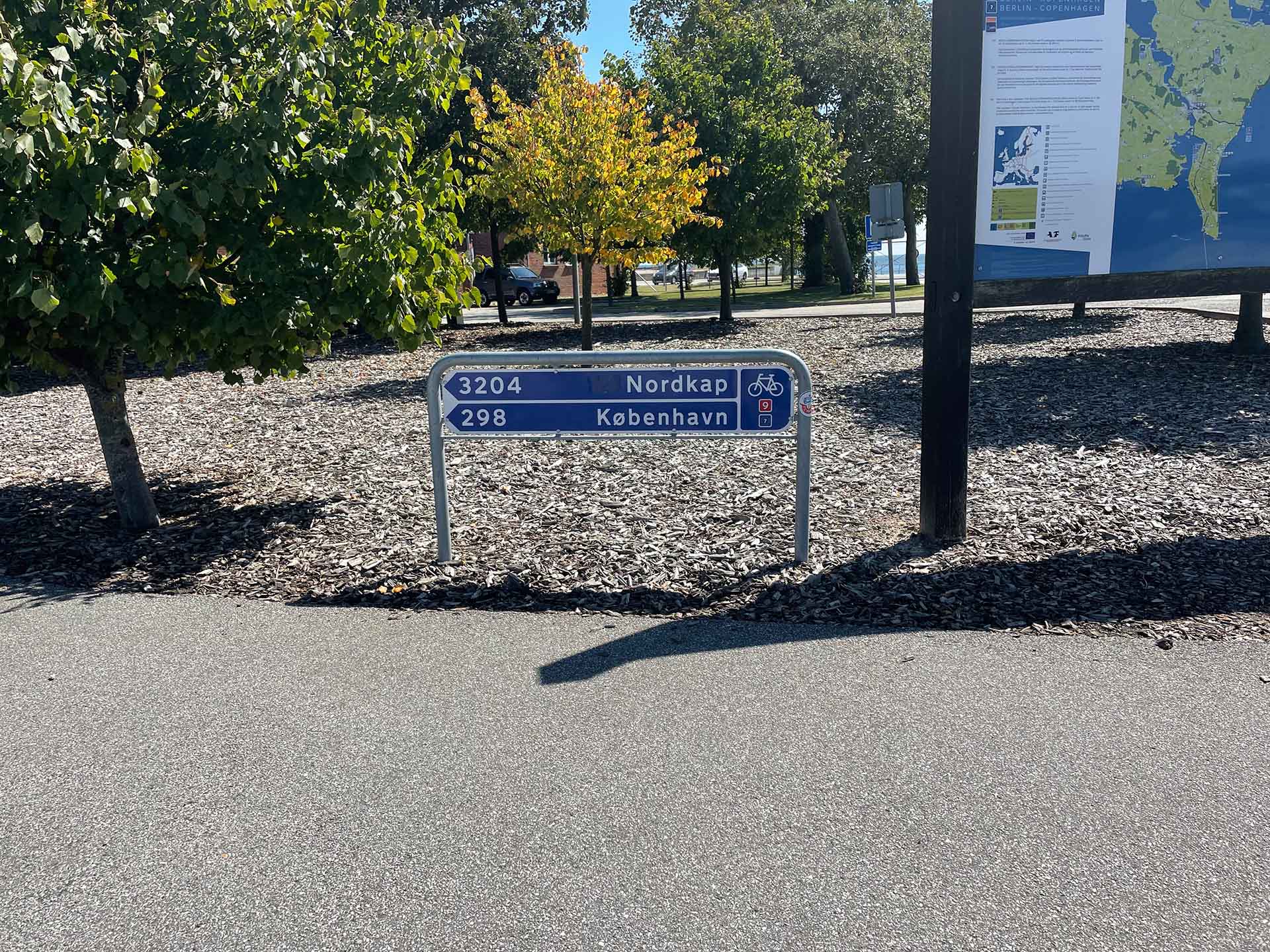
I don’t want to raise false expectations or give overly specific hints about what kind of plan I hatched after seeing this sign — just this much: after graduating from high school, I may have the time and definitely the desire to explore Scandinavia more extensively by bike — where might that trip go, I wonder?
https://p3g3.de/content/media/2026/04/windraeder.mp4
One more question I asked myself on the way to Stralsund: I can hardly imagine that the wind turbines in the distance (unfortunately a bit blurry because of the poor lighting conditions) are lighting up at the same time by chance. Does anyone have an idea how and why they do that?